Best Affordable Workshop Essentials for Under $300
What's inside
As an Amazon Associate I earn from qualifying purchases. This post may contain affiliate links at no extra cost to you.
Spend on capability, not a matching set
A useful workshop does not need a premium tool in every corner. With a $300 ceiling, prioritize tools that solve frequent problems, then leave room for consumables such as drill bits, sandpaper, and blades. The prices below are typical US street-price ranges, not live quotes; sales and kit contents can shift them. If you already own a drill, hand tools, or a work surface, skip duplicates and spend the difference on accessories you will actually use.
For a first setup, the strongest value is usually a corded circular saw, a basic cordless drill kit, a stable work surface, measuring tools, and eye and hearing protection. That mix handles straightforward shelves, repairs, and small projects without spending the whole budget on one battery platform.
As an Amazon Associate we earn from qualifying purchases at no extra cost to you.



A balanced under-$300 kit
| Essential | Typical price | What to check | Where cheap is fine |
|---|---|---|---|
| 12-volt or entry-level 18-volt drill kit | $60–$100 | Battery, charger, clutch, and common chuck size | Light assembly and small pilot holes |
| 7¼-inch corded circular saw | $50–$80 | Blade included, bevel adjustment, shoe stability | Occasional cuts in framing lumber and sheet goods |
| Folding workbench or sawhorses | $35–$60 | Load rating, wobble, usable clamping edge | Folding supports are adequate for rough cutting |
| Tape, combination square, and level | $20–$35 | Readable markings and a square blade | Basic models work if checked for accuracy |
| Safety glasses, hearing protection, dust mask | $20–$35 | Comfort and fit; correct mask rating for the task | Simple certified protection is enough |
| Extra saw blade and drill-bit set | $20–$35 | Wood-cutting tooth count and bit material | Starter sets are fine for softwood and household jobs |
At the low end, this totals about $205; at the high end, roughly $345. Keep it under $300 by choosing a $60 drill kit, a $55 saw, and straightforward folding supports, or by using an existing table as a work surface. Avoid buying a large accessory bundle just because the advertised piece count looks generous: blunt bits and specialty pieces you never use are not savings.
Drill and saw: where the budget goes
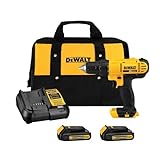
A drill is the more versatile first purchase. For screws, furniture assembly, and holes up to around ⅜ inch in ordinary wood, an entry-level kit is usually sufficient. A second battery helps if you work for long stretches, but it is not essential for short repairs. Check whether the kit includes the charger and battery; bare tools can look cheap while costing more once those are added. Compare cordless drill-driver kits with battery and charger by total kit price, not the tool-only price.
For cutting plywood or lumber, a corded circular saw often offers better capacity per dollar than a cordless one. A basic 7¼-inch model can cut common framing stock in one pass and has widely available blades. The trade-off is managing a cord and needing an outlet. Check that the base plate sits flat and the depth and bevel locks hold securely. A loose shoe or inaccurate angle scale can make cuts frustrating even if the motor is powerful. For occasional straight cuts, a guide made from a straight board and clamps is a cheap substitute for a track saw.
Buy a replacement blade when the included one burns wood, tears veneer badly, or needs force to advance. A lower tooth-count blade cuts quickly but leaves a rougher edge; a fine-tooth blade is better for cleaner plywood cuts, though it may cut more slowly.
Workholding and measuring are not optional
Cutting material balanced on a chair or held by hand is a common source of bad cuts and injuries. Folding sawhorses are inexpensive and easy to store, but two narrow supports do not automatically make a stable bench. Put the workpiece across both, keep the offcut supported, and clamp the stock before cutting. For drilling or assembly, a folding bench with a clamping edge is more convenient; check its weight rating and whether it rocks under sideways pressure.
Measure twice, then check the square before relying on it. A budget combination square can be tested by drawing a line along its edge, flipping the tool, and drawing again against the same reference. If the lines diverge, it is not square enough for accurate layout. A 25-foot tape is plenty for most small workshops; paying extra for a longer tape adds bulk without helping typical shelf or furniture jobs.
Buy safety and consumables before upgrades
Safety gear is not a place to stretch the budget to zero. Wear eye protection when cutting or drilling, and use hearing protection around saws. A dust mask is useful for nuisance dust, but fine dust from sanding or repeated cutting calls for better-fitting respiratory protection and sensible dust control. Keep loose sleeves, hair, and jewelry away from rotating tools, and unplug a corded saw before changing its blade.
Leave at least $20 for consumables. A drill that comes with no usable bits cannot make the holes you bought it for, and a dull saw blade makes cheap tools perform worse. For a first round of projects, a modest wood-bit set, a few clamps, and spare blades are more practical than a specialty sander. If sanding is the main job, consider setting aside the circular saw budget for a basic random-orbit sander instead, plus sanding discs in several grits.
When to spend more and when to wait
Battery tools become better value when you already own batteries and plan to add more tools from the same platform. If this is your first purchase, compare complete kits: a discounted bare drill is a poor deal when the battery and charger add another $80. Brand loyalty matters less than warranty support, battery availability, and the cost of the next tool you expect to buy. For occasional DIY, an established budget line can be adequate; for weekly use, a stronger service network and replacement batteries may justify a higher initial price.
Seasonal sales can bring starter kits down, especially around major holiday promotions and spring home-improvement events. Compare the exact battery capacity, included accessories, and warranty rather than trusting a crossed-out list price. Buy now if a missing tool is stopping a project; otherwise, waiting for a bundle can save money. Do not buy an upgrade to solve a problem caused by poor setup: a stable work surface, sharp blade, and correctly marked cut often improve results more than a pricier saw.