Best Affordable Shop Vacuum for Sawdust and Workshop Cleanup
What's inside
As an Amazon Associate I earn from qualifying purchases. This post may contain affiliate links at no extra cost to you.
A shop vacuum for sawdust does not need a huge tank or a long list of attachments. It needs enough airflow to collect the dust your tools produce, a filter that keeps fine particles from blowing back into the room, and a hose that fits your workspace. For occasional cleanup, a modest wet/dry vacuum can be a good buy. For sanding or repeated cabinetmaking, filtration and dust-control connections matter more than tank size.
As an Amazon Associate we earn from qualifying purchases at no extra cost to you.


What matters for sawdust cleanup
Start with filtration. Coarse wood chips are easy to collect; fine sanding dust is not. A basic cartridge filter may catch much of it, but a poor or clogged filter can send fine dust out the exhaust and reduce suction. Check that replacement filters are available and that the filter is rated for fine dust. A bag can make cleanup easier and protect the filter, but it adds an ongoing cost.
Airflow matters more than a big horsepower number on the box. That number often reflects peak electrical input, not useful suction at the hose. For a portable vacuum used on a sander or saw, a 1¼- to 2½-inch hose is common. Narrow hoses are easier to connect to small tool ports, but clog more readily with chips. A wide hose moves debris well during floor cleanup but may not fit a power tool without an adapter.
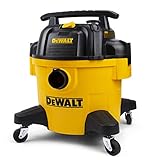
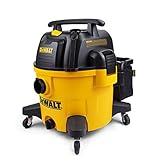
Tank capacity is a convenience, not a measure of cleaning strength. A 5- to 8-gallon unit is generally manageable in a small shop and holds plenty of routine debris. Larger tanks mean fewer trips to empty, but they take more floor space and are heavier when full. If you mainly vacuum around a bench, compact storage may be worth more than another few gallons.
Budget vacuum trade-offs
| Type | Best for | Typical trade-off | Before buying |
|---|---|---|---|
| Compact wet/dry vacuum, about 2–5 gallons | Small shops, quick bench and floor cleanup | Less capacity; may need frequent emptying | Check hose diameter, filter cost, and whether bags are available |
| Mid-size wet/dry vacuum, about 6–12 gallons | General workshop cleanup and occasional tool hookup | Bulkier to store and move | Look for a fine-dust filter and useful tool adapters |
| Dust extractor or dedicated dust collector | Frequent sanding or machines that make steady dust | Higher purchase cost and more space | Compare filtration, automatic tool switching, and connection sizes |
For a first shop vacuum, compare a compact wet/dry vacuum with a fine-dust filter against a mid-size unit. Choose the compact option if your work is occasional and storage is tight. Step up if you routinely collect several bags of chips or want to leave the vacuum connected to a tool.
Connecting it to saws and sanders
For a circular saw, track saw, or sander, a vacuum is most useful when its hose fits the dust port securely. Measure the tool port rather than assuming an included adapter will work. Reducers can help, but a loose connection leaks dust; a tight, mismatched connection can restrict airflow. A flexible adapter or short length of appropriately sized hose is often a better fix than wrapping a poor fit in tape.
Some vacuums include an outlet that starts the vacuum when a connected tool runs. That is convenient, but it is not essential for occasional use. Check the outlet’s electrical rating against the tool’s requirements, and do not exceed it. Without automatic switching, turning the vacuum on a few seconds before cutting and leaving it running briefly afterward helps collect dust left in the hose.
A shop vacuum can reduce dust at the source, but it is not a substitute for good general dust control. On a table saw, router table, or planer that produces a high volume of chips, a small shop vacuum may clog or fail to capture dust escaping from the machine. For repeated work, compare a small workshop dust collector with a vacuum. It costs more and uses more space, but its larger ducting is better suited to stationary machines.
Filters, bags, and common failures
Fine dust loads a filter quickly. When suction drops, stop and check the hose, inlet, tank, and filter before assuming the motor is failing. A packed filter is a common cause of poor pickup. Clean it as the manual directs; banging a cartridge filter hard can damage the media, and blowing it out with compressed air can scatter dust across the shop. If the filter is visibly torn or no longer seals, replace it rather than running the vacuum without it.
Use a collection bag if one is available and priced reasonably. It keeps debris from coating the filter and makes disposal cleaner, especially after sanding. Bags are not always worth the cost for occasional coarse-chip cleanup, but a reusable filter alone may need frequent cleaning during a long sanding session. Never vacuum hot ash, flammable liquids, or material the manufacturer excludes. A standard shop vacuum is not designed to safely collect every kind of hazardous dust.
When to spend more—and when to wait
Buy the least expensive unit that has a suitable fine-dust filter, available replacements, and a hose or adapter that fits your tools. Paying extra for a larger tank is sensible if emptying a small one would interrupt regular work. Paying extra for automatic switching is mainly a convenience. If you sand for hours, work indoors, or need to control fine dust consistently, put the budget toward better filtration or a purpose-built extractor instead of a larger basic vacuum.
Compare the total cost, not just the sale price: filter replacements, bags, adapters, and storage all count. Seasonal promotions can make mid-size units competitive with compact models, but a discount on a vacuum with costly or hard-to-find filters may not be a bargain. Before ordering, confirm the return policy and check that replacement filters for the exact product are currently sold. Those small checks can prevent a cheap purchase from becoming a frustrating one.