Best Value Tools for Laying Flooring in a Single Room
What's inside
As an Amazon Associate I earn from qualifying purchases. This post may contain affiliate links at no extra cost to you.
For one room, the best-value flooring kit is usually not a kit at all. Buy the few tools that protect the floor and make accurate cuts, then borrow or rent anything you’ll use for only a few hours. The right list depends on the material: laminate and click-lock vinyl need tapping and spacing tools; sheet vinyl and glue-down flooring call for different cutting and adhesive gear.
As an Amazon Associate we earn from qualifying purchases at no extra cost to you.


Start with the flooring, not the tool bundle
Check the installation instructions before shopping. They specify expansion gaps, approved underlay, cutting methods and whether tapping blocks or pull bars are allowed. A generic laminate kit can be a poor match for vinyl plank: a hard tapping block or excessive force may damage vinyl’s locking edges. Some products also prohibit tapping altogether.
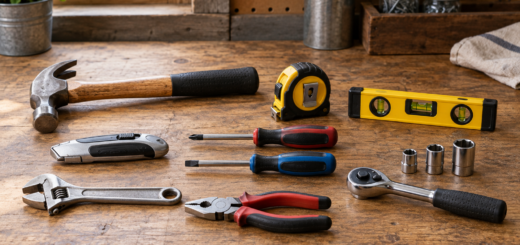
For a typical 10-by-12-foot room using floating click-lock planks, expect to need a tape measure, pencil, square, spacers, a utility knife or saw suited to the product, and a way to tap joints without striking the plank directly. You may also need a pull bar for the last row. That’s a short list; paying extra for a large case of accessories usually isn’t worthwhile.
Best-value tools for a one-room job
| Tool | Good-value choice | When to spend more |
|---|---|---|
| Tape measure and pencil | Basic, readable 25-foot tape; sharp pencil | If you already own reliable ones, don’t replace them for this job. |
| Square | Affordable speed square or combination square | Buy a sturdier square if it will see frequent use or must stay accurate after rough handling. |
| Spacers | Reusable plastic spacers, or a small DIY spacer cut to the specified gap | A proper set is useful for long rooms or repeated flooring work. |
| Tapping block and pull bar | Inexpensive set made for the floor type | Choose a better-fitting block if the budget one slips, cracks or doesn’t match the locking profile. |
| Cutting tool | Utility knife for score-and-snap products; hand saw or rented cutter where specified | Rent or buy a powered saw for many cuts, thick material or difficult angles. |
| Knee protection | Foam pad or basic knee pads | More supportive pads are worth it if you’ll work on your knees for several hours. |
A basic laminate installation kit with spacers, tapping block and pull bar can be a sensible purchase when you lack those items. Compare the set’s contents with the flooring instructions; some low-cost kits include brittle spacers or a block that’s too narrow to use comfortably. For a single room, borrowed tools are often the best value.
Spend according to the number and type of cuts
Many click-lock vinyl planks can be scored with a utility knife and snapped, but don’t assume every product can. Use a fresh blade, support the plank and follow the manufacturer’s cutting method. Dull blades wander, leaving ragged edges or a cut that won’t fit cleanly. For laminate, thicker boards or complicated cuts around door jambs, a hand saw or jigsaw may be more practical. Keep the cut edge on the side hidden by trim when the layout permits.
Count cuts before buying a saw. A 120-square-foot room might require roughly 20 to 30 full planks, plus end cuts and obstacles; the actual count depends on plank size and layout. If you already own a jigsaw, one appropriate blade can be cheaper than buying a specialty flooring cutter. If you don’t, see whether a tool library or rental shop has a cutter for a day. Buying an inexpensive saw for one room can cost more than borrowing one—and leaves you with another tool to store.
Use an utility knife and replacement blades for products approved for scoring. A single blade may dull partway through the job, especially on tougher wear layers. Changing it is cheaper than forcing a cut and damaging a plank.
Where the cheapest option can cost more
Don’t skip spacers to save a few dollars. Floating floors need the expansion gap specified by the manufacturer—often around 1/4 inch, but the correct number varies. Too little clearance can make a floor buckle as it expands; too much can leave a gap the baseboard won’t cover. Remove spacers after installation if the instructions require it.
Likewise, don’t tap plank edges with a hammer or improvise with a block that damages the locking profile. A chipped joint can open later, and replacing a damaged board may mean taking apart several rows. A cheap, correctly shaped tapping block is adequate; an unsuitable one isn’t a bargain.
Underlay is another place to follow the product sheet rather than guess. Flooring with attached underlayment may not need another layer, and adding one can affect joint support or the warranty. Don’t buy a thicker underlay simply because it seems more comfortable.
When to buy and what to compare
Tool prices fluctuate, but seasonal promotions matter most when you can plan ahead. Spring renovation events and major holiday sales can reduce prices on hand tools and knee pads; rental rates may not follow retail sale calendars. Check local rental availability before ordering materials, since waiting for a specialty cutter can delay the job.
Compare the cost of a bundle against buying only missing pieces. A low-priced kit is good value if it includes a usable block, pull bar and enough spacers. It’s poor value if you already own a tape and square and the kit adds duplicates you won’t use. For a second or future room, sturdier reusable tools may justify a modest premium; for one weekend, a basic kit or a loaner is usually enough.
A practical checkout list
Measure the room and note doorways, closets and heating pipes before choosing cutting tools. Confirm the flooring type, required gap and permitted installation accessories. Then price the missing essentials—not a full contractor’s toolbox. If you need a flooring spacer and pull-bar set, check that it suits your material and includes a block that contacts the plank safely. Spend the remaining budget on a sharp blade, a straight layout and enough flooring to replace a piece if a cut goes wrong.