How to Decide If a Tool Upgrade Is Worth the Extra Cost
What's inside
As an Amazon Associate I earn from qualifying purchases. This post may contain affiliate links at no extra cost to you.
A higher-priced tool is worth buying when it saves enough time, lasts long enough, or handles work the cheaper tool cannot. A bigger battery, metal gears, or a familiar brand name does not automatically make an upgrade good value. Compare the tools against the jobs you actually do, then check what the extra money buys—and what it does not.
Start with the job, not the feature list
Write down the three tasks you expect the tool to handle most often. Include the material, how long each task takes, and how frequently you do it. Driving a few screws into softwood once a month is different from building a deck, even if both jobs use a drill.
Then identify the cheaper tool’s specific limitation. Does it stall in harder material? Overheat during a long session? Need frequent battery changes? If you cannot name a limitation that affects your work, the upgrade may be paying for capacity you will rarely use.
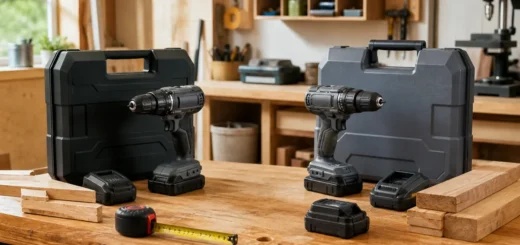
For occasional household repairs, an entry-level cordless drill-driver kit is often enough. For regular drilling in masonry, repeated large-hole boring, or hours of assembly work, a more capable tool can make the job faster and less tiring.
Compare the total cost of owning it
Tool prices can be misleading. A bare tool may look like a bargain until you add a battery and charger. On the other hand, if you already own compatible batteries, a bare tool may be the cheapest sensible upgrade. Compare packages on the same basis: tool, batteries, charger, case, and any accessories you would otherwise buy.
| Cost or benefit | What to check | When it matters |
|---|---|---|
| Upfront price | Compare complete kits, not bare-tool prices against kits | When you lack compatible batteries |
| Battery compatibility | Check whether your current batteries fit and provide enough capacity | When building within one battery platform |
| Time saved | Estimate minutes saved per job and jobs per year | For frequent work or paid jobs |
| Consumables and service | Check blade, bit, accessory, and repair costs | When the tool sees heavy use |
| Durability | Look for a warranty and parts or service availability | When downtime is costly |
Use a simple payback calculation: divide the upgrade’s extra cost by the money it saves per year. If a $100 upgrade saves you $25 a year in labor or replacement costs, the payback is four years. If you are unlikely to keep the tool that long, or the savings are only a guess, the upgrade is hard to justify on cost alone.
Put a value on time—but be realistic
Time savings matter most when they recur. Suppose a better saw saves five minutes on each cut, but you make only 20 cuts a year. That is about 100 minutes annually. For a homeowner, a $150 premium may not be worthwhile. For a contractor making those cuts every workday, the same improvement could pay back quickly.
Do not count all saved time as cash unless it really changes your work. A faster tool may reduce a long afternoon to a shorter one, but if the rest of the job still takes the same amount of time, the practical value may be convenience rather than income.
Look beyond headline power
More voltage or a higher advertised speed does not guarantee better results. Match the tool to the task: sustained performance, control, weight, vibration, and handling can matter more than peak numbers. A heavier tool may drive large fasteners faster but become tiring overhead. A compact tool may be easier to control but run out of capacity sooner under continuous heavy load.
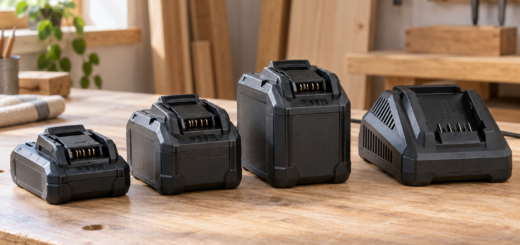
Battery capacity also involves a trade-off. A larger battery can extend runtime, but it adds weight and cost. For short jobs, a smaller battery may be more comfortable and perfectly adequate. For long sessions, a second battery can be more useful than buying a more powerful tool.
Consider what can go wrong
A cheap tool is a poor value if it fails in the middle of a job, but buying premium does not eliminate failure. Think through the likely weak points: a plastic adjustment lever that gets knocked around, a motor that overheats under continuous load, a battery that loses runtime, or a tool with no practical repair support. Check warranty length, exclusions, and how claims are handled; a warranty is useful only if the service process works for you.
For occasional use, a failure may mean borrowing a tool or finishing the next day. For paid work, downtime can cost more than the tool itself. That is a stronger case for a durable professional-grade option—or for keeping a backup—than a vague promise of higher quality.
If you use a saw regularly, compare the cost and availability of blades as well as the tool. A good circular saw blade suited to your material can improve cut quality more than an expensive saw upgrade. Likewise, a compatible battery or sharp bit may fix the problem you are blaming on the tool.
Separate brand value from platform value
A brand premium can buy a better service network, longer parts availability, tighter quality control, or compatibility with tools you already own. Those benefits are worth considering, but brand reputation alone does not prove that a particular tool is better for your job. Compare warranties, reviews that describe similar workloads, and the cost of adding batteries or chargers.
If you already own several batteries from one platform, staying with it can save real money and reduce clutter. But do not buy into a platform just because the first tool is discounted. Price out the next two or three tools you might realistically add. A low-cost starter kit can become expensive if replacement batteries and bare tools cost much more than competing options.
Use timing without letting the deal decide
Seasonal sales can make an upgrade attractive, especially around major holiday promotions or spring home-improvement periods. Compare the sale price with the tool’s recent normal price if you can, and check whether the discount is on the kit you need. A bundle with accessories you will not use is not automatically a better deal.
Set a maximum price based on your payback calculation before shopping. If the upgrade does not solve a real problem at that price, wait. Buying the right cheaper tool now—or renting a specialized tool for one demanding project—can be better value than purchasing extra capability that stays on the shelf.