Best 5-Inch Corded Orbital Sander With Dust Collection
What's inside
- Top Picks at a Glance
- Quick Comparison Table
- 1. DEWALT DWE6423K: Best Overall for Variable-Speed Control
- 2. Bosch ROS20VSC: Best Premium Dust Handling
- 3. DEWALT DWE6421K: Best Value for a Capable Workshop Sander
- 4. CRAFTSMAN CMEW231: Best Familiar-Brand Middle Ground
- 5. SKIL SR211601: Best Budget Dust Box
- 6. BLACK+DECKER BDERO100: Best for Occasional Use
- Also Consider
- How We Chose
- Buying Guide
- Common Mistakes to Avoid
- Frequently Asked Questions
- Which One Should You Buy?
- Sources
As an Amazon Associate I earn from qualifying purchases. This post may contain affiliate links at no extra cost to you.
If you want the best 5-inch corded orbital sander with dust collection, start with the DEWALT DWE6423K for variable-speed control and the Bosch ROS20VSC for its microfilter dust system. For a lower budget, the SKIL SR211601 with its cyclonic dust box is the simplest way to get a catch-it-at-the-source design without paying for a premium brand. Every sander in this guide is a corded 5-inch model, so you never fight a battery that fades halfway through a tabletop.
Dust collection is the feature that separates a sander you enjoy using from one you dread. Fine sanding dust hangs in the air, clogs sandpaper, and settles on a fresh finish. A good onboard canister or bag keeps a meaningful share of that dust out of your lungs and off your workpiece, and a vacuum port, where a model offers one, does better still. No onboard system catches everything, so wear a dust mask or respirator that matches the material and the maker’s guidance, and treat any dust-collection claim as a reduction, not an elimination.
Because “orbital sander” is how most shoppers search, you will see that term here. Almost every 5-inch round-pad sander sold today is technically a random orbital sander, which spins the pad and oscillates it at the same time to avoid the swirl marks a plain spinning disc leaves. If you were picturing a quarter-sheet or palm sander with a square pad, that is a different tool, and the Also Consider section points to one detail-sander option for tight corners.
As an Amazon Associate we earn from qualifying purchases at no extra cost to you.



Our Top Picks



Top Picks at a Glance
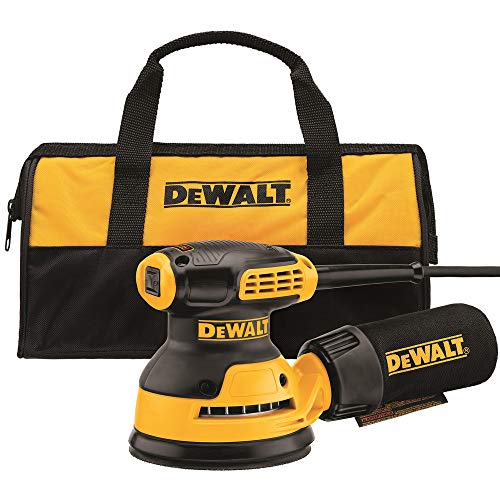
- Best Overall: DEWALT DWE6423K. Variable speed, 5-inch pad, corded power, sold as a kit.
- Best Premium Dust Handling: Bosch ROS20VSC. Variable speed with a microfilter listed for dust control.
- Best Value: DEWALT DWE6421K. 3 amp motor and 12,000 OPM from a trusted brand name.
- Best Budget Dust Box: SKIL SR211601. Cyclonic dust box and starter sandpaper in the box.
- Best for Occasional Use: BLACK+DECKER BDERO100. 12,000 OPM with a dust bag included.
- Best Familiar-Brand Middle Ground: CRAFTSMAN CMEW231. 3 amp, 12,000 OPM, corded.
Quick Comparison Table
| Product | Best for | Key specs (per listing) | Watch for | Price tier |
|---|---|---|---|---|
| DEWALT DWE6423K | Control across wood, paint and finish | 5 in, variable speed, corded, kit | Motor amperage and OPM range not listed in the title | Premium |
| Bosch ROS20VSC | Cleanest-air priority | 5 in, 2.5 amp, variable speed, microfilter | Lower amp rating than the 3 amp models | Premium |
| DEWALT DWE6421K | All-round workshop use | 5 in, 3 amp, 12,000 OPM, corded, kit | Speed control not listed | Mid-range |
| CRAFTSMAN CMEW231 | Homeowner projects | 5 in, 3 amp, 12,000 OPM, corded | Dust system details not shown in the title | Mid-range |
| SKIL SR211601 | Budget starter with a dust box | 5 in, cyclonic dust box, 3 sanding sheets | Motor rating not shown in the title | Budget |
| BLACK+DECKER BDERO100 | Light, occasional sanding | 5 in, 2.0 amp, 12,000 OPM, dust bag included | Smallest motor of the group | Budget |
1. DEWALT DWE6423K: Best Overall for Variable-Speed Control
- 5-inch random orbit sander, corded electric
- Variable speed, per the listing
- Sold as a kit, so it ships with extras beyond the bare tool
- Dust collection: onboard system not detailed in the listing title, so check the box contents before buying
Best for: woodworkers who move between bare wood, primer and finish coats. Skip if: you only sand a few small pieces a year and a fixed-speed sander would do.
Variable speed is the feature that earns this model the top spot. A lower speed protects a clear coat or a soft pine surface from heat and gouging, while a higher speed removes material faster on bare hardwood. On a fixed-speed sander you control the result only with pressure and technique, which is harder for new users. Having a dial lets you slow down near edges and when you switch from 80 to 220 grit.
The kit format matters for dust collection. Kits in this family typically bundle a carrying case and accessories, but the listing does not spell out exactly what is inside, so read the retailer’s contents list before you buy and confirm that a dust bag or canister is included and whether a vacuum adapter is part of the package. Specifics such as motor amperage and the OPM range are not shown in the shopping title, so treat those as “not listed” until you check the maker’s spec sheet.
Pros: variable speed; recognised brand with wide parts and pad availability; corded power with no runtime limit; kit packaging. Cons: costs more than entry-level sanders; full specs need checking on the maker’s page; dust-collection details are not in the title.
2. Bosch ROS20VSC: Best Premium Dust Handling
- 5-inch random orbital palm sander, corded
- 2.5 amp motor, per the listing
- Variable speed, per the listing
- Microfilter named in the listing as the dust system
Best for: anyone who sands indoors, in a garage attached to the house, or in a small shop without a dust extractor. Skip if: you want the highest amperage for aggressive stock removal.
The reason this sander appears in a dust-collection guide is the microfilter called out in its listing. A filter that traps fine particles keeps more of the powder out of the air as the canister fills and the air flows through it. Dust-collection quality depends on how well the pad holes line up with your sandpaper and how full the canister is, so a clean filter is a habit, not a one-time feature. Tap out the canister before it reaches about half full, because a packed filter loses airflow and the sander starts to behave as if it has no collection at all.
At 2.5 amps it sits below the 3 amp DEWALT and CRAFTSMAN models on paper. Amperage matters most when you push the sander hard on rough stock. For finish sanding, furniture, cabinet doors and trim, the control from a variable-speed dial is usually worth more than the extra current. Bosch’s exact OPM range is not shown in the shopping title, so check the maker’s sheet if you need the number.
Pros: microfilter dust system; variable speed; strong choice for indoor work; well-known tool brand. Cons: premium price tier; 2.5 amp rating is lower than some rivals; pad details are cut off in the listing text.
3. DEWALT DWE6421K: Best Value for a Capable Workshop Sander
- 5-inch orbital sander kit, corded
- 3 amp motor
- 12,000 orbits per minute
- Kit packaging, per the listing
Best for: general woodworking where you want strong motor power at a mid-range price. Skip if: you need to dial the speed down for delicate finishes.
Twelve thousand OPM equals 200 orbits every second. That fast motion is what lets a 5-inch sander leave a uniform scratch pattern, provided you keep the pad flat and let the tool do the work. A 3 amp motor helps the pad hold its speed under load, which means fewer stalls when you lean on it. For sanding a workbench top, a deck rail, or the face frames of a cabinet, that headroom is useful.
The listing does not state a variable-speed dial for this model, so assume a single operating speed unless the maker’s page says otherwise. That makes it a great fit for rough and medium grits and a slightly less forgiving fit for finish coats. Dust collection details are likewise not in the title; confirm the dust bag or canister inclusion before purchase, and if you have a shop vacuum, look for an adapter or a hose-compatible port in the accessory list.
Pros: 3 amp motor; 12,000 OPM; kit; well-supported brand. Cons: variable speed not listed; dust system not described in the title; weight not listed.
4. CRAFTSMAN CMEW231: Best Familiar-Brand Middle Ground
- 5-inch orbital sander, corded
- 3 amp motor
- 12,000 OPM
- Dust collection details: not shown in the listing title
Best for: homeowners who want a dependable general sander without overspending. Skip if: dust capture is your number-one concern and you want a named microfilter or cyclonic box.
On paper this model shares its core numbers with the DEWALT DWE6421K: 3 amps and 12,000 OPM. That makes it a straightforward comparison on value. If both are priced the same where you shop, pick the one with the better dust bag or the better return policy. The difference may come down to the pad, the switch feel, and the comfort of the housing in your hand, none of which the listing describes in enough detail to rank.
Because the title does not mention a dust bag or canister, plan on checking the box. Many sanders at this level ship with a cloth or plastic collection bag that clips onto a dust port, and a bag that does not seal well will leak fine dust at the connection. If you plan to connect a shop vacuum, measure the port diameter before you buy a hose adapter, as a loose fit undermines the whole point of the vacuum.
Pros: 3 amp motor; 12,000 OPM; mid-range tier; familiar brand. Cons: dust system not described in the title; variable speed not listed; fewer details available than on the Bosch or SKIL models.
5. SKIL SR211601: Best Budget Dust Box
- 5-inch random orbital sander, corded
- Cyclonic dust box, named in the listing
- Includes 3 sanding sheets, per the listing
- Motor rating and speed range: not listed in the title
Best for: first-time buyers and weekend projects. Skip if: you sand for hours at a stretch and want a heavier-duty motor.
A cyclonic dust box spins the airflow so heavier particles drop into a bin rather than packing into a fabric filter. In everyday terms, that can mean the box stays usable longer between empties than a plain bag, though how well it works depends on the dust: fine drywall and paint dust can still pass through. Treat it as a first line of defence, and still wear a mask.
The three included sheets are only a starter set, and sheets are the consumable you will replace most often. Buy a pack of hook-and-loop discs in 80, 120 and 220 grit and check that the hole pattern matches the pad. Holes that do not align with the pad’s openings block airflow and make even a good dust box perform poorly. Also keep in mind that budget sanders often have simpler pads, so replace a worn hook-and-loop pad when sheets stop sticking rather than fighting with them.
Pros: cyclonic dust box; budget tier; starter sheets included; easy first sander. Cons: motor rating not shown in the title; less suited to long daily use; variable speed not listed.
6. BLACK+DECKER BDERO100: Best for Occasional Use
- 5-inch orbital sander, corded
- 2.0 amp motor
- 12,000 OPM
- One sheet and a dust bag included
Best for: small household jobs such as refreshing a chair, a shelf or a picture frame. Skip if: you plan to refinish furniture regularly or sand large surfaces.
At 2.0 amps this has the smallest motor of the six, and the listing says it ships with a single sandpaper sheet and a dust bag. That is enough to try the tool, but you will want extra discs right away. The 12,000 OPM figure matches the pricier models, so the pad motion is similar; the difference is how well the motor holds speed under pressure. A lighter touch and a finer grit make the most of a smaller motor.
The dust bag is the main collection method here. Empty it often. Bags can also clog from the inside as fine particles embed in the cloth, so tap it out and, if the maker allows, brush the fabric clean. If you only sand a handful of times a year, this is the tool that keeps the cost lowest while still giving you a collection path.
Pros: budget tier; dust bag included; 12,000 OPM; simple to use. Cons: smallest motor; one sheet only; not built for heavy stock removal.
Also Consider
DEKOPRO 5-inch Random Orbital Sander
The listing mentions a dust box and six speed settings. It sits at the low end of the market, so it suits very occasional work. Specs such as amperage and the OPM range are not listed in the title, so treat it as a low-cost experiment rather than a long-term shop tool.
HYCHIKA 5-inch Random Orbital Sander
This one lists 13,000 RPM, six variable speeds and a bundle of 12 sandpapers. The sandpaper bundle is attractive for a first purchase. As with other budget names, confirm the dust collection method before you order.
SKIL SR232 Detail Sander
This is a corded multi-function detail sander with a micro-filter dust box, three extra attachments and 12 sanding sheets. It is not a 5-inch round-pad sander, so choose it only if tight corners and trim are your main work.
DEWALT DCW210B (Cordless, Tool Only)
The listing describes a 20V MAX orbital sander with a brushless motor and dust collection. It is cordless and sold as a tool only, so it needs a battery and charger from the same platform. Consider it if cord management bothers you and you already own the batteries.
How We Chose
This guide is research-based. We did not personally use these products. We started from the corded 5-inch sanders that appear in the product store for this site, then compared their listing details: pad size, motor rating, OPM, speed control and the dust system named in each title. We then cross-checked the brand names against manufacturer product pages and well-known woodworking publications for general guidance on dust collection and sanding technique.
Where a spec is not shown in the listing, we wrote “not listed” instead of guessing. We also limited the main picks to two models per brand. Prices are described only as tiers because street prices move, and we avoid quoting numbers we cannot keep current. Picks are ordered by how well the documented features match the goal of cleaner sanding, not by any lab measurement.
Buying Guide
Choose the dust system before the motor
There are three common collection methods: a cloth or plastic bag, a hard canister with a filter, and a cyclonic box. Bags are cheap and light but clog quickly. Canisters with filters usually capture finer dust. Cyclonic boxes separate heavier particles but still rely on a filter for the finest material. The best result of all is a port that connects to a shop vacuum, since a vacuum moves far more air than any sander fan. If you own a shop vacuum, confirm the sander’s port diameter and buy the right adapter.
Match amperage to the work
Amperage tells you how much current the motor can draw. For finish work, 2 to 2.5 amps is usually enough. For frequent stock removal, 3 amps gives more headroom. A higher number alone does not guarantee a better tool, but when two sanders cost the same, the extra current helps on rough grits.
Variable speed is worth it for finishing
If you sand painted trim, veneer or a film finish, a lower speed gives you time to see what you are doing. If every project is rough lumber, a single-speed unit is fine. Among the six picks, the DEWALT DWE6423K and the Bosch ROS20VSC list variable speed in their titles.
Check the pad and the sheets
A 5-inch pad uses hook-and-loop discs. Match the hole pattern on the disc to the holes in the pad, or the dust has nowhere to go. A worn pad is a quiet source of poor performance, so replace it when discs slide or curl at the edge.
A worked example
A 5-inch pad has a face area of roughly 19.6 square inches (pi times 2.5 inches squared). A tabletop that is 36 by 72 inches covers 2,592 square inches, which is about 132 pad-sized patches. If you plan to move across the whole top three times per grit across three grits, that is a lot of passes, so you will empty a small canister several times. This is simple arithmetic, not a benchmark: it shows why a bigger canister or a vacuum connection saves time on large jobs, and why a bag that fills quickly becomes irritating.
Quick decision guide
| Your situation | Pick | Reason |
|---|---|---|
| Mixed wood and finish work | DEWALT DWE6423K | Variable speed |
| Sanding indoors, filter matters most | Bosch ROS20VSC | Microfilter listed |
| Rough lumber, frequent use | DEWALT DWE6421K | 3 amp, 12,000 OPM |
| Tight budget, want a dust box | SKIL SR211601 | Cyclonic dust box |
| A few jobs a year | BLACK+DECKER BDERO100 | Low cost, bag included |
Common Mistakes to Avoid
- Pressing hard. Extra pressure slows the pad and can create swirl marks; let the weight of the sander do the work.
- Skipping grits. Jumping from 60 to 220 leaves deep scratches that the finer disc cannot remove.
- Letting the canister overfill. A full canister cuts airflow, which means more dust in the air.
- Ignoring a respirator. Onboard collection reduces dust but does not remove it all.
- Using discs with mismatched holes. Dust cannot escape through blocked openings.
Frequently Asked Questions
Is an orbital sander the same as a random orbital sander?
In most shopping listings, yes. A true orbital sander moves in small circles with a square pad, while a random orbital sander spins and orbits at once. The 5-inch round-pad models in this guide are random orbital designs sold under the broader “orbital sander” label.
How good is built-in dust collection?
It reduces the amount of dust that reaches the air but does not remove all of it. Connecting the sander to a shop vacuum generally captures more, and a respirator is still wise for long sessions.
Should I buy corded or cordless?
Corded models give steady power without battery limits and tend to cost less. Cordless models offer freedom to move but need a battery and charger, which adds to the total outlay.
What does OPM mean?
OPM stands for orbits per minute. A rating of 12,000 OPM means the pad completes 12,000 small orbits every minute, or 200 per second, which is what produces a fine, uniform scratch pattern.
How often should I empty the dust canister?
Empty it when it is about half full. A packed canister or filter reduces airflow and makes collection much weaker.
Can I use a shop vacuum with these sanders?
Many sanders accept a vacuum hose through an adapter, but the listings here do not confirm adapters for every model. Check the maker’s accessory list and measure the port before buying a hose fitting.
Which grit should I start with?
Start at 80 grit for rough wood, move to 120, and finish with 180 or 220 before applying a clear finish. Sanding through each step in order gives the smoothest result.
Which One Should You Buy?
Choose the DEWALT DWE6423K if you want control and plan to use the sander often. Choose the Bosch ROS20VSC if dust control and indoor work are the priority. Pick the DEWALT DWE6421K or the CRAFTSMAN CMEW231 for value with a 3 amp motor, the SKIL SR211601 for a budget cyclonic dust box, and the BLACK+DECKER BDERO100 for light, occasional jobs. Whichever you choose, pair it with a vacuum connection where possible and a proper dust mask.
Sources
- DEWALT product pages for the DWE6423K and DWE6421K
- Bosch Power Tools product page for the ROS20VSC
- CRAFTSMAN product page for the CMEW231
- SKIL product pages for the SR211601 and SR232
- BLACK+DECKER product page for the BDERO100
- Manufacturer safety manuals for sanding and dust-collection guidance
Last updated: October 2026