Best Value Cordless Reciprocating Saw Kit for Home Demolition
What's inside
As an Amazon Associate I earn from qualifying purchases. This post may contain affiliate links at no extra cost to you.
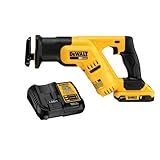
For home demolition, the best-value cordless reciprocating saw kit is rarely the cheapest saw on the shelf. A useful kit needs enough battery capacity for repeated cuts, a charger that does not take all day, and a saw that can survive nails, screws, and awkward angles. The right choice depends less on maximum cutting speed than on how much material you expect to remove and whether you already own batteries in that brand’s system.
As an Amazon Associate we earn from qualifying purchases at no extra cost to you.


What makes a good demolition kit
A basic cordless reciprocating saw can cut wood, plastic pipe, drywall, and light metal. Demolition work is harder because the blade often hits hidden nails or changes direction inside the cut. That puts more stress on the gearbox and battery than trimming branches or cutting clean lumber.
Look for a kit with a brushless motor if the price difference is reasonable. Brushless saws usually run longer per charge and handle sustained work better, though a brushed saw can be perfectly adequate for a one-room project. A variable-speed trigger, tool-free blade clamp, adjustable shoe, and orbital action are more useful than a high no-load speed printed on the box.
Orbital action makes aggressive wood cuts faster, but it also produces more vibration and is unsuitable for most metal cutting. A saw with orbital action that can be switched off is the most flexible option. A pivoting shoe helps keep the blade engaged when cutting flush to a stud or pipe.
Battery size and kit value
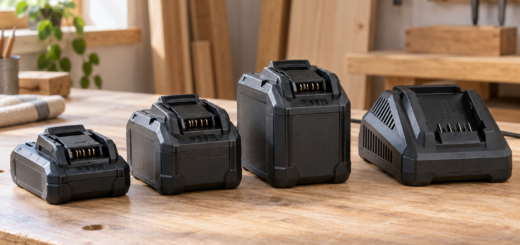
For demolition, avoid judging a kit by its advertised voltage alone. Most consumer cordless platforms sold as 18V and 20V are effectively in the same class; the important figure is watt-hours. A 2.0Ah battery on an 18V platform stores roughly 36 watt-hours, while a 5.0Ah battery stores about 90 watt-hours.
| Kit configuration | Best use | Main limitation | Value judgment |
|---|---|---|---|
| Tool only | Owners of compatible batteries | Expensive if you need a battery and charger | Best only when already invested |
| One 2.0Ah battery | Occasional cuts and small repairs | Short runtime and more charging pauses | Fine for light demolition |
| One 4.0Ah or 5.0Ah battery | Room-by-room demolition | Heavier saw in hand | Usually the best balance |
| Two batteries and rapid charger | Large renovation projects | Higher upfront cost | Worth it if the batteries will power other tools |
A 2.0Ah pack may be enough to dismantle a small vanity, cut a few studs, and remove some copper pipe. It is a poor choice for tearing out a deck or cutting dozens of nail-embedded wall studs. The saw will not necessarily fail, but the battery may drain quickly, heat up, and need a long cooldown before charging.
For most homeowners starting a cordless platform, a brushless cordless reciprocating saw kit with a 5.0Ah battery is the sensible target. It costs more than a compact kit, but the battery is useful in drills, circular saws, lights, and blowers from the same system.
Budget versus premium brands
Budget brands are attractive when you need one tool for one project. Their saws can cut quickly through clean lumber, and a lower-priced kit often includes a battery and charger for less than a premium bare tool. The compromises usually appear in vibration, blade-clamp durability, trigger feel, and battery availability.
Mid-priced homeowner platforms generally offer the strongest value. They have enough power for drywall, framing lumber, PVC, and occasional nails, while batteries and replacement blades are easy to find. Premium professional platforms tend to have better balance, smoother control, stronger blade clamps, and a wider range of high-capacity batteries. Those improvements matter if you work overhead, use the saw every week, or expect to cut heavy material for hours.
Do not pay a premium merely for a larger claimed stroke rate. A long stroke can remove material faster, but it also increases vibration and blade breakage. A compact saw with a shorter stroke may be more comfortable for plumbing, cabinet removal, and cuts in confined spaces.
If you already own batteries, buying a tool-only cordless reciprocating saw is often the cheapest route. Confirm that the battery generation and voltage match. Some brands sell visually similar packs that are not electrically compatible.
Blades and the real demolition cost
The included blade set is usually a starter assortment, not a complete demolition solution. A coarse wood blade with roughly 5 to 8 teeth per inch is useful for studs and framing. A 10-tooth-per-inch blade is slower but leaves a cleaner cut. For nail-embedded lumber, use a dedicated demolition blade rated for wood with nails. For steel pipe, screws, and sheet metal, use a bi-metal metal-cutting blade with finer teeth.
Expect to spend around $15 to $35 on replacement blades during a serious project. Cheap blades can be fine for drywall and clean softwood, but they dull quickly when they meet hardened screws. Forcing a dull blade makes the motor work harder, increases heat, and encourages the operator to twist the saw. Twisting is a common cause of bent blades and damaged blade clamps.
Keep two or three blade types available rather than trying to make one general-purpose blade do everything. Blade cost is small compared with wasted battery time or a damaged saw.
When the cheaper option is good enough
Choose the cheaper kit if you are removing a bathroom vanity, cutting a few drywall sections, dismantling shelving, or trimming occasional branches. In these jobs, a brushed saw with a 2.0Ah battery may complete the work without meaningful trouble. Spend the savings on better blades and eye protection.
Step up to a brushless kit with at least a 4.0Ah battery for kitchen demolition, deck removal, repeated stud cuts, or lumber containing nails. The extra runtime and lower vibration are easier to appreciate after the first hour. If the saw will be shared by several household members, balance and trigger control can matter more than peak power.
Best times to buy
Cordless tool kits are commonly discounted around major holiday sales, spring renovation promotions, Father’s Day, and late November. The best value is often a battery promotion rather than a small discount on the saw itself. Look for a kit that includes a free high-capacity battery, second battery, or charger upgrade.
Compare the complete package price: saw, battery, charger, blades, and any required case. A cheap bare tool can become the expensive choice once a battery and charger are added. Also check whether the advertised battery is a small 1.5Ah or 2.0Ah pack. A discounted kit with a two-battery reciprocating saw kit can be a better buy than a newer saw with one undersized battery.
For occasional homeowners, buy into the battery platform with the best combination of charger availability, replacement battery pricing, and other tools you will actually use. For a single demolition job, rent a heavy-duty saw if the purchase price of a suitable kit exceeds your project budget. That is often better value than buying a weak kit, overheating it, and replacing it later.