Best Value Cordless Screwdriver Kit for Switch Plates and Small Fixtures
What's inside
As an Amazon Associate I earn from qualifying purchases. This post may contain affiliate links at no extra cost to you.
What the job actually needs
Replacing switch plates and installing small fixtures is light work, but it calls for control more than speed. A typical wall plate has one or two screws; overdriving them can crack the plate, strip the screw head, or damage the box. A cordless screwdriver with a modest speed, a comfortable grip, and a clutch is usually a better fit than a full-size drill-driver.
For this work, look for a tool that turns slowly enough to stop accurately, accepts common 1/4-inch hex bits, and has a clutch or another reliable way to limit torque. A light, compact body helps when working close to a wall. A built-in work light is useful in dim rooms, but it is not a substitute for checking that the circuit is off before removing a switch or fixture.
As an Amazon Associate we earn from qualifying purchases at no extra cost to you.


Best value: a clutch-equipped cordless screwdriver kit
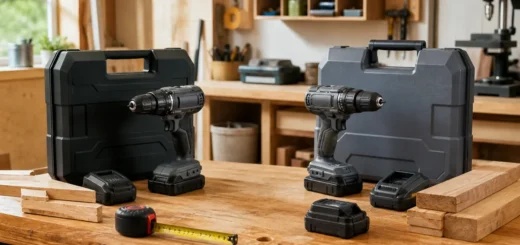
The best value for most homeowners is a basic cordless screwdriver kit with adjustable torque, a forward/reverse switch, and a small assortment of bits. Search for a cordless screwdriver kit with an adjustable clutch. You do not need a high-voltage drill or a large battery for wall plates and small cabinet or fixture screws.
Pay attention to what “kit” includes. A case and a few useful Phillips and flat bits are more valuable here than a large collection of obscure bits. Check whether the kit uses standard hex bits, which are easy to replace, and whether the battery is built in or removable. A built-in battery keeps the tool compact and can be perfectly adequate if you use it occasionally. A removable battery is easier to replace, but may add cost and bulk.
As a practical target, choose a tool with at least two speed settings or a trigger that is easy to feather, plus several clutch positions. The exact torque number matters less for this task than being able to start gently and stop before the screw bottoms out.
Cordless screwdriver, drill-driver, or manual driver?
| Option | Best for | Trade-off | Value verdict |
|---|---|---|---|
| Basic cordless screwdriver | Wall plates and occasional small screws | Less power and fewer features | Best if the job is limited and the price is low |
| Clutch-equipped screwdriver kit | Repeat household fixes and delicate fasteners | Costs more than the simplest option | Best balance of control and usefulness |
| Compact drill-driver | Small fixtures plus drilling and broader DIY jobs | Heavier and easier to overdrive screws | Worth it if you will use it beyond plates |
| Manual screwdriver | One or two plates, occasional adjustments | Slower; tiring across many screws | Cheapest and often entirely sufficient |
If you already own a drill-driver, do not buy another tool just for a few plates. Use its lowest speed and clutch setting, and finish the last turn by hand if the screw feels close to snug. If you have only a couple of plates to change, a well-fitting manual screwdriver may be the better purchase: it gives direct feedback and eliminates battery care.
Features worth paying for—and ones you can skip
A clutch is the most useful upgrade. It lets you set a limit so the tool slips rather than continuing to tighten once resistance rises. Start on a low setting, test on an accessible screw, and increase only if the screw will not seat. A clutch is not foolproof: a damaged screw, a crooked start, or a bit that does not fit can still cause trouble.
Useful extras include a magnetic bit holder, an ergonomic handle that rotates between pistol and straight positions, and a charge indicator. A compact case helps keep the correct bit with the tool. Variable speed is helpful when it responds smoothly at low pressure; a tool that jumps from stopped to fast is harder to control.
Do not pay much extra for a large battery, very high torque, or a long list of included bits if your main job is switch plates. These features make more sense for frequent furniture assembly or general home projects. A small 4V cordless screwdriver kit can handle light fastening; a compact 12V drill-driver kit is a more flexible purchase if you also expect to drill pilot holes or tackle larger household repairs.
Brand value and buying timing
For occasional use, compare the complete kit price, not just the tool. A low-priced screwdriver can be a poor deal if its bits are soft, its charger is proprietary, or replacement batteries are unavailable. On the other hand, paying for a premium battery platform is hard to justify if you will use one screwdriver twice a year. If you already own batteries from a tool brand, a bare tool from that same platform may be economical, provided it is actually designed for fine, low-torque work.
Prices move during major retail promotions, holiday sales, and seasonal home-improvement events. Compare the kit’s normal price and contents before treating a discount as a bargain. A kit with a removable battery may cost more upfront but offer a practical replacement path; a built-in-battery model may be cheaper and simpler for light duty. Avoid buying extra batteries unless you have another compatible tool or a real need for uninterrupted work.
How to avoid stripped screws and damaged plates
Before working on a switch or fixture, turn off the relevant breaker and verify the circuit is de-energized with an appropriate tester. A cordless screwdriver is not an electrical safety tool. For a simple cover plate, use a bit that matches the screw head exactly—often Phillips, but not always—and keep the bit straight. A loose-fitting bit can cam out and chew up the head.
Start at low speed and low clutch torque. Let the bit engage before pressing the trigger, then stop as soon as the plate is snug. Plastic plates can crack if tightened hard, and a screw that spins without tightening may be turning in a damaged box or stripped hole. Do not keep driving it; remove the screw and inspect the fit. If the fixture feels loose, crooked, or unsupported, the issue may be mounting hardware rather than insufficient screwdriver power.
For a screw that is already tight, resist using a more powerful setting to force it. Switch to a manual screwdriver for the final adjustment or removal, and stop if the head begins to deform. That small amount of patience costs less than replacing a plate, fastener, or damaged electrical box.