Best Affordable Tools for a Homeowner Who Rents Instead of Owns
What's inside
As an Amazon Associate I earn from qualifying purchases. This post may contain affiliate links at no extra cost to you.
Renting calls for a smaller, more selective tool kit than homeownership. You want enough to hang shelves, assemble furniture, tighten a loose handle and handle minor upkeep—not a garage full of gear for repairs your landlord should make. Start with a few versatile hand tools, then buy power tools only when a recurring job justifies them.
As an Amazon Associate we earn from qualifying purchases at no extra cost to you.



Start with the basics
A tape measure, utility knife, adjustable wrench, pliers, level and screwdriver set cover many routine jobs. A 16-foot tape is plenty for most rooms and furniture. A 6- to 10-inch adjustable wrench handles common nuts and plumbing fittings, though it can slip more easily than a correctly sized fixed wrench. Keep both Phillips and slotted screwdriver tips on hand; a multi-bit driver saves drawer space and usually costs less than a full set.
For small fixes, buy ordinary, replaceable tools rather than premium trade-grade versions. A basic 16-foot tape often costs about $5–$15, while a decent multi-bit screwdriver is commonly $8–$20. The cheapest tape can have a flimsy blade that folds when extended, and bargain screwdriver bits may wear quickly. For occasional household use, those drawbacks matter less than they would on a daily job site.
A claw hammer, combination pliers and a compact level round out the starter kit. A 16-ounce hammer is manageable for picture hooks and small assembly jobs; it is not the right tool for heavy demolition. A 9-inch torpedo level is easy to store and adequate for checking a shelf or frame. If you hang several shelves, a longer level gives a more reliable reading.
Buy for rental limits
Before drilling, check your lease and ask the landlord about restrictions. Some rentals prohibit holes beyond small picture nails, while others require written approval for wall mounts. Even a removable anchor can leave a patch that costs you a deposit. For lightweight frames, adhesive hooks may avoid drilling, but follow the weight rating and surface instructions: textured paint, dusty walls and humid bathrooms can cause them to release.
For allowed wall mounting, a stud finder and a drill are useful, but neither guarantees a safe hole. Stud finders can give false readings around pipes, wiring, foil-backed insulation and uneven plaster. Use them as a guide, avoid drilling near outlets or plumbing fixtures, and stop if you encounter unexpected resistance. In doubt, ask the landlord or a qualified professional rather than risk a hidden service line.
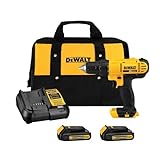
A corded drill is often the cheapest way to get reliable power, but the cord can be awkward in a small apartment. A basic cordless drill is more convenient for furniture and light-duty holes. A compact 12-volt kit is usually enough for screws and pilot holes in wood; drilling into masonry or driving many long fasteners calls for more power and the correct bit. Compare battery cost as well as tool price—a bare tool is a poor bargain if you do not already own compatible batteries.
What is worth buying?
For a renter who only assembles furniture once in a while, a hand screwdriver may be enough. If you regularly build flat-pack items or install approved fixtures, an entry-level drill-driver saves time. Buy a small set of common drill and driver bits too; using a worn or mismatched bit is a common cause of stripped screw heads. A budget cordless drill-driver kit can be good value when it includes a battery, charger and basic bits.
Do not buy a circular saw, table saw or large sander just in case. These tools take up space, create dust and are rarely needed for ordinary renter tasks. For one-off cutting, borrowing, renting or paying a shop to make a cut can cost less than buying and storing a tool. A compact hand saw is a cheaper choice for occasional small cuts, provided the material and task are suitable.
Quick value comparison
| Tool | Typical budget range | Good renter use | When the cheap option falls short |
|---|---|---|---|
| Multi-bit screwdriver | $8–$20 | Furniture assembly and small hardware | Soft bits wear or slip on tight screws |
| Adjustable wrench | $8–$20 | Occasional nuts and fittings | Jaw play can round a stubborn fastener |
| Basic cordless drill kit | $50–$120 | Repeated assembly and approved light drilling | Small batteries may drain quickly; included bits can be poor |
| Stud finder | $10–$35 | Locating likely framing behind drywall | Readings are unreliable on some walls and around obstructions |
Prices vary by sale, included accessories and battery platform, so treat these as rough US retail ranges rather than fixed quotes. A kit with a second battery can justify a higher price if you use the drill often; for a single shelf, it probably cannot.
Spend on consumables and safety
Bits, blades and anchors are wear items. A modest assortment of correctly sized screws and bits is more useful than a large bargain kit full of sizes you never use. Replace a driver bit when its tip is rounded; pressing harder often makes slipping and stripped screws worse. Match anchors to the wall material and load, and never assume a plastic drywall anchor can safely support a heavy mirror or television.
Wear safety glasses when drilling or cutting, and use hearing protection for loud power tools. A simple dust mask helps with ordinary cleanup, but do not sand unknown old paint: older coatings may contain lead. In a rental, report peeling or damaged paint to the landlord instead of disturbing it.
When to borrow and when to buy
Buy a tool when you expect to use it repeatedly, need it on short notice, and have somewhere safe to store it. Borrow or rent tools used once a year, especially bulky or high-cost equipment. A neighborhood tool library, friend or local rental shop may make a specialty job cheaper than ownership, though check rental minimums, deposits and return times first.
Seasonal sales can help with starter kits, particularly around major holiday promotions and spring home-improvement events. Compare the complete package, not a headline discount: battery, charger, warranty and return policy all count. For most renters, a sound basic hand-tool set plus one appropriately sized drill is better value than a large bundle of low-quality tools. If you want to round out that kit, a basic household hand-tool set is convenient, but check that it includes the individual tools you actually need.