Best Value Tools for Building a Simple Firewood Rack
What's inside
As an Amazon Associate I earn from qualifying purchases. This post may contain affiliate links at no extra cost to you.
A simple firewood rack does not need a premium tool collection. For a rack made from common lumber and screws, the useful buys are usually a reliable circular saw, a drill-driver, and a way to check cuts and layout. If you already own a drill, borrowing or renting a saw can be better value than buying one for a single small build.
As an Amazon Associate we earn from qualifying purchases at no extra cost to you.

What the job actually needs
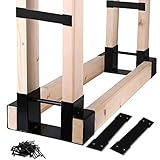
A basic rack can be built from 2-by-4 lumber, with a rectangular base, upright supports, and a few crosspieces. The work is mostly straight cuts, pilot holes, and driving screws. A handsaw can handle a few cuts, but repeated cuts through 2-by-4s take time and make consistency harder. A circular saw speeds that up; a miter saw is convenient, but usually unnecessary unless you already have one.
Before buying tools, decide how many cuts the design calls for and whether the rack will sit on soil, concrete, or a deck. Uneven ground can make a square frame look crooked, so a tape measure and a basic level are more useful than an expensive saw upgrade. Keep the rack slightly off the ground to reduce moisture exposure, and use lumber and fasteners suited to outdoor conditions.
Best-value tool kit
| Tool | Good-value choice | When to spend more | Common compromise |
|---|---|---|---|
| Circular saw | Basic corded 7¼-inch saw | Frequent use, better dust control, or more comfortable adjustment | Less refinement; check the fence and blade alignment |
| Drill-driver | Entry-level 18V or 20V kit with battery and charger | You expect regular projects or need a second battery | Lower torque and shorter runtime than higher-tier kits |
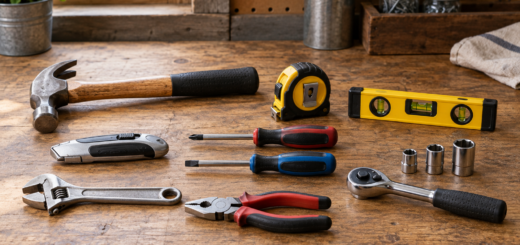
| Tape measure and square | Basic 16- or 25-foot tape and a framing square | Daily layout work or rough jobsite handling | Cheap tapes may retract poorly or have a loose hook |
| Clamps | Two basic bar clamps, or no purchase if a helper is available | You build alone or make repeated assemblies | Light clamps can flex under heavy pressure |
For a first rack, a corded 7¼-inch circular saw is often the strongest value. It avoids battery costs and has enough capacity for ordinary 2-by lumber. Choose one with a clear depth adjustment and a base plate that sits flat. A saw that cuts slightly out of square can be managed with careful layout, but a loose or awkward adjustment makes every cut more frustrating.
Corded or cordless saw?
For a rack built near an outlet, corded is the economical choice. You do not need to buy a battery platform, and runtime is not a concern. The trade-off is managing the cord: keep it behind the saw and away from the cut line. If you are building outside, far from power, or already own compatible batteries, a cordless saw may be worth the extra cost.
Do not buy a bare cordless saw without checking battery compatibility and price. A tool-only deal can look inexpensive until the battery and charger are added. For occasional use, a kit with one battery is enough; cutting a few dozen lumber pieces does not usually justify paying for a large battery pack. A cordless circular saw kit with battery and charger makes more sense if those batteries will serve other tools too.
Spend sensibly on the drill
A drill-driver is more useful than an impact driver for many occasional builders because it can drill pilot holes and drive screws with a clutch that helps prevent overdriving. A basic kit is fine for a small rack. Look for two speeds, a variable-speed trigger, and a clutch. If you already have a working drill, keep it and spend the money on exterior-rated screws instead.
Pre-drilling near the ends of 2-by-4s helps reduce splitting, especially with larger screws or dry lumber. Use a bit sized for the screw’s core, not its full outside diameter. For outdoor construction, choose coated or stainless fasteners appropriate to the lumber treatment; ordinary indoor screws can corrode. Do not assume a more powerful driver fixes poor screw placement or a split board.
Brand value without paying for a logo
For infrequent DIY work, compare the complete kit price, warranty terms, battery availability, and local service—not just the tool’s advertised price. Established tool lines can be worthwhile when you expect to add tools later, because shared batteries spread the initial cost. For one firewood rack, a lower-priced reputable brand or corded tool is often enough.
Very cheap tools can still be reasonable for a one-off build, but inspect the basics. On a saw, check that the base is flat and the guard moves freely. On a drill, check that the chuck grips a bit without obvious wobble. A low-cost tape is usable if its hook is secure and its markings are readable. These checks matter more than extra features such as lasers, app connectivity, or elaborate cases.
When to buy
Tool prices often fluctuate around major retail sales and seasonal promotions, but the calendar is less important than comparing the full price of the kit you need. Spring and early summer promotions may suit outdoor projects; late-year sales can be good for bundled batteries and chargers. Check whether a discount is on a bare tool, a kit, or a package with accessories you will not use.
Do not delay a simple build for a small advertised saving if the rack is needed before the woodpile arrives. On the other hand, if you have several months, watch prices and consider buying a drill kit that can support future projects. A drill-driver kit with battery and charger is easier to compare than a bare tool because it includes the parts that add up.
Avoid the purchases that do not pay back
A miter saw, table saw, and impact driver can all be useful, but none is essential for a straightforward rack. If you own a handsaw and only need a few accurate cuts, ask a lumberyard whether it offers cutting before buying a power saw. If you plan more projects, a circular saw gives broader use for the money than a dedicated cutting station.
Finally, budget for a sharp, appropriate blade and basic safety gear. A dull blade burns lumber and encourages pushing too hard; a suitable general-purpose blade makes cleaner cuts. Wear eye and hearing protection, support the offcut so it cannot bind the blade, and secure the lumber before cutting. Those inexpensive precautions prevent more trouble than paying extra for features you will not use.