Best Affordable Digital Level for Hanging Cabinets and Shelves
What's inside
As an Amazon Associate I earn from qualifying purchases. This post may contain affiliate links at no extra cost to you.
What matters for cabinets and shelves
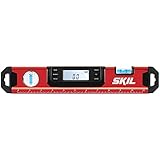
A digital level can make cabinet installation faster, but it does not make a crooked wall straight. For hanging cabinets and shelves, the useful features are a clear display, repeatable readings, and a body long enough to bridge the surface you are checking. A 24-inch level is a practical size for many wall cabinets and shelves; a shorter 10- to 12-inch model is easier to fit inside tight spaces but shows smaller alignment errors less reliably across a wide span.
Look for a level that reads in degrees and percent, has a hold function, and allows calibration. Audible alerts at 0 and 90 degrees are handy when the display is hard to see, though not essential. Accuracy is usually listed as a tolerance, such as ±0.1 degree. That sounds precise, but a small error adds up: over 24 inches, a 0.1-degree tilt is roughly 0.04 inch from end to end. For most home cabinets and shelves, a properly checked budget level is accurate enough.
As an Amazon Associate we earn from qualifying purchases at no extra cost to you.



Budget level versus a better-built one
Most shoppers do not need a professional-grade digital level for occasional kitchen work. Basic models often cost about $20 to $40; sturdier options with better displays, tougher housings, or stronger calibration documentation commonly fall around $40 to $80. Prices change, especially during tool sales, so compare features and return policies rather than treating a particular price as fixed.
| Type | Typical price | Best for | Trade-off |
|---|---|---|---|
| Basic digital level, 10–12 inches | $20–$35 | Short shelves, occasional DIY work | Harder to detect a small tilt across a long cabinet run |
| Digital level, around 24 inches | $30–$60 | Wall cabinets and longer shelves | Needs room to sit flat; build quality varies |
| Premium digital level, 24 inches or longer | $60–$100+ | Frequent use, jobsite handling, longer spans | Often unnecessary for a one-off installation |
For a single cabinet project, a well-reviewed 24-inch digital level is usually the best value. If you already own a reliable 24-inch spirit level, do not buy a digital one just for the display. The bubble level can do the job; digital readouts mainly make small differences easier to quantify.
Features worth paying for
Prioritize a display you can read from below or at an angle. A backlight helps in a dim kitchen, but check that it switches off automatically or can be turned off to save the battery. A magnet is useful on steel surfaces, though cabinets and wood shelves rarely provide a surface for it to grip. A V-shaped edge can help the tool sit on pipe, but it is not a major advantage for flat cabinet work.
Calibration matters more than a long list of modes. Before trusting a new level, put it on a firm surface, note the reading, rotate it 180 degrees in the same spot, and compare. The readings should be equal in magnitude and opposite in direction. If they are not, check the manual for a calibration procedure or return the tool. Repeat this check after a hard drop. A level can still power on and show numbers after its sensor has shifted.
Models with a measuring range limited to 0–90 degrees can be fine for leveling, but a level that shows small positive and negative angles around zero is easier to use for fine adjustment. Do not pay extra for Bluetooth or app features unless you have a specific workflow that uses them.
Use it without fighting the wall
Start by finding the cabinet’s required height and marking a level reference line. Check the wall at several points: corners, the planned cabinet edges, and any obvious high spots. If the wall bows, a level will tell you what is happening; it will not solve it. Cabinets may need shims behind their backs or at mounting points so they sit level without being twisted.
For a run of cabinets, level the first cabinet carefully, then clamp neighboring units together and check their top edges as you fasten them. Do not assume each cabinet will match the next. A small error repeated across four cabinets can leave the end noticeably out of level. Check both the top and the front face: a cabinet can be level along its length but lean toward or away from the wall.
For a shelf, check the bracket or cleat before setting the shelf on it. A shelf that looks level while resting on a flexible bracket may sag under books. If the shelf is long or heavily loaded, add appropriate support rather than relying on a more accurate level to prevent deflection. Use fasteners suited to the wall construction; a level cannot compensate for an anchor that pulls loose.
When a cheaper tool is enough
A basic digital level is a sensible buy if you will use it for a few cabinets, shelves, picture rails, or appliance checks each year. You can save money by skipping magnets, multiple angle units, and wireless features. The main risks with the very cheapest tools are a dim or slow display, poor calibration, and a body that rocks on an imperfect surface. Check reviews for reports of inconsistent readings, not just complaints about packaging.
If you install cabinets regularly, work in dusty conditions, or need to span wider runs, spend more on a durable 24-inch digital level with a protected display. A solid housing and dependable calibration are more useful than extra screen modes. A long level also makes it easier to spot a slope that a short tool may miss.
When to buy
Digital levels are not usually expensive enough to justify waiting months for a sale. Still, compare prices during spring home-improvement promotions, holiday tool sales, and retailer clearance events. If a model is discounted, confirm the length, accuracy specification, and included battery; a low price on a short model may not be a bargain for a cabinet run. Also check whether the seller accepts returns, since calibration problems are easiest to identify before installation.
For most homeowners, the best-value choice is a 24-inch digital level in the middle of the budget range, with a readable display, calibration instructions, and a straightforward return policy. Choose a shorter basic level only when storage or tight working space matters more than checking a longer span.