Best Value Portable Tile Saw for Occasional Bathroom Repairs
What's inside
As an Amazon Associate I earn from qualifying purchases. This post may contain affiliate links at no extra cost to you.
For a one-bathroom repair — replacing a cracked shower tile, patching a vanity backsplash, or re-tiling a small floor — you don’t need a contractor-grade saw. You need something that makes straight cuts without chipping, doesn’t flood your garage, and can sit on a shelf for 18 months until you need it again. That changes what “value” means.
The most expensive mistake for occasional use isn’t buying too cheap. It’s buying too much saw and then eating the depreciation and storage cost. A $600 rail saw with a 10-inch blade is wasted if you cut 40 linear feet of tile a year.
As an Amazon Associate we earn from qualifying purchases at no extra cost to you.


What “Occasional Use” Really Means for the Specs
Occasional bathroom work is almost always ceramic or porcelain, usually 4×4 to 12×24, and often less than 30 cuts per project. You are cutting straight lines and a few L-cuts around a valve or toilet flange — not 45-degree miters all day.
That means you don’t need high continuous duty cycle, a 2+ HP motor, or a 24-inch rip capacity. What you do need is:
A 7-inch blade platform. It’s the cheapest blade size to replace ($15-$30 for a decent diamond rim), it handles any standard bathroom tile up to about 1-1/4″ thick, and replacement parts are everywhere. 4-inch handheld tile saws look tempting at $60-$80, but they require a steady hand and chip more on porcelain.
At least 3,400 RPM with a direct-drive motor. Lower RPM saws bog down on dense porcelain and cause the edge to blow out.
A sliding table or a stable overhead rail. Fixed-table “tile cutters” where you push the tile through by hand are fine for soft ceramic but wander on large-format porcelain. Wobble in the tray is the number one cause of crooked cuts on budget saws.
Water containment that actually works. Occasional users work in driveways, garages, or even bathrooms. A saw that sprays mist everywhere will not get used a second time.
The Two Categories That Actually Make Sense
For value on this job, there are only two categories worth considering. Everything else is either too flimsy or too much saw.
1. Compact tabletop 7-inch wet saw ($89 – $149): This is the sweet spot for most homeowners. Think of a small plastic basin with a cutting table on top and a submersible pump that recirculates water. It weighs 25-35 lbs, stores vertically, and plugs into a standard 15A circuit. Brands in this bracket include the entry lines from Ryobi, Harbor Freight Chicago Electric, and Skil. Performance is almost identical — a 0.5 to 0.7 HP motor, 7-inch diamond blade included, and about 12-14 inches of rip capacity.
The trade-off is accuracy. The rip fence on these saws flexes 1/32″ to 1/16″ if you push hard, and the miter gauge is usually sloppy. You compensate by going slow, letting the blade do the work, and not forcing the tile. If you do that, they cut porcelain cleanly. If you push, they chip.
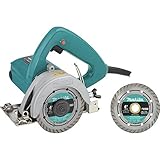
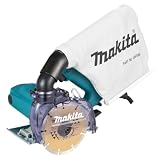
2. Portable rail/plunge style 7-inch saw ($180 – $280): A step up in cut quality and portability. The blade travels on a rail while the tile stays put, similar to a small miter saw. These cost more but give you a true straight edge without relying on a plastic sliding tray. They are also better at containing water because the cut happens over a small tray. If you plan to do a full bathroom floor (60+ sq ft) or you work with large-format 12×24 porcelain, this is where value shifts toward the rail design. A good portable rail tile saw will hold alignment longer and is easier to carry up stairs.
What you should skip for occasional repairs: 10-inch saws ($350+), saws without a water pump (bottle-fed or sponge-fed systems overheat the blade), and any cordless tile saw unless you already own the battery platform and only cut 2-3 tiles at a time. Cordless is convenient but you pay a 40% premium for less power.
Comparison: What Your Money Actually Buys
| Feature | Budget Tabletop 7″ ($89-$149) | Portable Rail 7″ ($180-$280) | Rental (7″-10″ pro saw) |
|---|---|---|---|
| Typical price to own / rent | $99 avg. + $25 blade | $220 avg. + $25 blade | $55-$75 per day, $180 per week |
| Best for | 1-2 bathroom patches, ceramic & light porcelain | Full bath floor/wall, dense porcelain, 12×24 tiles | One-time large job, no storage |
| Rip capacity | 12″-14″ | 18″-24″ (with plunge rail) | 20″-24″ |
| Water system | Submersible pump, small basin – splashes if overfilled | Captive tray, less overspray | Large basin, best containment |
| Common failure point | Tray wobble, fence flex, pump clogging | Rail alignment after transport, pump hose kink | N/A – but worn blades common |
| Storage footprint | ~24″ x 18″ x 10″, ~28 lbs | ~32″ x 14″ x 10″, ~30-38 lbs | None |
Where to Spend and Where to Save
The saw itself is only half the cost equation. Blades and failure modes decide whether your cheap saw stays cheap.
Spend on the blade, even on a cheap saw. The included blade on sub-$150 saws is usually a continuous-rim general purpose blade that cuts ceramic fine but chips porcelain and glazes over on hard tile after 100-150 linear feet. A $22-$28 aftermarket porcelain diamond blade with a thin rim cuts cleaner and keeps a budget saw from feeling like a bad saw. If you see sparking or need heavy pressure to advance, the blade is done.
Save on power and size. You don’t need a 1.5 HP motor for 3/8″ tile. Smaller motors actually stall more safely — they bog before they kick. That is preferable for a DIYer holding a small tile.
Watch these failure modes before they ruin tile:
Pump clogging: Fine tile dust settles in the basin and burns out the little 5W pump in 2-3 hours if you don’t change the water. Swap the water every 45-60 minutes of cutting and the pump lasts years. Keep the intake filter clear.
Tray play: Check the sliding table for side-to-side movement. More than 1/32″ of slop will show as a curved cut. Some users shim the rails with nylon tape; better to return the saw and exchange it if it’s loose out of the box.
Fence deflection: Don’t trust the scale printed on the fence. Make a test cut on a scrap piece and measure. On tabletop saws, clamp a straight piece of aluminum angle to the fence if you need repeatable 1/64″ accuracy.
If you go the tabletop route, look for a 7-inch tabletop tile saw with pump that includes a sliding table rather than a fixed top. The sliding table alone is worth $30 in cut quality.
When Renting Is the Better Value
Do the math on storage and frequency. If you will cut tile once in the next 3 years and you live in an apartment, renting wins. At $65/day, two days of rental is still cheaper than owning a $129 saw you have to store and then sell for $40 on Marketplace.
Rent when: Your job is more than 70 sq ft, you need large 45-degree miters, or you are cutting natural stone (marble, granite, travertine) thicker than 1/2″. Rental saws have heavier tables and better water flow for stone, and you avoid loading your home pump with stone slurry.
Buy when: You have at least two bathroom patches planned in the next year, you have garage storage, or you prefer to work at your own pace over a weekend. Tile jobs always take longer than expected, and rental clock pressure causes rushed cuts and mistakes.
A third option that is often the best value: buy the budget tabletop, use it, clean it thoroughly, and resell it for 50-60% of what you paid. Net cost ends up being $40-$60, which is less than a single rental.
Seasonal Buying Advice for Best Price
Tile saws are seasonal tools. Prices follow home improvement cycles, not tool innovation cycles.
The cheapest new prices run from late November through February. Black Friday to Presidents’ Day, home improvement retailers clear inventory — tabletop models that sell for $149 in May drop to $89-$109. Refurbished units also flood Amazon and eBay in January after holiday returns. That’s the best window to pick up a budget tile saw for home use to keep on hand.
The worst time to buy is March through June, when demand peaks. You’ll pay full MSRP and see fewer discounts on blades. If you must buy in season, check open-box deals at Home Depot and Lowe’s — rental fleet saws are often sold in September/October after summer rentals end, usually cleaned and with a new blade for 30% off.
Whatever you buy, run it for 10 minutes on scrap tile within the return window. If the motor smells hot, the tray binds, or water leaks from the basin seam, return it immediately. Budget saws have variable quality control, and the defect shows up in the first hour, not the tenth.
For most people doing occasional bathroom repairs, the honest answer is simple: get the cheapest 7-inch sliding-table wet saw you can find on sale for under $130, put a $25 porcelain blade on it, and change the water often. It will make cuts that are indistinguishable from a $300 saw on 90% of bathroom tile, and you won’t care if it sits in the corner until the next leak.