Best Affordable Benchtop Drill Press for Accurate DIY Holes
What's inside
As an Amazon Associate I earn from qualifying purchases. This post may contain affiliate links at no extra cost to you.
If you’re drilling hinge holes, dowel joints, or steel brackets with a hand drill, you know the problem: even a degree off ruins the joint. A benchtop drill press fixes that, but the affordable ones vary wildly in actual accuracy. The good news is you don’t need to spend $500 to get clean, perpendicular holes in wood and light metal. You just need to know which specs matter and which cheap corners you can live with.
As an Amazon Associate we earn from qualifying purchases at no extra cost to you.

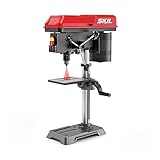
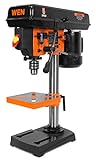
What “Affordable” Actually Gets You Right Now
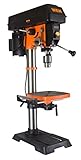
In 2024-2026, “affordable benchtop” means $120 to $300 street price. Under $120 you’ll find 8-inch, 2.0 to 2.5-amp presses with 5 speeds and a 1/2-inch chuck. From $150 to $220 you get the sweet spot: 10-inch, 3.2 to 3.5-amp motors, 5 to 12 speeds, and a cast-iron table. From $250 to $320 you step into 12-inch presses or variable-speed models with better chucks and less runout.
Prices fluctuate $20-$40 seasonally, but the tiers have held steady. The jump from $139 to $199 usually buys you more than the jump from $199 to $299, because that first step upgrades the two things cheap presses do worst: chuck quality and spindle support.
The 3 Specs That Decide Accuracy
Don’t shop by horsepower or laser guides. Shop by these:
1. Chuck runout. This is wobble at the bit. A good affordable press measures 0.003″ to 0.005″ runout at the chuck taper. A bad one is 0.008″ to 0.015″, which you’ll see as oversized holes, squealing forstner bits, and broken 1/16″ drill bits. Runout is the number one failure mode on sub-$150 presses. You can’t fix it with alignment; you fix it by replacing the chuck, which costs $30-$45 and often isn’t worth it on the cheapest chassis.
2. Quill and spindle play. Grab the chuck and push side-to-side. Any click means the quill is loose in the housing or the bearings are undersized. On a 2-inch quill travel, even 0.004″ of side play translates to a visibly angled hole in 3/4″ hardwood. Look for a quill diameter of at least 1.5″ and a housing that doesn’t flex when you lock the quill. This is where 8-inch presses suffer most.
3. Speed range, not speed count. For accurate holes you need the right RPM, not more speeds. Wood with forstner bits wants 500-1,200 RPM. Steel with twist bits wants 250-600 RPM. A 5-speed press that goes 620-3,100 RPM will burn bits in steel and blow out plywood. A press that goes down to 300-500 RPM on the low end is far more useful for DIY than one with 12 speeds that bottom out at 600 RPM. Belt-change is fine; variable speed is convenient but adds $80-$100 and another failure point at this price.
Table flatness and fence rigidity matter too, but you can work around a mediocre table with a drill press vise or scrap plywood sub-table. You can’t work around runout.
Budget Picks Compared: What to Expect by Size and Price
Most affordable presses fall into three clear groups. Here’s how they actually compare in the shop, not just on the spec sheet:
| Category | Swing | Typical Motor | Speed Range | Typical Runout | Street Price | Best For |
|---|---|---|---|---|---|---|
| Light 8-Inch | 8″ | 2.3 – 2.5A | 620 – 3,100 RPM (5 speeds) | 0.007″ – 0.015″ | $89 – $139 | Craft wood, plastic, very light aluminum |
| Value 10-Inch | 10″ | 3.2 – 3.5A | 340 – 3,000 RPM (5-6 speeds) | 0.003″ – 0.007″ | $149 – $219 | General DIY: dowels, mortising, steel to 1/4″ |
| Heavy 10/12-Inch | 10″ – 12″ | 4.5 – 6.5A | 250 – 3,100 RPM (12 speeds or variable) | 0.002″ – 0.005″ | $249 – $329 | Repeatable accuracy, forstner bits over 1-1/2″, thicker steel |
The 10-inch value class is the most accurate per dollar for most people. You get a larger cast table (typically 8″ x 8″ vs. 6″ x 6″ on 8-inch models), longer 2-1/2″ to 3″ quill travel, and a chuck that will actually hold 0.005″ or better if you clean the taper before installing. The light 8-inch presses save space but give up rigidity; the head flexes under hand pressure, and the short column makes it hard to drill the center of a 12-inch board.
When the Cheapest 8-Inch Press Is Actually Fine
Buy the $99-$129 press only if all three are true: you drill wood and plastic only, you use bits under 1″ diameter, and you don’t need depth accuracy better than 1/64″. For hanging shelves, drilling pen blanks, or making jigs, it’s adequate and far better than a hand drill in a wobbly stand.
Skip it if you plan to drill steel over 1/8″, use forstner bits over 1″, or drill repeated dowel holes for furniture. In those cases the high minimum speed (620 RPM) will overheat the bit, and the runout will make 1/4″ dowel holes sloppy. You’ll end up buying twice. A used 10-inch press for $120 on marketplace is a better value than a new 8-inch press at the same price, provided the bearings are quiet and the chuck isn’t rusted.
Brand Value: Where Your Money Goes
At the affordable end, WEN, Central Machinery (Harbor Freight), Craftsman, and Bucktool dominate under $300. The differences are smaller than marketing suggests, because most use similar Chinese-made heads and motors.
WEN and Bucktool tend to put money into the chuck and publish real runout numbers; their 10-inch models consistently test around 0.004″ out of the box, and replacement parts are easy to find. Central Machinery is usually $20-$40 cheaper for the same swing, but you trade that for a noisier spindle and higher odds of needing to reseat or replace the chuck. If you live near a Harbor Freight, the easy return policy offsets that risk. Craftsman sits in the middle on price but often charges more for the same 5-speed head you get elsewhere.
Don’t pay extra for a built-in laser or LED work light. Lasers on affordable presses are almost never aligned to the true spindle center and drift after a few weeks. A $15 aftermarket light and a center punch are more accurate. Do pay attention to warranty length and table size: a one-year longer warranty or a 30% larger table is worth $20.
If you want to see current street prices side-by-side, browsing a recent affordable benchtop drill press search will show you where each brand lands this week. Sort by price and check the low-RPM spec in the listing photos, not just the title.
Seasonal Buying Advice: When to Wait and When to Buy
Benchtop drill presses are seasonal tools. The best discounts follow a pattern:
Father’s Day to July 4th (June): The deepest cuts on 10-inch and 12-inch models. Expect $30-$50 off $199-$299 presses from big box stores and Amazon. This is the best time to buy the value 10-inch tier.
Black Friday / Cyber Monday: Good for bundles (press + vise or press + bits), but base prices are often only $10-$20 lower than June. Watch for inflated list prices.
January-February: Harbor Freight and similar value brands clear inventory. Central Machinery 10-inch and 12-inch presses often drop $25-$40 with coupons. If you missed June, this is your second window.
Avoid early spring (March-April): Prices peak when DIY demand rises. If you need one then, look for open-box or refurbished units rather than paying full retail.
If you can wait, set a price alert at $179 for a 10-inch 5-speed and $259 for a 12-inch variable speed. When those hit, you are buying at the true value floor, not a fake sale.
Setup Tips That Beat Spending More
An affordable press can drill as accurately as a $500 floor model if you set it up right. Do this before you judge accuracy:
1. Clean the spindle taper and chuck taper with acetone and seat the chuck with a firm tap from a rubber mallet. Oil or grit here is the most common cause of runout complaints.
2. Check runout with a test indicator or by spinning a 1/4″ steel rod and watching the tip. If it’s over 0.006″, reseat the chuck first, then warranty it.
3. Build a flat sub-table from 3/4″ MDF and clamp it to the iron table. It gives you a larger, flatter reference and a replaceable surface for tearout. Add a simple fence and stop block for repeatable holes.
4. Slow down for steel. Use cutting oil and 500 RPM or less. If your press won’t go that low, you will burn bits and lose accuracy no matter how rigid it is.
For woodworking accuracy, pair the press with a decent WEN benchtop drill press or any value 10-inch model that hits that 300-500 RPM low end, then spend the money you saved on quality brad-point and forstner bits. A sharp $18 forstner in a $179 press will outperform a dull premium bit in a $350 press every time.