Echo vs Ryobi Chainsaws: Comparing Entry-Level Price and Maintenance Value
What's inside
As an Amazon Associate I earn from qualifying purchases. This post may contain affiliate links at no extra cost to you.
Price and positioning
Echo and Ryobi serve different entry-level buyers, even when their chainsaws appear in the same shopping search. Echo is primarily a gas-powered outdoor-equipment brand sold through dealers and tool retailers. Its homeowner saws usually cost more up front, but they are built around serviceable engines, replaceable parts, and regular firewood or property-maintenance use.
Ryobi competes aggressively on initial price, especially with cordless chainsaws. Its battery tools are aimed at homeowners who already use the company’s 18V or 40V battery platforms. A bare tool can look inexpensive, but the battery and charger can add $80 to $200 or more. If you already own compatible batteries, Ryobi’s effective cost is much lower.
As an Amazon Associate we earn from qualifying purchases at no extra cost to you.
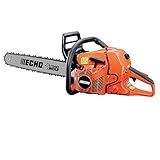


As a rough buying range, an entry-level gas Echo commonly lands around $200 to $350, while a Ryobi cordless bare tool may be roughly $100 to $250. A complete Ryobi kit often costs $180 to $400, depending on battery size and promotions. Prices move sharply during spring sales, Black Friday, and holiday bundle events, so compare the complete package rather than the tool sticker alone.
| Factor | Echo entry-level gas | Ryobi entry-level cordless |
|---|---|---|
| Typical initial cost | About $200–$350 | About $100–$250 bare; $180–$400 with battery |
| Best use | Repeated cutting, firewood, thicker limbs | Pruning, storm cleanup, occasional small logs |
| Routine maintenance | Fuel, air filter, spark plug, chain, bar | Chain, bar, oiling system, battery care |
| Common failure mode | Stale fuel, blocked carburetor, hard starting | Overheating, depleted battery, chain-oil or switch problems |
| Noise and emissions | Louder, exhaust, vibration | Quieter, no exhaust at the cut |
When Echo justifies the higher price
Choose an Echo gas chainsaw when you expect to cut for more than a few minutes at a time, process firewood, or handle limbs that regularly approach the saw’s bar capacity. Gas power avoids battery downtime and generally maintains performance through a longer cutting session. You can refuel in a minute instead of waiting for a battery to charge.
The trade-off is maintenance discipline. Use fresh, properly mixed fuel and do not leave ordinary gasoline sitting in the tank for months. Stale fuel can gum up the carburetor, harden fuel lines, and turn an otherwise healthy saw into a no-start machine. For seasonal users, drain the tank and run the carburetor dry before storage, or use a reputable premixed fuel designed for two-stroke equipment.
Expect to inspect the chain after every cutting session. A dull chain makes the engine work harder, produces fine dust instead of chips, and increases kickback risk. File or replace it before the cutters become badly damaged. Clean the air filter when dirty, check the bar groove, and turn the bar periodically so it wears evenly. These tasks are inexpensive, but dealer service can add meaningful cost if you do not want to perform them yourself.
Where Ryobi is the better value
Ryobi is often the smarter choice for a homeowner cutting a few branches after storms or pruning trees once or twice a year. A cordless saw starts immediately, has no carburetor to clog, and produces no exhaust while you work. That makes it easier to use around a house, shed, or neighbor’s property. It is also less objectionable for short jobs because you are not mixing fuel or warming up an engine.
For occasional pruning, look at Ryobi cordless chainsaws with a battery platform you already own. A small battery may be adequate for branches under about 4 inches, but larger cuts consume power quickly. Cold weather, a dull chain, and forcing the bar into wood can reduce cutting time substantially. Buy a larger battery if you expect repeated cuts, but remember that it adds weight and cost.
Ryobi’s lower maintenance burden does not mean maintenance-free. Keep the chain sharp and correctly tensioned, fill the chain-oil reservoir, and clean sawdust from the cover and cooling areas. Never run the saw with a dry chain-oil tank. Lack of lubrication can blue the bar, stretch or ruin the chain, and damage the drive components. Battery tools can also fail when stored fully discharged, left in extreme heat, or operated until they repeatedly shut down from overload.
Maintenance value over several years
The cheaper tool is fine when the job is small enough that its limitations never become inconvenient. If you cut six or eight small limbs each season, a Ryobi kit may deliver better value than paying extra for gas power you rarely use. There is no fuel to buy, no spark plug to replace, and no carburetor repair hanging over long-term storage.
Echo can become the lower-cost choice when you cut regularly. A quality gas saw is easier to keep working indefinitely if local dealers stock chains, bars, filters, fuel lines, and ignition parts. However, count your time: seasonal fuel preparation, sharpening, cleaning, and occasional repairs are part of the ownership cost. A gas saw left unused for two years is not automatically a bargain; neglected fuel systems are a common reason inexpensive repairs become uneconomical.
For either brand, budget $15 to $30 for replacement chains, depending on size and quality, and roughly $20 to $50 for a sharpening tool or basic file kit. Bars, batteries, and chargers can cost considerably more. Before buying, check whether the exact chain pitch and gauge are easy to find locally. An unusual replacement size can erase a low purchase price when a damaged chain stops the job.
Seasonal buying advice
Buy before spring cleanup if you need the saw immediately, but shop fall and Black Friday promotions for the best cordless bundle pricing. Retailers often discount a battery-and-charger package more heavily than a bare tool. Compare the included battery’s amp-hour rating, not just the voltage printed on the box.
Gas saws may be easier to negotiate or find in stock before the winter firewood season. Test the starting procedure, inspect dealer support, and confirm the warranty terms. For a first chainsaw, also buy eye and hearing protection, gloves, and proper leg protection; a low purchase price is not a saving if you skip basic safety equipment.
In practical terms, buy Ryobi for light, infrequent work and platform convenience. Buy Echo when cutting time, fuelwood volume, repairability, and sustained power matter more than the initial price.