Best Value Thermal Camera for Finding Drafts and Moisture Problems
What's inside
As an Amazon Associate I earn from qualifying purchases. This post may contain affiliate links at no extra cost to you.
A thermal camera can show where cold air is entering or insulation is missing, but it does not directly see drafts, water, or mold. It measures surface temperatures. For a homeowner checking a few rooms each year, the best value is usually an entry-level thermal camera that connects to a phone or a basic handheld unit—not a high-resolution professional imager.
As an Amazon Associate we earn from qualifying purchases at no extra cost to you.


What “good value” means for home checks
For finding likely drafts and moisture trouble, useful features matter more than a large advertised temperature range. Look for thermal resolution of at least 160 × 120 pixels if you can afford it; lower-resolution units can still locate a broad cold patch, but small gaps around outlets or window corners may blur together. A visible-light camera or image overlay helps you identify exactly which part of the wall you are looking at.
Check the stated accuracy, often around ±2°C or ±2% of the reading, and make sure the camera can save images. Temperature accuracy is not the same as diagnostic certainty: a cold area could be a leak, missing insulation, a pipe, or a reflection. Adjustable emissivity is helpful, but most painted drywall is straightforward to scan. Shiny metal is not; its reflected temperature can mislead the camera.
Phone attachment or handheld camera?
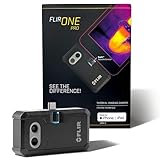
A phone-connected camera is often the lowest-cost sensible choice if your phone is compatible and you are comfortable using an app. It is compact and easy to store, though the phone connection, app support, and battery drain are potential annoyances. Before buying, confirm the connector fits your phone and that the manufacturer supports its operating system.
A handheld camera costs more, but it is ready to use, easier to pass between people, and less dependent on phone updates. It is a better fit if you expect to inspect several properties, use it for maintenance work, or want a dedicated screen. A basic unit is usually enough for room-by-room home checks. Browse phone thermal camera attachments or handheld thermal cameras for home inspection to compare current options and prices.
Compare the main value options
| Type | Typical cost range | Best for | Main trade-off |
|---|---|---|---|
| Entry-level phone attachment | About $150–$300 | Occasional DIY checks and basic documentation | Phone compatibility and app support vary |
| Basic handheld camera | About $200–$500 | Regular use, easier handling, no phone required | May cost more without offering higher resolution |
| Higher-resolution handheld | About $500 and up | Frequent inspections or smaller, harder-to-read targets | Often excessive for a few draft checks at home |
| Rental or inspection service | Varies by location and job | One-off inspections or uncertain problems | Less convenient; service may include interpretation |
These are broad price bands, not fixed quotes; sales and regional availability change the value calculation. If a suitable camera costs several hundred dollars and you only need one inspection, compare that with renting one or paying an energy auditor. An auditor may also use a blower door, which can reveal air leakage a thermal camera alone cannot confirm.
How to scan for drafts and moisture clues
Temperature contrast is essential. For a useful building-envelope scan, aim for an indoor-outdoor difference of roughly 10°C (18°F) or more; a larger difference generally makes weak insulation and air leakage easier to spot. Run heating or cooling long enough for surfaces to respond, then scan windows, exterior-wall corners, baseboards, attic hatches, and plumbing penetrations. Avoid direct sun on the wall and wait until the surface is no longer strongly warmed by sunlight.
Move slowly and keep a consistent distance. A small, low-resolution camera can make a narrow gap look like a vague stripe, especially from several feet away. Compare similar surfaces in the same room rather than treating one color as a diagnosis. A cold line beneath a window may indicate air leakage, but it can also be a thermal bridge or poorly insulated framing.
For suspected moisture, look for an unusually cool or irregular patch, then verify it with a moisture meter and inspect for staining, odor, or a known leak path. Evaporation can cool a wet surface, but a cold reading alone does not prove water is present. The same caution applies to mold: thermal cameras do not detect mold, and warm or cool patterns cannot establish whether it is growing behind a wall.
Common mistakes that waste money
Do not pay a premium just for an extreme temperature range if your task is checking rooms and windows. Resolution, image clarity, reliable saving, and a usable screen are more relevant. Also be wary of interpreting reflective surfaces: glass, polished tile, and metal can reflect people, heaters, or the sky rather than show their own temperature. Scan at an angle and compare with nearby materials.
Weather matters, too. Wind can cool exterior surfaces and make patterns harder to interpret, while a mild day may provide too little contrast. If the first scan is inconclusive, repeat it during colder weather rather than assuming the camera is faulty. For basic draft hunting, a smoke pencil or incense stick can help confirm moving air at a suspicious joint, used carefully and away from combustible materials.
When to spend more—and when not to
Choose a budget phone attachment if you have a compatible phone, need occasional checks, and mainly want to identify broad problem areas. Step up to a handheld model if you value quick operation, a dedicated display, or frequent use. Higher resolution is worth considering when you need to distinguish small defects or document inspections for work, but it is rarely necessary to find an obviously cold window corner.
Buy in late fall or winter if you want to scan during the same season; the temperature difference makes the camera more useful than an off-season bargain that sits unused. Before ordering, compare the complete price, including any case or required accessories, verify the return policy, and check whether saved images can be exported without a subscription. For a one-time, high-stakes moisture investigation, put the budget toward confirmation by a qualified inspector rather than relying on a cheaper camera to make the diagnosis.