How to Evaluate Tool Deals That Include Free Batteries
What's inside
As an Amazon Associate I earn from qualifying purchases. This post may contain affiliate links at no extra cost to you.
A “free battery” can turn an ordinary tool sale into a good value—or make an expensive kit look cheaper than it is. The battery may be useful, undersized for the tool, tied to an aging platform, or included in a promotion that requires a rebate or separate purchase. Evaluate the complete package, not the word “free.”
As an Amazon Associate we earn from qualifying purchases at no extra cost to you.


Start With the Real Price
Write down the checkout price, required items, and any costs needed to claim the battery. A kit priced at $149 with a “free” $99 battery is not automatically a $99 savings. You still need to ask whether you would have bought that battery and whether the included charger is adequate.
Check for common conditions:
- The battery is free only after mail-in or online registration.
- You must buy a specific tool, starter kit, or second item.
- The advertised price assumes a coupon that expires soon.
- The battery is a smaller-capacity version than the product photo suggests.
- The promotion excludes clearance, refurbished, or marketplace listings.
Compare the final price with the normal street price of the tool and battery separately. Use several weeks of pricing if possible; a retailer may raise the kit price just before advertising a large “free battery” value.
Check Battery Size Against the Job
Battery capacity is usually shown in amp-hours (Ah). A 2.0Ah pack is lighter and often charges quickly, but it will not run a demanding saw or grinder as long as a 5.0Ah pack. Voltage is not a direct measure of runtime: a 20-volt battery with 2.0Ah stores roughly half the energy of a 20-volt battery with 4.0Ah, assuming the ratings are comparable.
For occasional drilling, driving screws, assembling furniture, or light repair work, a compact 1.5Ah to 2.0Ah battery can be perfectly adequate. A 4.0Ah to 6.0Ah pack is more useful for circular saws, reciprocating saws, blowers, sanders, and long sessions. It also adds weight. That extra weight can be tiring on an impact driver or drill used overhead.
Look at the tool’s expected load. A free compact battery bundled with a drill is a reasonable deal. The same battery bundled with a high-demand reciprocating saw may produce short runtime, slower work, and frequent thermal cutoffs. In that case, the “free” pack may be something you replace immediately.
Value the Battery Platform, Not Just One Pack
A battery has value only if you will use the platform again. If you already own chargers and tools from that system, a free compatible battery can be worth close to its normal selling price. If this is your first tool on the platform, include the future cost of a charger, replacement batteries, and the tools you are likely to buy next.
Platform breadth matters more than a long list of nearly identical drills. A useful system should cover the categories you actually need, such as an impact driver, light, oscillating tool, trim router, or outdoor equipment. For occasional homeowners, a smaller budget platform can be the sensible choice. You may never recover the price premium of a professional system if you use a drill for two projects a year.
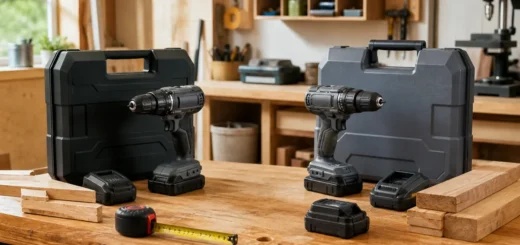
Search current cordless power tool combo kits by platform, then compare the cost per useful tool rather than the printed retail value of every included item. A kit with four tools you use is better than one with eight tools that occupy a drawer.
Compare the Complete Package
| Deal type | Typical advantage | What to verify | Best for |
|---|---|---|---|
| Tool plus compact battery | Lowest entry price and light weight | Runtime, charger speed, and battery availability | Light household work |
| Tool plus high-capacity battery | Longer runtime and better performance under load | Added weight and actual street price | Frequent users and demanding tools |
| Two-tool kit with free battery | Can reduce the cost of starting a platform | Whether both tools are useful and brushed versus brushless motors | Buyers needing several tools soon |
| Bare tool with promotional battery | Good value for existing platform owners | Charger requirement and promotion deadline | People who already own compatible batteries |
Separate the value of the tool, battery, charger, and accessories. A charger that takes several hours may be fine for weekend use but frustrating for a contractor or anyone working continuously. Likewise, two small batteries can be more useful than one large battery if one can charge while the other is in use.
Watch for Compatibility and Age
Battery platforms are not universally interchangeable, even when voltage numbers look similar. Stay within the manufacturer’s stated system. Avoid forcing a battery onto a tool or relying on unverified adapters; poor fit, overheating, and damaged contacts are real failure modes.
Inspect the seller and the return policy, especially on marketplace listings. A battery that arrives deeply discharged, has damaged terminals, or will not register on the charger should be returnable. Batteries also lose capacity with age and poor storage. A heavily discounted pack may have spent a long time in a hot warehouse.
For a cordless drill kit with battery and charger, confirm whether the charger is included, whether the battery is lithium-ion, and whether the kit includes a case. A case is not worth much money by itself, but it can protect the tool and keep the charger from disappearing in a crowded garage.
Time the Purchase Carefully
Free-battery promotions are often strongest around major holiday sales, spring outdoor-tool launches, Father’s Day, and end-of-year clearance. Seasonal deals can be worthwhile, but do not buy a tool early just to capture a battery you will not use for months. Check the warranty start date, return window, and battery storage instructions.
Outdoor tools deserve extra scrutiny. A free battery with a trimmer or blower may be a good deal if you already own the platform, but a small battery can deliver only a short session. Estimate the job: a small yard might take 15 to 25 minutes, while a larger property or wet grass can require substantially more runtime. Buying a second battery later may erase the original savings.
Know When the Cheaper Deal Is Enough
Choose the cheaper package when the tool will see light use, the included battery matches the workload, and replacement batteries are readily available. Paying twice as much for a premium platform is difficult to justify for hanging shelves, assembling flat-pack furniture, or making a few repairs each year.
Spend more when downtime is costly, the tool draws heavy current, you need a broad platform, or the cheaper battery has a history of short runtime and poor availability. The best free-battery deal is the one that avoids your next purchase—not the one with the largest claimed battery value.
If you need a larger pack for saws or outdoor equipment, compare 5Ah cordless tool batteries from the same platform before choosing a kit. That price is a useful reality check against the promotion’s stated savings.