Best Budget Angle Grinder for Cutting and Grinding Small Metal Projects
What's inside
As an Amazon Associate I earn from qualifying purchases. This post may contain affiliate links at no extra cost to you.
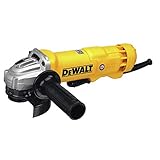
For small metal projects—cutting threaded rod, trimming angle iron, deburring welds, or cleaning rust—a basic 4½-inch angle grinder is usually enough. The best budget choice is a corded grinder from a known tool brand with a standard 4½-inch wheel, a side handle, and a guard that adjusts without a wrench. Spend extra for cordless only if you already own compatible batteries or need to work away from an outlet.
As an Amazon Associate we earn from qualifying purchases at no extra cost to you.



What to look for in a budget grinder
Most entry-level grinders draw about 6 to 8 amps and run near 11,000 to 12,000 rpm. That is adequate for occasional cutting and grinding in mild steel. A higher amp rating can help the tool maintain speed under load, but it does not make a small grinder a substitute for a chop saw or a larger grinder on thick stock.
Prioritize a properly fitting guard, a comfortable side handle, and a spindle lock for changing wheels. A tool-free guard is convenient when switching between cutting and grinding, though a simple adjustable guard is fine if it stays put. Check that replacement brushes and service information are available if you expect years of use. For a first grinder, compare corded 4½-inch angle grinders from established brands rather than buying on the lowest advertised price alone.
A low-cost grinder may lack a brake, soft start, or vibration control. Those features improve comfort and control, but they are not mandatory for occasional light work. A very cheap tool becomes a poor value if its guard is awkward, the switch is hard to reach, or it overheats during short cuts.
Budget grinder options compared
| Type | Typical cost | Best fit | Main trade-off |
|---|---|---|---|
| Basic corded 4½-inch | About $30–$60 | Home repairs and occasional steel work | More vibration and fewer convenience features |
| Better-featured corded 4½-inch | About $60–$100 | Regular small projects and longer sessions | Costs more without cutting much faster |
| Battery-powered 4½-inch | Often $100–$200 for a tool; more with battery and charger | Mobile work or an existing battery platform | Runtime and total kit cost |
Prices vary by retailer, sales, and whether the grinder is sold as a bare tool. A corded grinder is the value winner when you have an outlet nearby. Cordless makes sense if you already own the matching battery system; buying a battery and charger just for occasional cuts can cost several times the price of a corded tool. Compare cordless 4½-inch grinders sold as bare tools only against the cost of the complete setup you need.
Budget for wheels, not just the grinder
For cutting, use a thin abrasive cutoff wheel sized for the grinder, typically 4½ inches in diameter and around 1 mm thick. For grinding, use a thicker grinding wheel rated for the tool’s speed. Never use a cutoff wheel for side grinding: it is not designed to take that pressure and can shatter. Match the wheel’s maximum rpm rating to the grinder, and do not fit a wheel with a damaged center hole or a chip at the edge.
Inexpensive wheels are fine for occasional cuts in mild steel, but the cheapest packs can wear quickly or cut slowly. That can tempt you to push harder, which heats the work and increases the chance of binding. Let the wheel do the work. A pack of suitable cutoff wheels and a grinding wheel should be part of the purchase budget; a grinder with no usable wheel is not a complete bargain.
Where a budget grinder works—and where it doesn’t
It handles short cuts in flat bar, angle iron, small bolts, and threaded rod well. Cutting ¼-inch mild-steel plate is possible, but it takes patience and may require cutting from both sides. For repeated cuts in thick stock, a bandsaw or chop saw is faster, more consistent, and often leaves less cleanup. A grinder is also a poor choice for precise square cuts unless you make a guide and accept some finishing work.
Common failure modes are overheating from sustained pressure, a wheel pinching in a closing cut, and a tool that stalls because the material is too thick or the wheel is worn. Keep the workpiece clamped and support it so the kerf does not close on the wheel. If the grinder repeatedly slows, stop and change your approach; leaning harder is not a reliable fix.
Safety and practical setup
Wear eye protection plus a face shield, hearing protection, and suitable gloves. Secure the work in a vise or with clamps, keep the guard between you and the wheel, and hold the grinder with both hands. Direct sparks away from people, flammable materials, and the power cord. Unplug a corded grinder before changing wheels, and wait for the wheel to stop before setting the tool down.
For a first purchase, a basic corded grinder from a serviceable brand is enough for occasional small metal jobs. Step up to a better-featured corded model if you use it often and value lower vibration or easier guard adjustment. Choose cordless when portability or an existing battery platform justifies the extra cost—not because the tool is automatically better.
When to shop
Grinders are common sale items, so there is little reason to buy immediately at full price if the project can wait. Check prices around major holiday sales and compare the tool-only price with bundles that include a case, handle, or useful accessories. Avoid paying extra for a large accessory kit full of wheels you cannot identify or safely use. For most occasional users, a modest corded grinder, a few correctly rated wheels, and a solid clamp setup deliver better value than the cheapest tool or a premium cordless kit.