Best Budget Japanese Pull Saw for Fine Cuts in Small Woodworking Projects
What's inside
As an Amazon Associate I earn from qualifying purchases. This post may contain affiliate links at no extra cost to you.
For small woodworking projects, a Japanese pull saw can make cleaner cuts than a cheap Western backsaw while costing less than many premium hand tools. The best budget choice is usually a Japanese dozuki pull saw: it has a thin, supported blade and fine teeth suited to trim work, small joinery, dowels, and model-sized parts.
“Budget” does not mean buying the saw with the lowest sticker price. A blade that bends after a few cuts, or cannot be replaced, is often more expensive than a slightly better saw used for years. Expect to spend roughly $15 to $30 for a basic disposable-blade saw, $25 to $50 for a better replaceable-blade tool, and more for specialist or traditionally made saws.
As an Amazon Associate we earn from qualifying purchases at no extra cost to you.
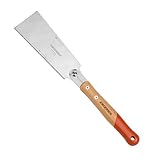
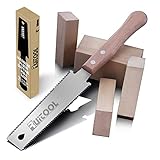

The best budget type for fine cuts
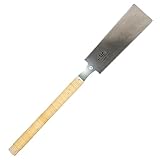
A dozuki is the safest recommendation for fine cuts. Its narrow blade is backed by a metal spine, which keeps it from wandering when cutting thin stock or making shallow joinery cuts. Teeth commonly fall around 20 to 32 teeth per inch, although Japanese saws are often described by pitch rather than TPI. Finer teeth leave a smoother surface but remove material more slowly and clog more easily in soft, resinous wood.
Choose a dozuki for box joints, small tenons, drawer parts, trim, dowels, and clean crosscuts in boards up to about 1 inch thick. It is not the right tool for demolition, wet lumber, or deep cuts where the spine prevents you from entering the material.
A ryoba has teeth on both edges: one side for crosscutting and one for ripping. It is more versatile and usually costs only a little more, but its unbacked blade requires better control. For a first saw used mainly on small projects, the dozuki is easier to manage.
For trimming dowels or plugs flush with a finished surface, buy a Japanese flush-cut pull saw. Its flexible blade can lie against the surrounding wood without scratching it. That flexibility is useful for one job and frustrating for another: it is a poor choice when you need a straight, square cut through thicker stock.
Budget saw types compared
| Saw type | Best use | Typical budget price | Main drawback |
|---|---|---|---|
| Dozuki | Fine crosscuts and small joinery | $15–$40 | Back limits cutting depth |
| Ryoba | One saw for ripping and crosscutting | $20–$45 | Needs more control; blade is exposed |
| Flush-cut saw | Dowels, plugs, and veneer edges | $10–$30 | Too flexible for accurate deep cuts |
| Replacement-blade saw | Regular use and mixed projects | $25–$50 | Replacement blades add long-term cost |
What to look for before buying
First, check whether the blade is replaceable. Disposable saws are fine if you only build a few projects each year, particularly when the complete tool costs under $20. For frequent use, a replaceable blade is better value. A blade eventually dulls, especially after cutting plywood glue lines, nails, screws, or abrasive tropical hardwood. Replacing only the blade also keeps the handle and balance familiar.
Second, inspect the tooth pattern and intended cut. Crosscut teeth are designed to sever wood fibers across the grain. Rip teeth remove material along the grain. A combination or ryoba saw is more forgiving for general work, but a dedicated fine crosscut blade normally gives a cleaner result on small parts.
Third, look at the handle and blade tension. The handle should let you hold the saw with a relaxed grip rather than squeezing to stop it from twisting. On inexpensive saws, the blade may feel slightly springy, but it should not arrive kinked or visibly bowed. A bent spine, loose blade fitting, or missing protective cover is a reason to return it.
Brand matters, but less than the blade design. Japanese tool specialists such as Gyokucho, Tajima, and Silky generally offer consistent tooth geometry and replacement blades. Budget house brands can cut well when new, and they are perfectly reasonable for occasional pine, poplar, and plywood work. The trade-off is usually shorter blade life, less predictable replacement availability, or a handle that feels rough rather than poor cutting performance on the first project.
How to get clean cuts
Japanese pull saws cut on the pull stroke. Start with two or three very light strokes while holding the blade at a low angle. Once a kerf is established, use the full blade length with short, controlled strokes. Do not push hard. Pressure is the most common cause of a wandering cut, bent blade, or teeth catching at the end of a cut.
Mark the waste side of the line and leave the line visible. On a small part, support the work close to the cut so vibration does not tear the fibers. When cutting a dowel flush, tape or clamp the work securely and let the flexible blade rest lightly on the finished surface. A thin card or scrap veneer under the blade can provide extra protection, but it also adds a small risk of cutting above flush.
For a clean crosscut in 3/4-inch hardwood, a fine dozuki may take 20 to 45 seconds once the cut is started. Rushing it can leave a ragged exit edge. Score the cut line with a knife first, or cut from the visible face until the kerf passes through, then finish with very light strokes from the opposite side.
Common failure modes
Teeth that stop cutting after a few inches are often clogged with resin or overloaded by too much pressure. Clean the blade with a dry brush; do not grind or file hardened Japanese teeth unless the manufacturer says they are resharpenable. Many inexpensive blades use impulse-hardened teeth that are durable but effectively disposable when dull.
Splintering usually comes from cutting unsupported fibers, using a dull blade, or pulling the saw sideways. A backing board, knife scoring, and a slower final stroke solve more problems than buying a more expensive saw.
Do not use a fine dozuki to cut through screws, nails, or hidden hardware. One metal contact can ruin the teeth. For reclaimed wood, inspect with a detector and use an old general-purpose saw rather than your best fine-cut blade.
When to buy and when to save
Prices often drop during major holiday sales, spring tool promotions, and multi-item woodworking events. Replacement blades may be discounted more heavily than complete saws, so compare the total cost: a $20 saw with a $15 replacement blade can be worse value than a $30 saw with $8 replacement blades.
If you make one or two small projects a year, buy a basic dozuki or flush-cut saw and replace it only when damaged. If you build monthly, spend extra for a known brand with available Japanese pull saw replacement blades. For a single saw that handles the widest range of work, a Japanese ryoba pull saw is the practical upgrade, provided you are willing to practice keeping its unbacked blade square.