Best Affordable Japanese Pull Saw for Detailed Woodworking
What's inside
As an Amazon Associate I earn from qualifying purchases. This post may contain affiliate links at no extra cost to you.
For detailed woodworking, a Japanese pull saw can deliver cleaner cuts than a similarly priced Western backsaw, but you do not need an expensive tool to get the main benefits. The best affordable Japanese pull saw is usually a replaceable-blade dozuki, ryoba, or flush-cut saw from a reputable tool brand. The right choice depends on whether you are cutting joinery, breaking down boards, or trimming plugs and dowels.
Most budget pull saws cost roughly $15 to $35. Premium replaceable-blade saws often run $35 to $70, while traditional fixed-blade tools can cost more and are harder to replace when damaged. For occasional furniture repairs and small projects, the cheaper category is often entirely adequate. The main savings come from accepting a less refined handle, thinner steel, or a blade that may not stay sharp quite as long.
As an Amazon Associate we earn from qualifying purchases at no extra cost to you.


Choosing the Right Saw for Detailed Work
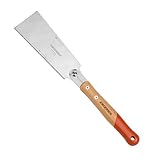
A Japanese dozuki pull saw has a thin blade backed by a metal spine. It is the most precise option for dovetails, tenons, small moldings, and other joinery where the cut must start accurately. Typical blades are about 0.2 to 0.3 mm thick. The spine limits depth, commonly to around 1 to 1.5 inches, but it also keeps the blade from wandering.
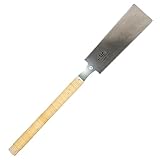
A ryoba has teeth on both edges: one side for crosscuts and one for ripping with the grain. It has no stiffening spine, so it can cut deeper and handle boards that a dozuki cannot. It is a better one-saw choice for general woodworking, but it takes more practice to start cleanly.
A flush-cut saw has flexible teeth set to one side or with little to no set. It is designed for trimming dowels, plugs, and protruding joinery without scratching the surrounding surface. It is not a substitute for a general-purpose saw because the flexible blade can buckle during long cuts.
| Saw type | Best use | Typical affordable price | Main limitation |
|---|---|---|---|
| Dozuki | Dovetails, fine joinery, small parts | $18–$40 | Limited cutting depth |
| Ryoba | General ripping and crosscutting | $20–$45 | Needs more control to start accurately |
| Flush-cut saw | Dowels, plugs, trim repairs | $12–$30 | Not suitable for heavy stock removal |
| Replacement-blade saw | Frequent use and lower long-term cost | $20–$50 | Blade fittings vary by brand |
Features Worth Paying For
Tooth pitch matters more than decorative handles. Fine dozuki blades commonly fall around 20 to 26 teeth per inch, giving controlled cuts in hardwood and plywood. Coarser ryoba teeth may be closer to 9 to 15 teeth per inch for faster cutting. A fine blade cuts more slowly and can clog in resinous softwood; a coarse blade removes material quickly but leaves more cleanup.
Look for a straight blade, consistent tooth shape, and a handle that does not twist in your hand. A rubberized or cord-wrapped handle is not essential, but it helps during repeated cuts. On a budget saw, inspect the blade at the store or immediately after delivery. A slight bend can sometimes be corrected, but a kink near the handle usually means a replacement is more sensible.
Replaceable blades are generally the best value for regular users. Japanese-style teeth are often impulse-hardened, which makes them stay sharp longer but also makes sharpening impractical with ordinary files. When the teeth dull or a blade bends, replacement is the repair. Check replacement prices before buying: a $25 saw with $18 replacement blades may cost more over several years than a $40 saw with $10 blades.
For an inexpensive first tool, a replaceable-blade Japanese pull saw is usually safer than a very cheap fixed-blade import. You get a usable handle, a way to recover from accidental damage, and a clearer long-term cost.
Budget Brand and Price Trade-Offs
At the lowest prices, expect thinner handles, rougher blade mounts, and less consistent packaging. These saws can still make excellent cuts, especially in pine, poplar, cedar, and plywood. They become less attractive when cutting dense maple, white oak, or repeated hardwood joinery, where tooth durability and blade stiffness matter more.
Mid-priced saws from established Japanese hand-tool brands usually offer better blade consistency and more reliable replacement availability. You are paying for quality control, not a completely different cutting principle. A $25 saw may cut 90 percent as well as a $50 saw on a weekend project. The more expensive option earns its price when you make dozens of precise cuts each month or cannot afford a damaged workpiece.
Do not overpay for a traditional fixed-blade saw unless you specifically want its balance or craftsmanship. Fixed blades can be excellent, but shipping damage, accidental kinks, and dulling create a replacement problem. For a first saw, the affordable Japanese ryoba saw offers more range than a premium single-purpose tool.
How to Get Clean, Accurate Cuts
Pull saws cut on the backstroke, so use light pressure and let the teeth do the work. Start with the blade nearly flat, using two or three short strokes to establish a kerf. Once the cut is started, lower the handle gradually. Pressing hard is a common failure mode: it bends thin blades, causes the teeth to grab, and makes the cut drift away from the line.
Support the workpiece close to the cut. Vibration can chip plywood veneers and make a fine blade feel dull. For joinery, mark the waste side clearly and make a shallow knife line before sawing. Keep the blade aligned with the waste, then check both faces after the first few millimeters. A cut that is already drifting at 1/8 inch is difficult to rescue later.
Clean pitch from the blade with a dry cloth or a small amount of suitable saw-cleaning solvent. Do not twist the saw to widen a stuck kerf. Withdraw it, clear the waste, and restart. Store the blade where it cannot contact screws, chisels, or other steel edges.
When to Buy and When to Save
Prices often improve during major holiday promotions, spring workshop sales, and tool-focused events, but discounts on hand saws are usually modest. A 10 to 20 percent reduction is worthwhile if you already know which blade type you need. Avoid buying a two-saw bundle simply because the package is discounted; a dozuki and ryoba duplicate each other for many small projects.
Choose the least expensive reputable dozuki for occasional dovetails, a ryoba for one general-purpose hand saw, and a flush-cut saw only when trimming is your main task. Spend more on replacement-blade availability and consistent construction before paying for premium handles or traditional styling.