Best Budget Coping Saw for Trim and Craft Wood Cutting
What's inside
As an Amazon Associate I earn from qualifying purchases. This post may contain affiliate links at no extra cost to you.
A coping saw is one of the least expensive ways to make controlled curved cuts in trim, thin plywood, and craft wood. For most homeowners, a budget saw is perfectly adequate—but the cheapest tool on the rack is not always the best value. A loose frame, poor blade tension, or a handle that twists in your hand can turn a five-minute cut into a frustrating repair.
The best budget coping saw for trim and craft work has a rigid frame, a comfortable handle, a useful tensioning mechanism, and replaceable blades that are easy to find. Expect to spend roughly $10 to $25 for a dependable saw and a small blade assortment. Spending more than that only makes sense if you use the tool frequently or need unusually accurate cuts.
As an Amazon Associate we earn from qualifying purchases at no extra cost to you.

What to Look for in a Budget Coping Saw
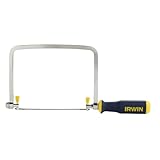
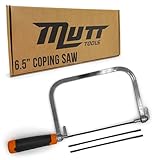
Most coping saws have a 5- to 6-inch cutting depth, which is enough for baseboard, casing, shoe molding, lattice, and craft stock. A deeper frame may look more capable, but extra throat depth is not automatically useful. It can make the frame easier to flex and harder to control.
Frame rigidity is the first priority. Hold the saw by the handle and press lightly against a scrap board. The frame should not visibly bend or twist. Some flex is normal when tensioning a blade, but excessive movement makes it difficult to follow a pencil line.
Look for a saw with swiveling blade mounts. They allow the blade to turn as you cut, which is useful when coping inside corners in trim. Fixed mounts can work, but they force you to rotate the entire tool and are less forgiving in tight spaces.
The handle should be large enough to grip without pinching your fingers against the frame. A simple hardwood handle can be comfortable and durable. Molded plastic is also fine if it has a defined grip and does not feel slippery. Fancy rubber overmolds are not necessary for occasional work.
Blade tension matters more than cosmetic finish. A blade should produce a clear, high-pitched “ping” when lightly plucked. If it hangs loose even after tightening, either the tensioning hardware is weak or the blade is too long for the frame. A loose blade wanders and may buckle when you start a turn.
Best Budget Coping Saw Options by Use
| Use | Recommended type | Typical price | Main trade-off |
|---|---|---|---|
| Occasional trim repairs | Basic steel-frame coping saw | $10–$15 | Less refined tension adjustment |
| Regular DIY trim work | Rigid frame with swiveling mounts | $15–$25 | Higher cost, but easier to control |
| Small craft projects | Compact coping saw with fine blades | $10–$20 | Slower on thick stock |
| Frequent detailed cutting | Better-finished saw with replacement blades | $25–$40 | Harder to justify for one repair |
For one or two door-casing joints, a basic budget coping saw with replacement blades is usually enough. The inexpensive option is fine when the wood is soft, the cut is short, and you are willing to sand the edge afterward.
If you are installing several rooms of trim, move up to a rigid-frame saw with swiveling blade holders. The added $5 to $10 can save time because the blade follows a curved profile more predictably. This is particularly helpful when coping crown molding or hard baseboard.
Blade Selection Is Half the Tool
Many cheap coping saws fail in practice because users try to make every cut with the blade supplied in the package. Blades are consumables. A fine blade that is good for thin plywood will clog or heat up in thick hardwood, while a coarse blade can tear delicate craft material.
For general trim, start with a medium blade in the range of about 10 to 15 teeth per inch. Use a finer blade—around 18 to 24 teeth per inch—for thin plywood, veneer, plastic, or small fretwork details. Coarser blades remove material faster but leave a rougher edge and are more likely to catch when turning.
Keep at least two spare blades available. A blade can still look intact while being dull enough to force the saw sideways. If you need heavy pressure, the cut begins drifting, or the teeth make a scraping sound instead of a consistent cutting sound, replace it.
When buying a coping saw replacement blade assortment, check the stated blade length and mounting style. Most coping saws use pinned or pinless blades, and they are not always interchangeable. A package of 10 or more blades is often a better value than buying individual blades.
How to Use a Coping Saw on Trim
Make the initial miter cut first, then mark the visible profile on the cut edge with a pencil. Remove the waste from the back side of the molding, keeping the blade angled slightly away from the finished face. That back-cut creates a narrow edge that contacts the adjoining piece even if the wall is imperfect.
Support the molding close to the cut. A piece that vibrates will produce a ragged edge and can break a thin blade. Start with short, gentle strokes to establish the kerf. Once the blade is tracking, use long strokes and let the teeth do the work.
Do not force the saw around a tight corner. Rotate the blade gradually, or stop and drill a small relief hole in craft wood before inserting the blade. Forcing a turn is a common cause of broken blades and bent frames. Leave the line slightly proud, then refine the fit with a file, sanding block, or sharp utility knife.
Brand Value and the Best Time to Buy
For a budget tool, brand value mostly shows up in blade availability, thread quality, and consistency between units. A familiar hand-tool brand with widely stocked blades is often safer than an unbranded multipack, even when the unbranded saw costs a few dollars less. That difference matters if a replacement wing nut strips or the original blade breaks during a project.
Buy whenever the saw is needed if the price is under $15; seasonal savings are usually small. Larger hardware retailers often discount hand tools during spring renovation promotions, Father’s Day sales, and November holiday events. Online prices can drop 10% to 25% during those periods, but compare the delivered price because low-cost tools often attract separate shipping.
For craft cutting, a small craft coping saw with fine blades may be a better buy than a heavy trim-oriented frame. For occasional household use, however, the cheapest rigid saw with standard replacement blades remains the sensible choice. Spend extra on blades and a small file set before paying for decorative handles or a premium finish.