Best Affordable Portable Table Saw Stand for Jobsite Setup
What's inside
As an Amazon Associate I earn from qualifying purchases. This post may contain affiliate links at no extra cost to you.
A portable table saw stand does more than raise the saw to a usable height. It needs to keep the machine stable during a rip cut, fold or break down without a fight, and survive being loaded into a truck. The cheapest stand is not always the best value: a shaky base can spoil cuts, while an overbuilt rolling stand may cost nearly as much as a budget saw.
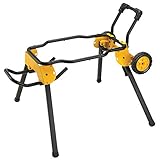
For most homeowners and occasional contractors, the sweet spot is a folding stand with wide legs, adjustable feet, and a working height near 32 to 36 inches. A wheeled stand is useful when the saw must move across a garage or jobsite, but wheels add cost and can introduce play. Before buying, check the mounting pattern and weight capacity against your saw.
As an Amazon Associate we earn from qualifying purchases at no extra cost to you.



What to Look For in an Affordable Stand
Stability comes first. Look for a broad footprint and steel leg braces rather than a narrow, lightweight frame. A stand that flexes when you push a board through the blade can cause wandering cuts, burning, or kickback. Adjustable feet help on uneven concrete, but they are not a substitute for a strong frame.
Confirm compatibility. Some stands use universal brackets, while others are designed around one saw family. Measure the saw’s mounting holes and check the stand’s maximum top width. A stand rated for 150 pounds may sound generous, but that rating can include both the saw and the workpiece. A practical minimum is a 100-pound capacity for a typical 50- to 70-pound portable saw, leaving room for handling loads.
Consider setup time. A simple folding metal stand can be ready in under a minute. Stands with wheels, extension supports, and quick-release brackets may take longer to assemble initially but are easier to use every day. If you regularly work alone, prioritize a stand that lets you mount or remove the saw without balancing it awkwardly.
For a basic folding platform, compare current universal folding table saw stands rather than focusing on one brand. Hardware and dimensions change frequently, and price differences of $20 to $40 are common.
Best Stand Types by Budget and Use
| Stand type | Typical price | Best for | Main compromise |
|---|---|---|---|
| Basic folding steel stand | $50–$90 | Occasional garage and DIY work | Limited mobility and fewer adjustments |
| Universal stand with wheels | $90–$160 | Frequent repositioning on smooth surfaces | More weight, cost, and wheel wear |
| Stand with outfeed and side supports | $130–$220 | Sheet goods and long boards | Bulkier storage and more parts to adjust |
| Brand-matched rolling stand | $150–$300 | Daily professional use | Often poor value for occasional users |
A basic folding stand is the right choice when the saw will stay in one area and you usually cut short lumber. It is also easier to repair: a bent foot or loose bolt is generally accessible. The cheaper option is fine if you can place the stand on a level surface and do not need to roll the saw over gravel.
Choose a portable table saw stand with wheels when the saw must be moved between a vehicle and a work area several times per day. Look for large rubber wheels, preferably around 6 inches or more. Small hard wheels catch on cords, thresholds, and chipped concrete. Locking casters should hold the frame firmly; otherwise the saw can creep during a cut.
Brand Value Versus Low-Cost Stands
Brand-matched stands usually have better brackets, clearer instructions, and replacement hardware that remains available. They also tend to fit the intended saw without improvised drilling. That matters if you transport the saw often or depend on accurate alignment.
However, a recognizable brand does not automatically justify a $100 premium. Many universal stands use similar tubular steel construction. If the saw has a conventional rectangular base, a well-reviewed universal stand can deliver nearly the same stability for less money. Spend extra for a matched stand when you need rapid setup, integrated wheels, or a folding system that you will use every day.
Be cautious with stands that advertise very high weight capacities but have thin legs, small hinges, or plastic locking levers. The failure point is often not the frame’s static rating. It is a loose hinge, a bent mounting tab, or a leg that folds when the saw is pushed sideways. Read reviews for reports of wobble after assembly, stripped threads, and missing hardware rather than relying only on star ratings.
Setup Details That Prevent Problems
Mount the saw with all supplied fasteners and use flat washers under the bolt heads. Tighten the hardware evenly, then check that the saw table is level with the stand’s supports. If the saw rocks, find the cause before cutting. A rocking stand can shift several inches while ripping a long board.
Keep the stand’s feet fully open and lock every brace. Do not use a folded or partially deployed stand to gain a little working height. Set the saw so its table is roughly level with your hip or slightly below it; a common working range is 32 to 36 inches. Too high makes it harder to control stock, while too low encourages bending and poor feed pressure.
Outfeed support is especially important with plywood and long boards. An inexpensive roller stand or folding support behind the saw can prevent the workpiece from levering the saw upward. If you routinely cut full sheets, buy a stand with outfeed support, or use a separate support table. Never let the board’s weight pull against the fence.
When to Buy for the Best Price
Prices are usually most competitive around spring remodeling season, major holiday sales, and late November. Stand-only discounts often appear when manufacturers bundle a stand with a saw, so compare the package price against buying the tools separately. A bundle is worthwhile only if the included stand fits your intended setup and does not replace a more useful feature such as a better fence.
Late winter can also be a good time to check discontinued or previous-generation stands. The basic frame may be unchanged, but verify that replacement brackets and mounting hardware are still available. Avoid buying solely because a listing shows a large percentage discount; compare the final price, shipping, return policy, and included accessories.
The Practical Choice
For occasional use, buy a sturdy folding steel stand in the $50 to $90 range and spend the savings on a good blade or separate outfeed support. For frequent jobsite work, the extra $40 to $100 for wheels and quicker setup can pay for itself in saved handling time. Choose a brand-matched rolling stand only when its fit, folding mechanism, or service support solves a problem that a universal stand cannot.
Before ordering, verify the saw’s weight, mounting holes, stand height, folded dimensions, and wheel size. Those five checks matter more than a glossy product photo, and they are the best defense against a stand that looks affordable but becomes unstable or unusable after the first job.