Best Affordable Table Saw for a Beginner’s Small Garage Workshop
What's inside
As an Amazon Associate I earn from qualifying purchases. This post may contain affiliate links at no extra cost to you.
A small garage workshop does not need a heavy cabinet saw. For a beginner, the useful target is a portable 10-inch jobsite saw with a stable stand, a working riving knife, and enough fence adjustment to cut accurately. Expect to spend roughly $250–$500 for a sensible new setup; prices vary by season and included accessories.
As an Amazon Associate we earn from qualifying purchases at no extra cost to you.
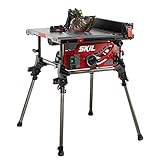


The best value: a 10-inch jobsite saw
A jobsite saw is compact enough to store against a wall and can handle shelving, plywood breakdown, and ordinary home projects. A 10-inch blade gives more depth of cut than a 8¼-inch compact saw, which matters when crosscutting thicker stock or making a full-depth cut in 2-inch lumber. Most models run on standard 120-volt household power, so you do not need to install a 240-volt circuit.
Shop for a saw with a rack-and-pinion fence or another fence that locks parallel to the blade without fuss. A flimsy fence is a frequent source of poor cuts and frustration. A stand is worth paying for if you will set up and put away the saw often; a saw that wobbles on a folding table is a false economy. Compare current 10-inch jobsite table saws by fence design, stand, warranty, and included blade rather than motor claims alone.
What different budgets buy
| Approximate price | Typical setup | Best for | Main compromise |
|---|---|---|---|
| $150–$250 | Compact saw, often no stand | Occasional short cuts and tight budgets | Small table, less convenient fence, limited support |
| $250–$500 | 10-inch jobsite saw, sometimes with folding stand | Most beginners and general garage projects | More noise and vibration than a larger saw |
| $500–$800 | Better-equipped jobsite saw or entry-level contractor-style setup | Frequent use and larger panels | Higher cost and more storage space |
Those ranges are useful shopping bands, not guarantees. Bundles and sales can move a saw between them, and a stand bought separately can add a meaningful amount. Check what is actually in the box: some listings show a saw with a stand in product photos but sell the stand as an extra.
When the cheaper saw is enough
A basic compact saw can be fine if you are making occasional cuts in narrow boards, have a solid work surface, and can tolerate slower setup. It is less attractive for repeated sheet-goods work. A small tabletop gives plywood little support, and an inaccurate fence can send a cut off line even when the blade itself is sharp. If the saw’s fence needs constant adjustment or will not stay square after locking, put that money toward a better-equipped model rather than assuming you can tune away every weakness.
An 8¼-inch blade can suit a garage with severe storage limits, but it sacrifices cutting depth and may restrict future jobs. For a first and only table saw, the larger 10-inch format is usually the more flexible choice. A used saw can be good value if the fence, guard, riving knife, and tilt and height adjustments all work. Test the lock and check for a bent arbor or damaged table before buying; missing safety parts can turn a bargain into an expensive repair.
Plan for the garage, not just the saw
Measure the folded saw and stand, then measure the clear path needed to feed your longest workpiece. A saw may fit in a corner but still be awkward to use if a car, freezer, or shelving blocks the infeed or outfeed. For full sheets of plywood, a table saw is often a poor solo breakdown tool. Use a circular saw and a straightedge to cut sheets into manageable pieces first, then use the table saw for accurate final sizing.
Keep the blade guard and riving knife installed for through-cuts. The riving knife helps keep the kerf from pinching the blade, a common cause of kickback. Wear eye and hearing protection, use push sticks for narrow cuts, and do not stand directly behind the workpiece. A small dust port will not make a garage dust-free: a shop vacuum can help, but fine dust still escapes, so clean up and use suitable respiratory protection when needed.
Features worth paying for
Prioritize a straight, repeatable fence; a usable guard and riving knife; a stable stand; and readily available replacement blades. A 10-inch, 40-tooth general-purpose blade is a practical starting point for mixed work, though a dedicated finer-tooth blade can improve plywood edges. Do not pay extra just for a high advertised horsepower figure: portable saws usually share household power limits, and safe feed rate, blade sharpness, and stock support matter more in everyday use.
Before the first project, check the blade alignment and fence parallelism using the manual’s procedure. Even a new saw may need adjustment after shipping. Make a test cut in scrap and measure it at both ends; if the width differs, correct the fence or alignment before cutting a finished panel. Also verify that the saw’s fence capacity is enough for your usual work. A listed rip capacity of around 24 inches or more is helpful for breaking down common sheet goods, but it does not replace proper support.
When to buy and what to skip
Tool promotions often cluster around major holiday sales and seasonal home-improvement events, but a discount is only useful if the saw meets your needs. Compare the delivered price against the saw, stand, and blade separately, and check the return policy. A bare saw with a low sticker price may cost more once you add a stable stand and a decent blade.
For most first-time garage users, a mid-priced 10-inch jobsite saw with a dependable fence is the balanced buy. Choose the cheaper compact option only when your cuts are occasional and storage is the overriding constraint. If you routinely rip wide boards or run long production sessions, save for a more substantial setup rather than expecting an entry-level portable saw to behave like a cabinet machine. A folding table saw stand can also make an existing saw more practical, provided it fits the saw and locks securely.