Best Affordable Carving Tool Set for Beginner Woodworkers
What's inside
As an Amazon Associate I earn from qualifying purchases. This post may contain affiliate links at no extra cost to you.
For a beginner, an affordable carving tool set should make it possible to learn safely without paying for professional-grade steel or a large collection of duplicate gouges. The best starting point is usually a small set of sharp, properly shaped tools—plus a strop—not the cheapest box containing 20 or 30 pieces. Expect to spend about $25 to $60 for a usable beginner kit and another $10 to $20 for sharpening supplies.
As an Amazon Associate we earn from qualifying purchases at no extra cost to you.



What beginners actually need
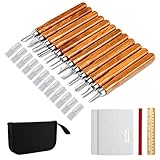
Most first projects use three cutting profiles: a V-tool for outlines and lettering, a medium gouge for removing waste, and a narrower gouge for details. A carving knife is useful for whittling and small figures. A 6mm to 12mm gouge is a practical general-purpose size, while a V-tool around 6mm works for borders and lettering.
A set with six to eight tools is usually enough. Look for high-carbon or chromium-vanadium steel, hardwood or comfortable composite handles, and blades that are ground evenly on both sides. The cutting edge should meet cleanly; a visible flat, burr, or uneven bevel means extra sharpening before the tool is enjoyable to use.
For a first purchase, compare beginner wood carving tool sets with individual tools rather than assuming the largest kit is the best value. A 20-piece set may include duplicate knives, polishing stones, and oddly shaped gouges you will not use. Six good tools can cover more work than 25 poorly finished ones.
Best-value set types compared
| Set type | Typical price | Best for | Main drawback |
|---|---|---|---|
| Basic 6–8 piece carving set | $25–$45 | Beginners learning relief carving and small projects | Edges may need honing immediately |
| Carving knife set | $20–$50 | Whittling, spoons, figures, and green wood | Limited for flat relief work and deep cuts |
| Budget gouge set | $35–$70 | Relief carving and removing material quickly | Handles and factory bevels vary in quality |
| Premium starter set | $80–$150 | Frequent users who want better finishing | Too expensive before you know your preferred style |
The basic gouge set is the strongest value for most beginners. A knife-only set is cheaper and perfectly adequate if you want to carve basswood animals or small ornaments. It becomes frustrating when you need a flat-bottomed cut, a clean inside corner, or a wide channel.
A practical budget setup
Start with a 6mm or 8mm V-tool, a 10mm to 12mm shallow gouge, a narrower 4mm to 6mm gouge, a straight or skew chisel, and one carving knife. Add a leather strop and honing compound. This setup normally costs less than a large set and lets you identify which shapes you actually use.
Some kits include a mallet, but most beginner carving is done by hand. A heavy steel hammer can damage handles and drive a tool too deeply into soft wood. If you later work on larger reliefs, buy a light carving mallet separately. For now, spend that money on a sharpening system or a bench hook.
A wood carving strop and honing compound is not optional equipment. A strop removes the fine burr left after sharpening and keeps an edge cutting cleanly. Ten to twenty light passes on each bevel after a session can prevent the edge from becoming noticeably dull. Do not use a powered grinder unless you know how to control heat; overheating a thin carving edge can permanently soften it.
Brand and price trade-offs
At the lowest price level, the main risk is inconsistent grinding rather than immediate breakage. Blades may arrive with blunt edges, uneven bevels, or a coating that hides poor finishing. That does not make every inexpensive set unusable. If the steel holds an edge and the handle is secure, careful honing can turn a $30 set into a reasonable learning tool.
Mid-priced sets generally offer better consistency and more comfortable handles. The improvement matters when carving for two or three hours, because hard, narrow handles can cause hot spots and hand fatigue. However, paying twice as much does not necessarily produce twice the cutting performance. You are often paying for quality control, better packaging, and less setup work.
Established European and Japanese carving brands tend to justify their prices for regular users, especially when replacement tools are available individually. A beginner who carves once a month usually gets better value from a sound budget set and sharpening practice. Someone carving every weekend may save money by buying fewer, better tools instead of replacing a cheap kit after one season.
Choose the wood before blaming the tools
Use basswood, butternut, or another straight-grained carving wood for early projects. Construction pine is inexpensive but often has reversing grain, knots, and resin that cause tear-out. A dull tool makes this worse, but even a sharp tool cannot make knotty pine behave like basswood.
Common beginner failures are predictable. Pushing too hard causes the blade to dive and can split the blank. Cutting across reversing grain tears out chunks behind the edge. Holding the work in one hand while cutting toward it creates a serious injury risk. Clamp the piece or use a bench hook, keep both hands behind the cutting edge, and make several shallow cuts instead of one deep cut.
Keep a first project under roughly 100mm by 150mm. Small work lets you learn grain direction and edge control without spending hours removing material. If a tool requires excessive force, stop and inspect the edge rather than leaning harder into the cut.
When to buy for the best price
Carving sets are often discounted around Black Friday, the December holiday season, and spring tool promotions. Prices can fall 10% to 30%, but bundles also appear with extra accessories that add little value. Compare the number and shape of actual cutting tools, not the piece count printed on the box.
January and early spring can be good times to buy discontinued packaging or previous-year kits. For a simple beginner purchase, a genuine discount of $10 or more is meaningful. If the set is only $3 cheaper than usual, buy based on the blade shapes, return policy, and reviews that mention edge quality.
If you prefer to build slowly, begin with a six-piece wood carving gouge set, then add a dedicated knife after your first project. That approach costs slightly more per tool but avoids paying for shapes that stay unused. For mostly whittling, choose a beginner carving knife set instead. The cheaper option is fine when the blades are secure, the steel can hold a working edge, and you are willing to hone it before carving.