Best Affordable Drain Snake for Recurring Household Clog Problems
What's inside
As an Amazon Associate I earn from qualifying purchases. This post may contain affiliate links at no extra cost to you.
Recurring household clogs usually do not require an expensive professional drain machine. For sinks, tubs, showers, and many toilet blockages, a manually operated drain snake in the $20–$60 range is often the best value. The right choice depends less on brand than on cable length, cable thickness, handle design, and whether the tool is meant for a fixture trap or a deeper branch line.
A cheap snake can clear a soft hair plug several times a year. It is a poor choice for a heavy grease blockage 30 feet down a kitchen line, a root intrusion, or a clog caused by a damaged pipe. Spending more helps when the problem is deep, frequent, or difficult to reach—but many homeowners buy more tool than they need.
As an Amazon Associate we earn from qualifying purchases at no extra cost to you.


The Best Drain Snake Types for Household Clogs
For most recurring bathroom clogs, start with a hand-crank drum auger. These tools typically hold 15 to 25 feet of cable and cost about $20 to $45. The cable feeds through the drain while you turn a crank, giving you better control than a disposable plastic zip tool. A 1/4-inch cable is flexible enough for bathroom sinks, tubs, and showers, and it can usually pass through a trap or overflow opening.
A plastic barbed hair remover is cheaper, often under $10, and is fine for a shallow shower or bathroom sink clog. It is not really a reusable drain snake. It reaches only a few inches to roughly 18 inches, and the barbs pull out hair rather than breaking through a deeper obstruction. Buy one if the blockage is clearly near the drain opening, but do not rely on it for a recurring clog caused by buildup farther down the pipe.
Toilet clogs need a closet auger, not a bare metal cable pushed through the bowl. A closet auger has a short, curved protective guide that reduces the chance of scratching porcelain. Most have 3 to 6 feet of cable, which is appropriate for the toilet trap. A standard sink snake may work in an emergency, but its exposed cable can damage the bowl and is awkward to control.
For longer runs, a manual 25- to 50-foot drum auger is the affordable step up. Look for a 5/16-inch cable for general household branch lines. These tools can clear a blockage beyond a sink trap, but they require more patience and are easier to kink. If you regularly fight basement floor drains or a kitchen line that clogs well beyond the trap, compare 25-foot manual drain augers rather than buying another short bathroom snake.
Price and Value Comparison
| Tool type | Typical price | Best use | Main limitation |
|---|---|---|---|
| Plastic barbed remover | $5–$10 | Hair near a shower or sink drain | Very short reach; limited reuse |
| Hand-crank drum auger, 15–25 feet | $20–$45 | Bathroom and kitchen fixture clogs | Slow on deep or hard blockages |
| Closet auger | $25–$55 | Toilet blockages | Not useful for most sinks and tubs |
| Long manual auger, 25–50 feet | $35–$80 | Branch-line and floor-drain clogs | More difficult to feed without kinking |
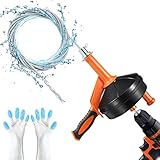
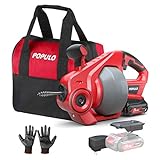
| Drill-powered drain auger | $60–$150 | Frequent or deeper household clogs | Can damage pipes or tangle if used carelessly |
What to Look For Before Buying
Choose cable length based on the location of the blockage, not the largest number on the package. A 15-foot snake is easier to store and control than a 50-foot model. For a tub or bathroom sink, 15 to 25 feet is usually enough. For a basement drain or laundry line, 25 feet may be the minimum practical length.
Cable diameter matters too. A 1/4-inch cable bends through small traps and tight turns, but it has less strength against dense grease or scale. A 5/16-inch cable offers more pushing power while remaining usable in many household lines. Avoid forcing a thick cable through a small fixture drain; getting it stuck can turn a cheap repair into a plumber’s visit.
Pay attention to the drum and locking mechanism. A thumb screw or lever that clamps the cable securely is safer than a loose friction grip. The drum should keep dirty cable contained, and the handle should turn smoothly without wobbling. Bare cable stored outside the drum will rust faster and spread contaminated water around your work area.
Interchangeable tips are useful but not essential. A bulb or spear tip can help with soft clogs, while a corkscrew tip can grab hair and fibrous material. For a first purchase, prioritize a well-built cable and solid housing over a large accessory kit. Search hand-crank 15-foot drain snakes when you mainly deal with bathroom fixtures.
How to Use a Drain Snake Without Making the Problem Worse
Remove standing water where possible, wear gloves and eye protection, and place a bucket under the trap if you are working on a sink. Feed the cable slowly while turning the handle clockwise. When you feel resistance, do not ram the cable. Rotate it several times, advance an inch or two, then pull back slightly to work the tip into the blockage.
After the water begins to drain, run hot tap water for several minutes and test the fixture. Do not immediately pour a chemical drain cleaner into a line you plan to snake. The chemical can remain in the trap, splash back through the opening, and burn your skin or eyes. It can also weaken some cables and damage older metal plumbing.
Stop if the cable will not advance, becomes tightly coiled, or comes back coated with unusual debris such as gritty mineral scale, roots, or pipe fragments. Those signs may indicate a damaged or obstructed main line rather than an ordinary household clog. A drain camera or professional cable machine may be more economical than repeatedly buying inexpensive snakes.
When a More Expensive Auger Is Worth It
Upgrade to a drill-powered unit only if you have recurring clogs in the same deeper line, multiple drains backing up together, or enough work to justify the added risk. A drill can spin a cable much faster than a hand crank, but that speed makes kinks, cable breaks, and pipe damage more likely. Use the lowest practical speed and keep both hands controlling the housing.
For occasional bathroom maintenance, the cheaper hand-crank option is usually the sensible buy. For a toilet, buy a closet auger specifically. For a shower that clogs every few weeks, a reusable 15- to 25-foot drum auger is a better long-term value than repeated chemical treatments or disposable plastic tools.
Seasonal Buying Advice
Drain snakes are most useful before and during wet weather, when basement and floor-drain problems become more noticeable. Prices can also improve around spring home-maintenance sales and major holiday promotions. Compare the final price, cable length, and return policy rather than chasing a small discount on an unknown brand.
Buy the shortest, lightest tool that reaches your normal problem area. That approach keeps the cost low, makes the tool easier to control, and avoids the common mistake of storing a heavy machine that is rarely needed.