Best Affordable Tools for Seasonal Garage Organization
What's inside
As an Amazon Associate I earn from qualifying purchases. This post may contain affiliate links at no extra cost to you.
Why Seasonal Organization Needs Different Tools
Garage storage gets expensive when every item is treated as a permanent installation. Seasonal gear does not need the same solution as daily-use tools. Snow shovels, camping bins, fans, lawn equipment, and holiday decorations may sit untouched for six months. The best value usually comes from combining inexpensive containers and hooks with a small number of sturdy, frequently used storage pieces.
Before buying, measure the usable wall height, the space above your vehicle, and the depth available beside the garage door. Leave at least 30 inches of walking clearance around parked vehicles and do not plan to store heavy items above head height. A $20 storage rack that blocks a door or forces you to move three bins to reach one item is not a bargain.
As an Amazon Associate we earn from qualifying purchases at no extra cost to you.



Best Budget Storage Categories
Heavy-duty plastic storage bins are the best starting point for seasonal equipment. Use matching sizes where possible: 18- to 27-gallon bins are large enough for decorations, camping cookware, and winter clothing without becoming impossible to lift. Clear bins cost slightly more but save time when contents are changed several times a year.
Avoid thin, bargain-store totes for anything heavy or sharp. Their lids crack, handles tear, and sides bow when stacked. For light holiday decorations, a $6 to $10 tote can be perfectly adequate. For tools, hardware, or books, spend closer to $12 to $25 per bin and look for reinforced corners and a lid that snaps securely on all sides.
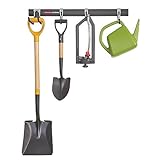
Garage wall hooks provide more usable space than small cabinets for long-handled tools. Individual hooks commonly cost $2 to $8, while multi-packs lower the price further. Choose hooks rated for at least twice the item’s weight. A 10-pound snow blower handle or garden tool is not difficult for a hook, but repeated impact can pull a weak hook or drywall anchor loose.
Storage Options Compared
| Storage type | Typical cost | Best use | Main trade-off |
|---|---|---|---|
| Plastic tote | $6–$25 | Seasonal gear and loose accessories | Consumes floor space when stacked |
| Wall hooks and rails | $2–$40 | Shovels, hoses, cords, and hand tools | Requires reliable wall attachment |
| Freestanding metal rack | $50–$150 | Bins, tires, and bulky equipment | Uses floor area and can wobble if overloaded |
| Ceiling rack | $60–$180 | Light seasonal bins used rarely | Harder access and installation risk |
| Small drawer cabinet | $25–$100 | Fasteners, bits, and small parts | Poor value for bulky items |
Where to Spend More
A basic five-tier garage shelving unit is usually the most useful single purchase. Budget units often cost $50 to $90 and hold roughly 150 to 350 pounds per shelf, but those ratings assume evenly distributed weight. Particleboard shelves sag when damp bins are packed tightly, so steel wire shelves are preferable in an unheated garage.
Pay more for shelving when you store paint, car parts, or multiple power tools. Look for adjustable shelves, a cross brace, and feet that can be leveled. A $70 rack with no brace may sway badly; a $110 rack with a back brace and bolt-together frame is often a better long-term buy. Anchor any tall rack to wall studs, especially if children can enter the garage.
Ceiling storage is useful only for items handled once or twice a year. A $60 to $100 overhead rack can hold empty luggage or labeled holiday bins, but it is a poor location for anything needed during a storm or weekend project. Never exceed the rack’s stated capacity, and attach it to ceiling joists rather than drywall. If your ceiling framing is difficult to locate, wall shelving is safer and usually cheaper.
Organizing Tools Without Overbuying
Use a simple rule: daily-use items stay between waist and shoulder height; seasonal items go high or toward the back. Put winter supplies near the garage door in October and move lawn-care accessories forward in spring. Label two sides of every bin because stacks are often approached from different directions.
For small hardware, inexpensive compartment boxes are better value than a large rolling tool chest. Buy boxes with removable dividers only if you regularly change the contents; fixed compartments cost less and do not shift when carried. A $5 to $12 organizer handles screws, anchors, and drill bits adequately. The failure mode is overloading it with heavy bolts, which can break thin hinges and latches.
Use a broom or tool rack for rakes, shovels, and extension cords rather than leaning them in a corner. Leaning tools create a falling hazard and waste roughly 2 feet of wall width. Keep cords loosely coiled—tight loops create kinks—and hang hoses on a wide, smooth hook so they do not flatten.
Seasonal Buying Timing
Buy winter storage supplies and snow-tool hooks in late winter or early spring, when seasonal merchandise is discounted. Garden storage, hose reels, and outdoor equipment often get better prices in late summer and fall. Plastic bins are commonly cheapest around major moving and back-to-school periods, while shelving prices fluctuate more with shipping costs and promotions.
Do not stock up before measuring. A sale on 40-gallon bins is wasted money if a loaded bin weighs 70 pounds and cannot safely be lifted onto your rack. Smaller 18- to 27-gallon containers are easier to rotate and reduce the temptation to fill every inch of available space.
A Practical Budget Plan
For a modest two-car garage, start with one $70 to $110 shelving unit, six to eight medium totes, and a $15 to $30 hook assortment. Add a $10 compartment organizer and labels. That puts a useful first-stage system around $140 to $250, before specialized racks or cabinets.
Install hooks first, then place shelving, and only afterward buy additional bins. This order prevents the common failure of filling the floor with containers before creating a usable path. Reassess after one season: if an item was not touched, move it higher or donate it. Organization saves money only when it makes the next seasonal change faster, safer, and less frustrating.