Best Budget Knee Pad Set for Flooring and Home Renovation Work
What's inside
As an Amazon Associate I earn from qualifying purchases. This post may contain affiliate links at no extra cost to you.
Best Budget Knee Pad Set for Flooring and Home Renovation Work
For flooring, trim work, cabinet installation, and general renovation, a budget knee pad set should do three things reliably: spread pressure across the kneecap, stay in place while you move, and survive contact with rough subfloors. You do not need tactical-looking pads or professional-grade hardware for occasional home projects. The best value is usually a comfortable pair in the $15 to $35 range, provided it fits correctly and has a thick, durable outer shell.
The cheapest pads can still be useful. A $10 to $15 foam pair is fine for painting baseboards, assembling furniture, or spending an hour on a clean floor. For installing vinyl plank, tile, or hardwood, however, the extra $10 to $20 for better straps and denser padding is usually money well spent. Cheap pads tend to flatten, slide down, or split at the strap rivets before the job is finished.
As an Amazon Associate we earn from qualifying purchases at no extra cost to you.


What to Look For in Budget Knee Pads
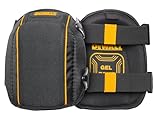
Start with the padding, not the shell. Look for at least 10 to 15 mm of dense foam or gel cushioning around the kneecap. Very soft foam feels comfortable in the first few minutes but can compress quickly under body weight. Firmer foam may feel less plush but provides better support during a full day of floor work.
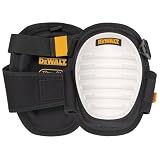
The outer cap should be hard plastic, rubber, or a thick molded synthetic material. A hard cap makes it easier to slide across plywood and concrete without catching. A soft rubber cap grips better on ladders and finished flooring but can drag when you reposition yourself. If you are laying click-lock flooring, a rounded cap is preferable because sharp edges can mark planks or snag underlayment.
Pay close attention to the straps. Two adjustable straps per knee are generally more stable than a single strap. The upper strap should sit above the calf and the lower strap below the knee joint, rather than directly across the back of the knee. Wide elastic straps are comfortable, while thin straps can dig into your legs after several hours. Hook-and-loop closures are easy to adjust but collect dust and lose grip when packed with sawdust.
A useful starting point is this budget flooring knee pad search. Compare the thickness, strap layout, and user photos rather than relying on a high review count alone.
Budget Knee Pad Comparison
| Price range | Best for | Typical strengths | Common weaknesses |
|---|---|---|---|
| $10–$15 | Short home tasks and light painting | Low upfront cost, lightweight, easy to store | Thin foam, slipping straps, faster wear |
| $15–$30 | Flooring and weekend renovation | Better padding, useful hard caps, more stable fit | Quality varies by brand and size |
| $30–$50 | Frequent DIY or trade work | Denser cushioning, stronger stitching, better comfort | May be excessive for occasional use |
| $50 and up | Daily professional use | Longer service life and refined fit systems | Poor value if used only a few times per year |
The Best Value Choice for Most Homeowners
For most renovation work, choose a pair in the $20 to $30 range with dense foam, a rounded hard cap, and two wide straps. This is the practical middle ground. It is usually comfortable enough for four to eight hours of flooring work without paying for features that matter mainly to full-time installers.
A hybrid design with a hard center cap and softer rubber around the edges works well indoors. The cap lets you shift your knees across the floor, while the outer material reduces scuffing and gives some grip when you lean sideways. If you work mostly on concrete, prioritize padding thickness and a secure fit. If you move between flooring and ladders, avoid very slippery plastic caps.
Consider gel knee pads with hard caps if you regularly install tile or spend several hours kneeling. Gel can reduce pressure points, but it is not automatically better. Low-cost gel inserts may shift inside the pad, leak after rough use, or provide little benefit once the foam around them compresses.
When the Cheapest Pads Are Fine
A basic foam pair is a sensible purchase for jobs lasting less than two hours, especially if the surface is clean and relatively soft. They are also adequate for caulking, painting, light drywall finishing, and occasional repairs. At that price, replacement is not a major problem if the foam becomes permanently compressed.
Do not expect entry-level pads to protect well on coarse concrete or gravel. The shell may crack, and the thin foam can leave your kneecap pressing directly into the floor. A common failure mode is strap creep: the pad slowly slides below the kneecap, forcing you to stop and readjust every few minutes. If that happens during a flooring job, the cheaper pair is costing you time as well as comfort.
Fit and Use Tips That Prevent Problems
Measure around your thigh and calf if the manufacturer provides sizing instructions. Knee pads that are too large will rotate; pads that are too tight restrict circulation and become painful behind the knee. Put them on over the clothing you will actually wear. Thin work pants and heavy jeans can require different strap adjustments.
Position the center of the cushion directly over the kneecap while standing, then bend down and check that it stays centered. Tighten the upper strap enough to prevent movement, but do not use it as a tourniquet. If the pad presses into the back of your knee, move the lower strap farther down your calf.
Use a kneeling board or a scrap of rigid underlayment when working for long periods on rough concrete. Knee pads reduce pressure, but they cannot eliminate the strain caused by remaining in one position. Switch between kneeling, squatting, and sitting, and stand up for a few minutes at least every 30 to 45 minutes.
When to Buy and How Much to Pay
Knee pads are commonly discounted during spring home-improvement promotions, Father’s Day sales, and the weeks around Black Friday. Prices often fall by 10 to 25 percent during these periods, but waiting is unnecessary if a flooring installation is already scheduled. A reliable $20 pair is better value than delaying a job for a possible $5 discount.
For a second option, compare two-strap professional flooring knee pads when you expect repeated use. Spend above $35 only when you install floors regularly, work on concrete, or have already experienced pain and strap failure with basic pads. Otherwise, a well-fitting $20 to $30 set offers the best balance of protection, durability, and price.