
What's inside
- Top Picks at a Glance
- Best Pressure Washer Comparison Table
- What to Look for in a Pressure Washer
- 1. Westinghouse ePX3500: Best for Mixed Home Jobs
- 2. Sun Joe SPX3000: Best Value Electric with a Rated Figure
- 3. Greenworks 3000 PSI (2.0 GPM Max) Brushless: Best Premium Electric
- 4. Westinghouse WPX3400 Gas: Best Overall Gas
- 5. DeWalt DXPW3300-S: Best Gas for a Known Tool Brand
- 6. Simpson Clean Machine 3200: Best Budget Gas
- 7. Greenworks 2200 PSI (1.2 GPM Max): Best Light-Duty Starter
- Also Consider
- How We Chose
- Buying Guide
- Common Mistakes
- Frequently Asked Questions
- Which One Should You Buy?
- Sources
As an Amazon Associate I earn from qualifying purchases. This post may contain affiliate links at no extra cost to you.
The best pressure washer for most homeowners is the Westinghouse ePX3500 if the job list is a car, patio furniture, a deck and a small patio, and the Westinghouse WPX3400 gas model if the job list includes a long driveway, a two-story house or stained concrete. The runner-up in each group is the Sun Joe SPX3000 for electric and the DeWalt DXPW3300-S for gas. The rest of this guide explains why, and how to read PSI and GPM so that you pick a machine for your own jobs instead of a headline number.
A quick word on method: this guide is research-based. We did not personally use these machines. Specs come from the listing titles in the store and from manufacturer descriptions, and anything we could not confirm is marked “not listed”. Prices are shown only as tiers (Budget, Mid-range, Premium) because they change often.
As an Amazon Associate we earn from qualifying purchases at no extra cost to you.


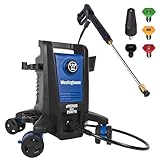
Our Top Picks
 Westinghouse ePX3500 Electric Pressure Washer2500 Max PSI13.5 x 14 x 16.5 inches19 poundsCheck on Amazon


Top Picks at a Glance
- Best Overall (electric): Westinghouse ePX3500 – 2500 max PSI, 1.76 max GPM, anti-tipping design, onboard soap tank.
- Best Value (electric): Sun Joe SPX3000 – 2500 max PSI (2030 PSI PWMA rated), a rare listing that states the rated figure next to the max figure.
- Best Premium Electric: Greenworks 3000 PSI (2.0 GPM max) brushless – the highest flow of the electric group here.
- Best Overall Gas: Westinghouse WPX3400 – 3400 PSI, 2.6 GPM, onboard soap tank, five-nozzle set.
- Best Residential Gas Brand Pick: DeWalt DXPW3300-S – 3300 PSI, 2.4 GPM, residential model with an axial cam pump.
- Best Budget Gas: Simpson Clean Machine 3200 – 3200 PSI, 2.5 GPM, turbo nozzle included.
- Best Light-Duty Starter: Greenworks 2200 PSI (1.2 GPM max) – for cars, bikes and patio chairs only.
Best Pressure Washer Comparison Table
| Product | Type | Best for | Key specs | Watch for | Price tier |
|---|---|---|---|---|---|
| Westinghouse ePX3500 | Electric | All-round home cleaning | 2500 max PSI, 1.76 max GPM, soap tank | Max PSI is a peak figure, not a sustained one | Mid-range |
| Sun Joe SPX3000 | Electric | Decks, siding, cars | 2500 max PSI (2030 PSI PWMA rated) | GPM not listed in the title | Mid-range |
| Greenworks 3000 PSI Brushless | Electric | Faster cleaning without gas | 3000 PSI, 2.0 max GPM, brushless motor | Heavier cord and hose handling | Premium |
| Greenworks 2200 PSI | Electric | Light tasks, apartments | 2200 PSI, 1.2 max GPM | Slow on large flat areas | Mid-range |
| Westinghouse WPX3400 | Gas | Driveways, fences, two-story siding | 3400 PSI, 2.6 GPM, five nozzles | Engine upkeep, fuel storage, noise | Mid-range |
| DeWalt DXPW3300-S | Gas | Owners who want a known tool brand | 3300 PSI, 2.4 GPM, axial cam pump | Engine specifics not listed | Premium |
| Simpson Clean Machine 3200 | Gas | Value gas power | 3200 PSI, 2.5 GPM, turbo nozzle | Hose length and engine make not listed | Budget |
What to Look for in a Pressure Washer
Three numbers decide how a pressure washer feels in use: PSI (how hard the water hits), GPM (how much water moves per minute) and the nozzle (how that water is shaped). Manufacturers like to advertise PSI because it is the biggest number on the box, yet for homeowners GPM often matters just as much, because flow is what carries dirt away from a surface instead of just blasting at one spot.
A common rule of thumb is cleaning power = PSI x GPM. Treat it as a rough comparison tool, not an official rating. Using the listing figures, the Westinghouse ePX3500 works out to roughly 2500 x 1.76 = 4,400 “cleaning units”, the Greenworks 3000 brushless to 3000 x 2.0 = 6,000, and the Westinghouse WPX3400 gas to 3400 x 2.6 = 8,840. That spread explains why a gas machine can clear a driveway in the time an electric unit takes to finish half of it.
Because several electric listings state “max PSI”, expect the sustained working pressure to be lower. The Sun Joe listing is helpful here: it states 2500 Max PSI and 2030 PSI PWMA rated in the same title, a reminder that standardised ratings run below peak numbers.
What PSI Pressure Washer Do I Need?
Match PSI to the toughest surface you clean regularly, then leave headroom.
- 1,300-2,000 PSI: cars, bikes, grills, outdoor furniture, window screens (wide fan nozzle only).
- 2,000-2,800 PSI: decks, fences, small patios, garage doors, vinyl siding. Most home electric washers sit here.
- 2,800-3,400 PSI: driveways, sidewalks, brick, stained concrete, two-story house wash.
- 3,500 PSI and up: heavy, repeated concrete or equipment cleaning; more than most homes need.
What PSI Pressure Washer Is Right for Residential Use?
For residential use, 2,000-3,000 PSI at 1.4-2.5 GPM covers almost every household job. Higher pressure is not automatically better: the nozzle you choose and the distance you hold the wand from the surface matter more than raw PSI. On soft wood, painted trim, older mortar and car paint, start with a wide fan tip, hold the wand farther away and work closer only if the surface allows. Check the manufacturer’s manual for the surface and nozzle limits of your model.
Electric vs Gas: The Real Differences
| Factor | Electric | Gas |
|---|---|---|
| Typical PSI in this guide | 2,200-3,400 max | 3,200-3,400 (higher on pro models) |
| Typical GPM | 1.2-2.0 | 2.4-2.6 (4.0 on pro models) |
| Noise | Moderate hum | Loud engine, ear protection advised |
| Upkeep | Minimal, winterise the pump | Fuel, oil, spark plug, fuel stabiliser |
| Where to use | Near an outlet; GFCI protected circuit | Open outdoor areas only, never indoors or in a garage |
| Best for | Small to mid-size jobs | Large flat areas and tough stains |
Worked Example: How Long Does a Driveway Take?
Take a 20 by 40 foot driveway, which is 800 square feet. With a bare 25-degree tip, a homeowner might clean a strip about 8 to 10 inches wide per pass, so the work is mostly walking speed and flow. A higher-GPM washer rinses grime off faster, so you can move steadily rather than going back over each strip. Lower-flow electric units need slower passes and more overlap. The practical takeaway: for areas above roughly 600 square feet, GPM and a surface cleaner attachment save more time than extra PSI. Exact times depend on the stain, the tip and your technique, so treat any hour figure you see online as a rough guide only.
Task-by-Task Decision Matrix
| Your main job | Suggested class | Tip to start with | Pick from this guide |
|---|---|---|---|
| Car, bike, grill | 1,300-2,200 PSI electric | 40-degree white | Greenworks 2200 |
| Deck and fence | 2,000-2,800 PSI electric | 25-degree green, kept at a distance | Westinghouse ePX3500, Sun Joe SPX3000 |
| Small patio | 2,500-3,000 PSI electric | 25-degree green | Greenworks 3000 brushless |
| Driveway and walkways | 3,000-3,400 PSI gas | 25-degree, or a surface cleaner | Westinghouse WPX3400, Simpson Clean Machine 3200 |
| Two-story siding | 2,500-3,300 PSI with soap | Soap tip, then 40-degree rinse | DeWalt DXPW3300-S |
1. Westinghouse ePX3500: Best for Mixed Home Jobs
- 2500 max PSI and 1.76 max GPM
- Anti-tipping technology
- Onboard soap tank
- Electric, so no engine upkeep
- Hose length and weight: not listed in the title
Best for: homeowners with a deck, a car, patio furniture and a small driveway section. Skip if: you need to clean a full-size driveway weekly or strip stained concrete.
The ePX3500 sits at the sweet spot for an electric washer. At 2500 max PSI it has enough bite for algae on a patio and mud on a mower deck, yet it is not so aggressive that a careless pass will gouge a softwood fence. The anti-tipping design matters in practice, because a washer that topples when you pull the hose across a lawn is a nuisance, and a tipped unit can strain the hose connectors.
The onboard soap tank is convenient for light detergent work, but low-pressure soap application through a built-in tank is rarely as effective as a foam cannon. If you wash vehicles often, plan to add a foam cannon that fits the quick connect on your wand.
This is the model behind the “Westinghouse ePX3500 electric pressure washer review” search. Based on the listing, the reasonable expectation is a capable light-to-mid-duty washer. Electric units in this class are generally slower on big concrete areas than gas machines, so keep expectations aligned with the 1.76 GPM figure.
Pros:
- Balanced PSI and flow for the home electric class
- Anti-tipping base
- Soap tank for quick light cleaning
- No fuel or engine upkeep
Cons:
- Peak PSI figure, so sustained pressure is lower
- Slow for large driveways
2. Sun Joe SPX3000: Best Value Electric with a Rated Figure
- 2500 Max PSI, 2030 PSI PWMA rated
- Electric power washer, heavy-duty positioning in the listing
- GPM: not listed in the title
- Detergent system: not listed
Best for: buyers who want an honest, standardised pressure figure. Skip if: you need confirmed GPM before purchase.
The Sun Joe SPX3000 is a good teaching example because its listing separates the max number from the rated number. If two washers both say 2500 PSI, the one that publishes a rated figure gives you a better basis for comparison. At about 2030 PSI rated, the SPX3000 is sensibly aimed at decks, siding, fences and cars rather than concrete restoration.
Look at the nozzle set and quick-connect hardware before you buy. Several electric washers in this class ship with four to five tips; keep the 25-degree tip for general work, the 40-degree for delicate surfaces, and leave the 0-degree red tip in the box unless you know exactly why you need it.
Pros:
- Transparent PWMA-rated pressure
- Well-known electric brand
- Good fit for decks and vehicles
Cons:
- GPM not stated in the headline specs
- Not meant for heavy concrete work
3. Greenworks 3000 PSI (2.0 GPM Max) Brushless: Best Premium Electric
- 3000 PSI and 2.0 max GPM
- Brushless electric motor
- Highest flow among the electric picks here
- Weight and hose length: not listed
Best for: homeowners who want near-gas performance without an engine. Skip if: your outlet is far from the work area and you do not want to manage long extension cords.
A brushless motor is attractive because it usually runs cooler and has no carbon brushes to wear out, which is why brushless tools are often positioned as longer-lived. At 2.0 GPM it moves about 14 percent more water than the 1.76 GPM units in this guide, and that extra flow shows up on wide surfaces like patios and decks where the washer must carry grime away, not just loosen it.
The trade-off is the supply: stronger electric washers draw more current, so use a heavy-gauge outdoor extension cord that the manufacturer approves, plug into a GFCI outlet and keep connections off wet ground.
Pros:
- 3000 PSI class power in an electric body
- Brushless motor
- Higher flow for faster rinsing
Cons:
- Premium price tier among electric units
- Needs a suitable outlet and cord
4. Westinghouse WPX3400 Gas: Best Overall Gas
- 3400 PSI and 2.6 GPM
- Onboard soap tank
- Spray gun, wand and five-nozzle set
- Gas engine; displacement not listed in this title
Best for: long driveways, fences, house washing and concrete stains. Skip if: you only wash a car and a grill, or you live where gas engines are restricted.
At 3400 PSI and 2.6 GPM, the WPX3400 gives the highest flow in this guide, which is where gas machines earn their place. Using the PSI x GPM shorthand, it is nearly twice the electric ePX3500. For a driveway, a wide surface cleaner attachment can cover ground in a fraction of the time a bare wand takes. A surface cleaner is an add-on that is not included, so confirm its connection size and rated maximum flow before buying.
Gas machines demand routine care. Use fresh fuel, check the oil before each use, and run the engine only outdoors with open air around it. Never run a gas washer in a garage or enclosed space because exhaust contains carbon monoxide.
Pros:
- Highest PSI and GPM among the picks
- Includes five nozzles
- Not tied to an outlet
Cons:
- Loud and heavier to move
- Fuel, oil and storage upkeep
- Too much force for delicate surfaces without the right tip
5. DeWalt DXPW3300-S: Best Gas for a Known Tool Brand
- 3300 PSI and 2.4 GPM
- Residential model with an axial cam pump (as stated in the listing)
- Gas engine; make and displacement not listed
Best for: buyers who prefer an established tool-maker and want a residential-class gas washer. Skip if: you want the cheapest 3000-plus PSI option.
The DXPW3300-S slots just under the Westinghouse on pressure and flow, but in return you get a brand people recognise from the job site. The listing calls it a residential model with an axial cam pump, which suggests it is built for homeowner duty rather than daily commercial use. On pump types, axial cam pumps are common and economical for homeowner use, while triplex pumps typically cost more and are rated for heavier, longer duty.
Pros:
- Brand recognition
- 3300 PSI and 2.4 GPM
- Residential design
Cons:
- Premium price tier for the specs
- Several details not stated in the title
6. Simpson Clean Machine 3200: Best Budget Gas
- 3200 PSI and 2.5 GPM
- Turbo nozzle included
- Axial cam pump (stated in the listing)
- Engine make and hose length: not listed
Best for: shoppers who want gas power on a tighter budget. Skip if: you need a larger engine or a long warranty.
Simpson is a long-standing name in pressure washers, and this model undercuts most gas rivals in this guide while still posting 3200 PSI and 2.5 GPM. That makes it the best choice for people whose main job is a driveway and a back patio a couple of times a year. A turbo nozzle (a rotating zero-degree tip) cleans quickly, but it is aggressive. Try it on a hidden patch first and keep it off wood, siding and car paint.
About the Simpson Mega Shot MSH3125 review search: the store lists replacement parts for that model but not the complete unit, and we could not confirm its full spec sheet, so this guide does not review it. The Clean Machine is the closest in-store Simpson option for a homeowner.
Pros:
- Lowest-cost route to gas power in this guide
- 3200 PSI and 2.5 GPM
- Turbo nozzle included
Cons:
- Less detail in the listing
- Engine upkeep like any gas washer
7. Greenworks 2200 PSI (1.2 GPM Max): Best Light-Duty Starter
- 2200 PSI and 1.2 max GPM
- Electric, compact class
- Soap system: not listed
Best for: apartment balconies, cars, bikes, grills and patio chairs. Skip if: your main job is a driveway or a long fence.
With 1.2 GPM, this machine moves about two-thirds the water of a 1.76 GPM unit. That is fine for rinsing a car or scrubbing a plastic chair, but it will feel slow on anything larger than a small patio. If your cleaning list is short and storage space is tight, this is a reasonable entry point.
Pros:
- Easy to store and carry
- Enough for light chores
Cons:
- Low flow
- Slow on large surfaces
Also Consider
CRAFTSMAN Electric Pressure Washer
A lightweight corded cold-water washer for cars, driveways, patios and garages, according to its listing. PSI and GPM figures are not shown in the title, so compare the full spec sheet first.
Simpson PowerShot 3300 (Honda GX200)
A professional-oriented gas washer at 3300 PSI and 2.5 GPM with a Honda GX200 engine. Choose it if you expect heavy use and want a more durable engine class; it sits in the Premium tier.
LawnMaster LT506
An electric washer with 2300 max PSI, a 13 amp motor and 1.4 GPM, CSA certified. A compact option for car and patio cleaning.
Westinghouse WPX3400e
The brushless electric sibling of the gas model: 3400 max PSI and 2.0 max GPM with an onboard soap tank. Good if you want a high peak figure without gas.
How We Chose
This is a research-based guide. We did not personally use these products. We started with products actually sold in the store, then compared their listed PSI, GPM, power source and included accessories. Where the listing gave only a peak figure, we say so. We read manufacturer product descriptions and cross-checked them against general guidance from the Pressure Washer Manufacturers Association (PWMA) and consumer buying guides, but we do not quote their scores. We limited each brand to two picks, covered both electric and gas, and sorted picks by task: light chores, mixed home jobs and large concrete areas.
Buying Guide
1. Start With Your Surface List
Write down every surface you will clean in a year. If it is just cars, furniture and a deck, an electric 2,000-2,500 PSI unit handles it. If it includes a driveway of over 600 square feet, a two-story house or old oil stains, step up to gas or the 3000-plus PSI brushless electric. Buying for the toughest job you do once a year is usually a worse decision than buying for the job you do monthly and renting for the rest.
2. Read GPM Before PSI
GPM sets cleaning speed. A 1.76 GPM washer and a 2.6 GPM washer can have similar PSI, but the second one moves roughly 48 percent more water per minute. If the listing hides GPM, check the manual or the manufacturer page before buying.
3. Understand Max PSI vs Rated PSI
Electric washers often advertise a max PSI that is not sustained. A rated value, such as the PWMA figure shown on the Sun Joe listing, is a better basis for comparison. When comparing two electric washers, assume the real working pressure is lower than the peak.
4. Check Nozzles and Connections
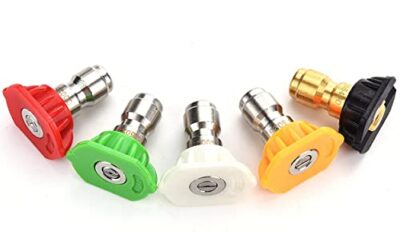
Common nozzle angles are 0 (red, pinpoint), 15 (yellow, stripping), 25 (green, general), 40 (white, delicate), plus a black soap tip. Quick-connect fittings are usually 1/4 inch. A good set should include at least the 15, 25, 40 and soap tips. Rotating turbo nozzles clean quickly but can damage soft surfaces.
5. Plan for Safety and Storage
Wear eye protection, closed-toe shoes and, with a gas unit, hearing protection. Never point the spray at people, pets or electrical fixtures. Use gas washers only outdoors. For electric washers, use a GFCI-protected outlet. Drain the pump and use a pump protector before freezing weather, following the manual.
6. Count the Ownership Costs
Electric washers cost little to run, but gas models add fuel, oil, a spark plug and a stabiliser for off-season storage. Over several seasons, add the cost of a foam cannon, a surface cleaner, a replacement hose and an inlet filter. These small items often decide whether the washer stays pleasant to use.
Common Mistakes
- Buying on peak PSI alone and ignoring GPM.
- Using a zero-degree or turbo tip on wood, siding or paint.
- Running a gas washer in a garage or enclosed space.
- Pulling the trigger before the water supply is fully on, which starves the pump.
- Storing the washer with water left in the pump through freezing weather.
Frequently Asked Questions
What is the best pressure washer for home use?
For most homes it is an electric unit around 2,000-3,000 PSI, with a 3,000-plus PSI gas machine for large driveways. The Westinghouse ePX3500 and WPX3400 are representative picks in each group.
What PSI pressure washer do I need for a driveway?
Aim for roughly 3,000-3,400 PSI at 2.4 GPM or more. Electric units below 2,500 PSI will work, but slowly, especially on stained concrete.
Is electric or gas better?
Electric is quieter, lighter and lower in upkeep, which suits small jobs. Gas offers higher flow and mobility, which suits large areas.
Is the Westinghouse ePX3500 good?
Based on its listed 2500 max PSI, 1.76 max GPM, anti-tipping design and soap tank, it is a sensible mid-range electric washer for mixed home tasks. It is not intended for heavy concrete restoration.
Can a pressure washer damage my surfaces?
Yes, if the pressure is too high for the material or the tip is too narrow. Start with a wide-angle tip, keep the wand moving, and follow the manufacturer’s guidance for each surface.
Do I need a surface cleaner attachment?
Not required, but it makes large flat areas faster and more even. Check that its maximum flow and connection fit your machine.
How should I store a pressure washer for winter?
Drain water from the pump, hoses and gun, and add a pump protector made for pressure washers if the manual recommends it. Store the unit away from freezing temperatures.
Which One Should You Buy?
If you wash cars, decks and furniture, choose the Westinghouse ePX3500 or the Sun Joe SPX3000. If you want electric convenience with stronger flow, step up to the Greenworks 3000 brushless. If you have a driveway, a long fence or a two-story house, choose the Westinghouse WPX3400, the DeWalt DXPW3300-S for a known tool brand, or the Simpson Clean Machine for the lowest gas entry. If you only need a small machine for light chores, the Greenworks 2200 will do. Whichever you choose, match the nozzle to the surface, keep the wand moving and read the manual before the first start.
Sources
- Manufacturer product pages: Westinghouse, Sun Joe, Greenworks, DeWalt, Simpson
- Pressure Washer Manufacturers Association (PWMA) rating guidance
- Owner’s manuals for nozzle, surface and winter storage guidance
- Consumer Reports and Family Handyman pressure washer buying guides (general guidance only)
Last updated: October 2026
Related guides
More from Amazon
Programs that pair well with the guide above. Offers and eligibility are set by Amazon and may change.
A free business account with business pricing and bulk-buying tools for work, shop or home office.
Create a business accountFree shipping on eligible items, Prime Video and more. Eligible new members can start with a free trial.
Start a Prime free trialAudiobooks and podcasts to listen to on the go. Eligible new members can start with a free trial.
Try Audible freeAd-free music streaming. Eligible new subscribers can start with a free trial.
Try Music Unlimited freeAs an Amazon Associate we earn from qualifying purchases.
Write Your Review
No reviews yet. Be the first to share your experience!