Best Value Electric Space Heater for an Enclosed Workshop
What's inside
As an Amazon Associate I earn from qualifying purchases. This post may contain affiliate links at no extra cost to you.
An enclosed workshop is usually a difficult place to heat cheaply. Doors open, insulation is often limited, and concrete floors absorb heat. For most small shops, the best value is a quality 1,500-watt ceramic fan heater with a real thermostat, tip-over protection, and a metal or heavy-duty plastic housing. It is inexpensive to buy, easy to move, and produces the maximum practical heat from a standard 120-volt outlet.
As an Amazon Associate we earn from qualifying purchases at no extra cost to you.
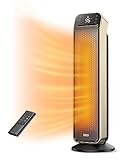


Best value: a 1,500-watt ceramic shop heater
A 1,500-watt heater produces about 5,100 BTU per hour. That is enough for spot heating a 100- to 200-square-foot enclosed workshop, especially if the heater is aimed at your work area rather than expected to heat the entire building. Look for adjustable output, such as 750 and 1,500 watts, an adjustable thermostat, overheat shutoff, and a tip-over switch.
The most useful feature is a thermostat that cycles the heater off after the room warms up. A basic two-setting heater without a thermostat can run continuously, wasting electricity and making the room uncomfortably hot near the heater while leaving distant corners cold. A 1500-watt ceramic space heater is the right starting point for most small enclosed shops.
| Heater type | Typical output | Best use | Main drawback |
|---|---|---|---|
| 1,500W ceramic fan heater | 5,100 BTU/hr | Small shops and spot heating | Limited by a 120V circuit |
| Oil-filled radiator | 5,100 BTU/hr | Quiet, steady background heat | Slow to warm and easy to bump |
| Infrared radiant heater | Varies by wattage | Heating one person or bench | Does not warm the whole room quickly |
| 240V shop heater | 10,000-17,000+ BTU/hr | Large, insulated workshops | Needs a dedicated circuit and installation |
What it costs to run
Electric resistance heaters convert nearly all of their electricity into heat, so there is no secret efficiency advantage between a ceramic heater, oil-filled radiator, and infrared unit using the same wattage. A 1,500-watt heater uses 1.5 kilowatt-hours per hour at full power. At $0.16 per kilowatt-hour, that costs about 24 cents per hour, or $1.92 for an eight-hour workday.
In real use, the thermostat may reduce that average after the room warms. However, a drafty shop can keep the heater running close to full time. Sealing a door bottom and weather-stripping gaps can save more money than upgrading from one 1,500-watt heater brand to another.
For a quiet shop, an oil-filled radiator heater is a reasonable alternative. It has no fan to blow dust across a freshly painted project and makes little noise. The trade-off is slow warm-up—often 15 to 30 minutes before it feels useful—and a hot surface that needs more clearance around it.
Circuit limits and workshop safety
At 120 volts, a 1,500-watt heater draws about 12.5 amps. That leaves very little capacity on a 15-amp circuit. Do not run it on the same circuit as a shop vacuum, compressor, saw, or space heater in another room. The breaker may trip when a motor starts, or an overheated receptacle may become a fire hazard.
Plug the heater directly into a wall outlet. Avoid extension cords, power strips, and lightweight cord reels. If an extension cord is unavoidable for temporary use, it should be short, fully uncoiled, and rated for the heater’s load, but direct connection is still the better practice. Warm plugs, discolored outlets, buzzing, or a loose-fitting receptacle are reasons to stop using the heater and repair the circuit.
Keep at least three feet of clearance from sawdust, cardboard, lumber, solvents, finishes, rags, and curtains. A tip-over switch is valuable in a busy shop, but it does not make a heater safe beside flammable materials. Never use a normal electric space heater where gasoline vapors, spray finishes, propane leaks, or other flammable vapors may collect. For dusty work, clean the intake grille regularly; a clogged heater can overheat and shut down.
When a 240-volt heater is the better value
If the workshop is larger than roughly 300 square feet, has high ceilings, or loses heat through uninsulated walls, a 120-volt portable heater will probably disappoint. Multiple small heaters can overload circuits and still leave cold areas. A permanently mounted 240-volt electric shop heater delivers far more heat, but it requires the correct dedicated circuit and often professional installation.
A 5,000-watt unit produces about 17,000 BTU per hour but draws roughly 20.8 amps at 240 volts. That is not a plug-in upgrade; the wiring, breaker, disconnect, and mounting all need to match the heater. It becomes good value when you use the shop frequently or need to maintain a comfortable temperature for hours. It is poor value for occasional weekend work in a small, leaky shed.
Best time to buy and features worth paying for
Space heaters are usually cheapest after the coldest part of winter, when retailers clear seasonal inventory. Fall sales can also be worthwhile, but selection is often better than the discounts. Avoid buying solely on a high advertised wattage; standard 120-volt heaters are generally capped near 1,500 watts.
Pay extra for a reliable thermostat, tip-over protection, overheat protection, a sturdy cord, and a warranty from a recognizable brand. Remote controls and app features are convenient but rarely improve heating value. A basic heavy-duty 1,500-watt shop heater is fine when you only need temporary heat at one bench. Spend more on insulation, a 240-volt circuit, or a permanently mounted heater only when the size and frequency of the job justify it.