Best Value Stick Welder for Occasional Farm Maintenance
What's inside
As an Amazon Associate I earn from qualifying purchases. This post may contain affiliate links at no extra cost to you.
What farm maintenance demands
For occasional repairs to gates, brackets, mower decks, and similar steel parts, a basic DC stick welder is often the best value. Stick welding tolerates outdoor drafts better than MIG, needs no shielding gas, and keeps the setup simple. It is not a fix for every farm repair: thin sheet metal, rusty metal, and safety-critical parts all demand more skill and preparation than a low price can solve.
Most small inverter welders advertise a 110–120-volt input and output ranges around 20–140 amps. That can cover common repairs in roughly 1/8- to 1/4-inch steel, depending on joint design, electrode, and the machine’s duty cycle. A 120-volt model is convenient, but its output may be limited by a 15-amp household circuit. A dedicated 20-amp circuit, correctly sized extension cord, and the manufacturer’s instructions matter; an undersized cord can cause voltage drop, poor starts, and overheating.
As an Amazon Associate we earn from qualifying purchases at no extra cost to you.


The best-value machine for occasional use
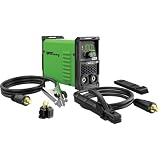
Look for a 120-volt inverter with adjustable amperage, a usable ground clamp, thermal overload protection, and enough output for common 1/8-inch electrodes. A rough working range for a 1/8-inch 6011 or 6013 rod is about 75–125 amps, but follow the rod packaging and test on scrap. If farm jobs regularly involve heavier stock or long welds, stepping up to a 240-volt machine is more useful than paying extra for flashy features on a small unit.
Compare 120-volt inverter stick welders by warranty, cable quality, included accessories, and the output they can sustain—not only their maximum amp claim. A bare-bones inverter can be fine for a few short repairs a year. It is poor value if its leads are too short for the work area or its clamp needs immediate replacement.
How the main options compare
| Option | Best fit | Trade-off | Value check |
|---|---|---|---|
| 120-volt inverter | Short repairs and portable use | Limited output and duty cycle | Best low-cost choice if the circuit and materials suit it |
| 240-volt inverter | Heavier stock and more frequent work | Needs a suitable outlet and usually costs more | Worth it when 120-volt limits cause repeated delays |
| Used transformer welder | Shop use where weight is not an issue | Heavy, less portable, condition varies | Good only if tested and priced below a warranted inverter |
For farm use, portability has practical value: a compact inverter is easier to carry to a gate or implement. But do not assume a “200-amp” label means it can deliver that output from a standard 120-volt outlet. Check the input voltage, required breaker, and duty cycle at the amperage you expect to use. A 20% duty cycle means about two minutes welding in a ten-minute period, followed by cooling time; short repair beads may make that adequate.
Budget for the parts around it
The machine is only part of the cost. Include a proper welding helmet, leather gloves, nonflammable clothing, an angle grinder with suitable discs, and dry electrodes. Basic starter kits often include a helmet or brush, but low-cost accessories may be uncomfortable or unreliable. A helmet with a dependable auto-darkening lens is convenient; a correctly rated fixed-shade helmet is also workable.
For general repair stock, 1/8-inch 6011 electrodes are useful when surfaces are not perfectly clean, while 6013 rods are easier for many beginners on clean, thinner material. Neither makes welding over paint, oil, heavy rust, or galvanized coating a good idea. Remove coatings and contamination, and avoid welding galvanized steel unless you know how to manage the hazardous fumes safely. For rods that must stay dry, buy a small quantity and store them according to the package guidance rather than leaving an open box in a damp shop.
Use 1/8-inch E6011 electrodes for a versatile repair supply, but select a rod suited to the metal and joint. A common failure is choosing a rod that is too large for the machine’s available amperage: the arc may stick repeatedly, leaving cold, weak welds. Another is making one long bead on thin material and warping or burning through it. Short, controlled passes and practice on scrap reduce both risks.
When to spend more—and when not to
Choose 240 volts if you have the outlet already and expect regular work on thicker steel, such as heavy brackets or equipment frames. It offers more headroom, but it does not make poor fit-up or bad technique safe. If the machine will only come out a few times each year for small repairs, a reputable 120-volt unit is usually enough. Spending more for digital displays, multiple processes, or an oversized amp rating is hard to justify unless you will use those features.
Check the maker’s warranty terms and availability of replacement leads before buying an unfamiliar bargain brand. A low advertised price can lose its appeal if the clamp is flimsy, the manual is vague, or warranty service requires shipping the whole machine overseas. Brand reputation is useful, but compare the actual package and support rather than paying a premium for a familiar logo alone.
Seasonal buying and safe limits
Prices and stock often improve around major holiday sales and spring tool promotions, when retailers discount welding kits and accessories together. Compare the final price against buying the machine and safety gear separately; bundled helmets and gloves are not automatically good quality. Before seasonal farm repairs begin, test the welder on scrap and inspect leads, connections, and the work clamp. A loose connection can overheat, while damp electrodes or a poor ground can make an otherwise sound machine seem defective.
Finally, do not treat a budget stick welder as a license to repair every broken part. A cracked trailer hitch, lifting point, pressure vessel, or structural component can fail catastrophically, and some repairs require qualified inspection or replacement. For ordinary noncritical farm steel, the best value is a machine that starts reliably, fits the electrical supply, and leaves enough budget for safe gear and preparation.