Best Value Tools for Installing a Ceiling Fan and Light Fixture
What's inside
As an Amazon Associate I earn from qualifying purchases. This post may contain affiliate links at no extra cost to you.
Installing a ceiling fan with a light is usually a straightforward job, but the right tools matter more than buying the biggest kit. You need to work overhead, make reliable electrical connections, and support a fixture that may weigh 15 to 50 pounds. A sensible budget is about $75 to $150 for tools if you already own a drill and basic hand tools. If the ceiling box is not fan-rated, add the cost of a brace or replacement box before you start.
The best-value tool kit
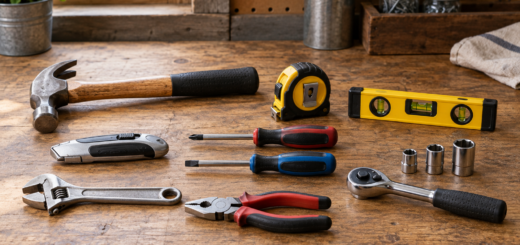
Start with a basic electrician tool set only if you are missing several essentials. Otherwise, buying individual tools is usually cheaper and lets you avoid low-quality pliers and screwdrivers found in oversized kits.
Your core kit should include a non-contact voltage tester, wire stripper, insulated screwdrivers, combination pliers, a tape measure, a utility knife, and a drill or driver. Add a step ladder, a headlamp, and a magnetic parts tray. The parts tray is inexpensive but useful: dropped wire nuts and mounting screws are hard to find from a ladder.
| Tool | Budget price | What to look for | Where cheap is fine |
|---|---|---|---|
| Non-contact voltage tester | $10–$25 | Clear audible and visual indication; replaceable or standard batteries | A basic tester is fine, but test it on a known live outlet first |
| Wire stripper | $8–$20 | Clean 14- and 12-gauge stripping slots; comfortable grips | Fine for one or two projects if it does not nick copper |
| Insulated screwdriver set | $15–$35 | Phillips and slotted tips that fit electrical screws tightly | Midrange handles are adequate; avoid soft, poorly formed tips |
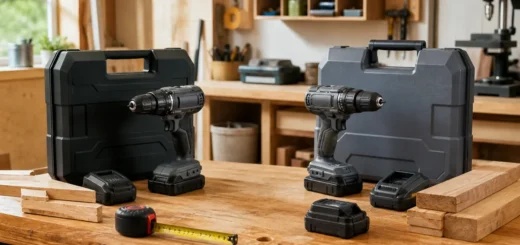
| Drill/driver | $40–$120 | Two-speed clutch and a 3/8-inch chuck or common bit system | A corded drill works if the room is accessible and power is off only at the ceiling circuit |
| Step ladder | $35–$90 | At least a 6-foot rating, wide steps, and a platform or hand grip | Do not substitute a chair or short household stool |
Electrical safety tools that are worth paying for
A non-contact tester is a useful first check, not proof that a circuit is dead. Turn off the breaker, confirm the ceiling light no longer works, then test the wires with the tester. If possible, use a two-pole voltage tester or multimeter for confirmation. A tester can give a false negative because of dead batteries, and it can give confusing readings from induced voltage.
A two-pole tester typically costs $25 to $50. For a one-time fan installation, it is not mandatory if you already have a reliable meter and know how to use it. For repeated electrical work, it is a better value than buying several specialty testers. Do not work on wiring you cannot positively identify. If there are multiple circuits in the box, aluminum wiring, damaged insulation, or no grounding conductor, stop and call an electrician.
Use wire connectors sized for the conductors you are joining. Lever-style connectors can be convenient when the box is crowded, but ordinary twist-on connectors are cheaper and perfectly suitable when installed correctly. Never rely on electrical tape as the primary connection.
Drills, bits, and fasteners
A 12-volt drill/driver is usually enough for fan installation. It is lighter overhead than an 18- or 20-volt hammer drill and has plenty of power for pilot holes and mounting screws. If you already own a larger cordless drill, use it on a low clutch setting rather than buying another tool.
Buy a short set of Phillips bits, a 1/4-inch nut driver, and a 3/16-inch or 1/8-inch drill bit for pilot holes. A magnetic bit holder helps when starting screws overhead. Do not drive lag screws at full speed; overtightening can strip the hole or crush a ceiling joist.
For a wooden joist, use the fasteners supplied with the fan-rated box or mounting bracket, unless the instructions specify otherwise. For old-work boxes, the box must clamp to the framing or use a listed fan brace. Standard plastic light-fixture boxes are not acceptable for a ceiling fan, even if the fan seems light.
Ladders and temporary support
The ladder is one of the most important value purchases. A 6-foot fiberglass or aluminum step ladder is adequate for many 8-foot ceilings. For 9- or 10-foot ceilings, an 8-foot ladder may be safer than stretching from the top step of a shorter one. Never stand on the top cap or the step marked “do not stand.”
A ceiling fan is awkward to hold while connecting wires. A second person is the cheapest support system. Some fan brackets include a temporary hanging hook, but do not assume yours does. A fan installation support tool can cost $20 to $40 and is worthwhile if you work alone or install several fans. It is less useful for a single small fixture.
Brand value and when to buy
For hand tools, established brands generally provide better jaw alignment, sharper wire-stripper edges, and replacement availability. You do not need premium professional tools for one fan, but the cheapest unbranded kits often have screwdrivers that cam out and strippers that nick copper. Spending an extra $10 to $20 on a reputable midrange set is usually justified.
For cordless tools, battery platform value matters more than a small difference in drill price. A $60 drill kit can become expensive if replacement batteries cost $50. If you already use a battery system, buy the tool bare. If not, a kit with one battery, charger, and drill is usually the best entry point.
Buy ladders and hand tools during spring home-improvement promotions, typically around April through June, and watch for cordless-tool discounts around Memorial Day, Labor Day, and Black Friday. Fans and light fixtures often see better pricing at the end of summer and during January clearance. Do not let a sale push you into a fan that lacks a listed fan-rated box or clear wiring instructions.
Tools that are usually poor value
A giant 100-piece household kit is rarely the best choice. Many pieces are filler, while the included tester, pliers, and bits may be mediocre. A dedicated wire-crimping tool is unnecessary for typical fan connections. An impact driver is also excessive: it can damage mounting screws, strip threads, and overdrive box fasteners.
If the existing box is sound, fan-rated, and firmly attached, the economical approach is simple: buy a reliable tester, use the drill and ladder you already have, and spend the savings on correct connectors and a safer work setup. The expensive mistake is not owning fewer tools; it is mounting a vibrating fan to a box that was never designed to carry it.