
What's inside
- Top Picks at a Glance
- Quick Comparison Table
- Jig Saw, Sabre Saw, Reciprocating Saw: Clearing Up the Names
- Top-Handle vs Barrel-Grip
- 1. DEWALT DW331K: Best Overall
- 2. Bosch JS365: Best Alternative to DEWALT
- 3. DEWALT DW317K: Best Mid-Range DeWalt
- 4. Makita JV0600K: Best for Furniture Shops
- 5. SKIL JS314901: Best Value
- 6. WORKPRO 6.5-Amp: Best Budget Kit
- Also Consider
- Which DeWalt Jig Saw Fits You?
- Blade Selection by Material
- Ownership Realities: What Wears First
- Getting Cleaner Cuts
- Matching a Saw to Your Budget and Workload
- How We Chose
- Buying Guide
- Common Mistakes to Avoid
- More Picks Worth Considering
- Frequently Asked Questions
- Which One Should You Buy?
- Sources
As an Amazon Associate I earn from qualifying purchases. This post may contain affiliate links at no extra cost to you.
The best corded jig saw for most woodworkers is the DEWALT DW331K: a 6.5-amp motor, a 1 inch stroke, four orbital settings and a keyless blade clamp make it a capable all-purpose cutter. The runner-up, the Bosch JS365, matches that amperage and adds a kit-style package at a similar price tier. This guide covers the best corded jig saws, includes the DeWalt options that shoppers ask about most, and explains what a jig saw can and cannot do compared with a reciprocating saw, which some regions call a sabre saw.
Our site already has a guide to cordless jigsaws for curved cuts and an entry-level jigsaw pick, so this article focuses on plug-in saws. They give steady power for long cuts in hardwood and thick stock with no battery to manage. We did not personally use these products; this guide is research-based, built from manufacturer spec sheets, retailer listings and published owner feedback.
Our Top Picks

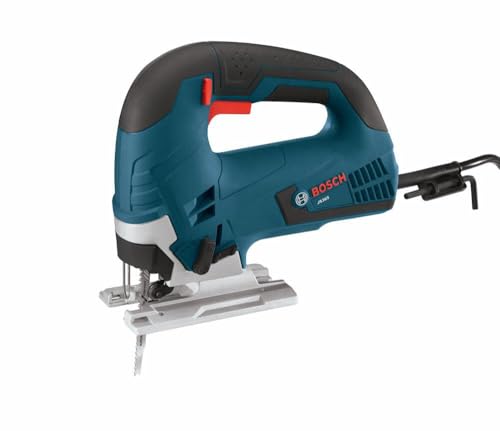
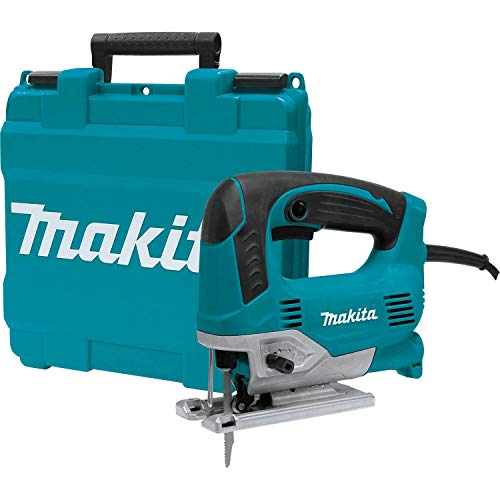
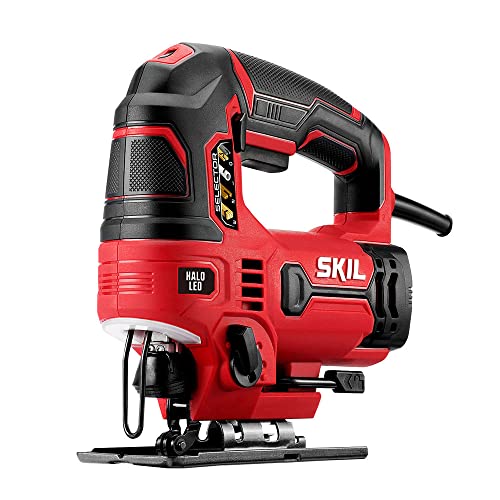
Top Picks at a Glance
- Best Overall: DEWALT DW331K, a 6.5-amp top-handle saw with a 1 inch stroke.
- Best Alternative to DEWALT: Bosch JS365, a 6.5-amp top-handle kit with up to 3,000 strokes per minute.
- Best Mid-Range DeWalt: DEWALT DW317K, a 5.5-amp saw for lighter work.
- Best for Furniture Shops: Makita JV0600K, a top-handle saw sold with a tool case.
- Best Value: SKIL JS314901, a 6-amp saw with tool-free blade change.
- Best Budget Kit: WORKPRO 6.5-amp jig saw with seven blades included.
Quick Comparison Table
| Product | Best for | Key specs | Watch for | Price tier |
|---|---|---|---|---|
| DEWALT DW331K | All-round woodworking | 6.5 A, 500 to 3,100 SPM, 1 in stroke, 4 orbital settings, about 6.4 lb | T-shank blades only | Premium |
| Bosch JS365 | Precise bevel work | 6.5 A, up to 3,000 SPM, 45 degree bevel | Stroke length not listed | Mid-range to premium |
| DEWALT DW317K | Occasional shop use | 5.5 A, corded, kit | Less power than the DW331K | Mid-range |
| Makita JV0600K | Furniture and trim | Top-handle design, tool case included | Amperage not in listing title | Mid-range |
| SKIL JS314901 | Home projects | 6 A, tool-free blade change | Lighter-duty build | Budget |
| WORKPRO 6.5 A | Budget starter kit | 6.5 A, 3,000 SPM, 6 speeds, 7 blades, 45 degree bevel both ways | Less established brand | Budget |
Jig Saw, Sabre Saw, Reciprocating Saw: Clearing Up the Names
A jig saw has a short, thin blade clamped at one end that moves up and down in the base plate. It is the tool for curves, scrolls, cutouts and notches. In some places people call it a sabre saw, though the same name is often used for what Americans call a reciprocating saw: a larger, two-handed tool with a longer blade for demolition, pruning and rough cutting. If you searched for the best deals on sabre saws and expected a demolition tool, you want a reciprocating saw, and our site has separate guides for those. If you want to cut shapes in plywood, countertops or trim, you want the jig saws below.
Top-Handle vs Barrel-Grip
Top-handle jig saws, like most models here, put your hand above the saw so you can push down and steer. They suit control-heavy work: following lines, cutting curves, making plunge cuts. Barrel-grip saws put the hand around the motor body, lowering the centre of gravity and helping when you cut flat, long lines on countertops. Every corded saw below is a top-handle design except where noted. Barrel-grip models are common on the cordless side, such as the DEWALT DCS335B mentioned later.
1. DEWALT DW331K: Best Overall
- Motor: 6.5 amp
- Speed: 500 to 3,100 strokes per minute, variable (some retailers list 3,000)
- Stroke length: 1 inch
- Orbital action: four positions
- Bevel: 45 degrees, with stops at 0, 15, 30 and 45
- Blade clamp: keyless lever, T-shank blades only
- Capacity: about 3/8 inch mild steel, 3/4 inch aluminum, 4-1/3 inch hardwood per retailer data
- Weight: about 6.4 pounds; cord about 8 feet
Best for: woodworkers who want one dependable jig saw for general cutting. Skip if: you want a lighter, cheaper saw for the occasional craft cut.
The 1 inch stroke is the number to notice. A longer stroke clears chips and removes more material per pass, which helps in thick stock. Pair it with the four-position orbital switch and you can set the saw to cut almost straight for clean finishing in thin plywood or more aggressively for fast rough cuts in thick lumber. A counter-balance mechanism and a built-in dust blower, which retailers list as features, help keep the line visible and reduce vibration.
The keyless lever-action blade clamp changes blades quickly, but it accepts only T-shank blades. That is not a real limitation, since T-shank is the dominant standard, but it means older U-shank blades will not fit. The detents at common bevel angles make repeat angle cuts easier.
Pros: long 1 inch stroke; four orbital settings; fast keyless blade changes; bevel detents; strong brand support. Cons: premium price tier; T-shank blades only; heavier than some budget saws.
2. Bosch JS365: Best Alternative to DEWALT
- Motor: 6.5 amp, 120 volt
- Speed: variable, up to 3,000 strokes per minute
- Bevel: 45 degrees
- Design: top handle, sold as a kit
- Stroke length, weight: not listed in the store title
Best for: woodworkers who prefer Bosch’s feel and want a match for the DEWALT’s amperage. Skip if: you need to compare stroke length, which the store listing leaves out.
Bosch has a long record in jig saw design, and the JS365 is one of its mid-tier corded models. At 6.5 amps and 3,000 strokes per minute it gives the same headline figures as the DW331K, so it comes down to ergonomics, the shoe, and which blade system you prefer. Confirm the stroke length and weight on Bosch’s spec sheet before buying.
Pros: strong motor; variable speed; 45 degree bevel; established brand. Cons: limited numbers in the store listing; priced like a premium tool.
3. DEWALT DW317K: Best Mid-Range DeWalt
- Motor: 5.5 amp, corded
- Design: top handle, kit with case (the K suffix)
- Speed, stroke length, weight: not listed in the store title
Best for: homeowners and light-duty shops that want a DeWalt but not the DW331K price tier. Skip if: you cut thick hardwood daily.
The DW317K is the step-down DEWALT. At 5.5 amps it gives up about 1 amp of motor capacity compared with the DW331K, which matters mainly for thick or dense stock. For furniture-grade plywood, trim, laminate and softwood it is plenty of saw. Check the DeWalt page for speed range and blade clamp details, as listings sometimes mix them up with other models.
Pros: DeWalt build quality at a lower price tier; kit packaging; suitable for most home projects. Cons: less power than the DW331K; fewer published numbers in the store listing.
4. Makita JV0600K: Best for Furniture Shops
- Design: top handle, supplied with a tool case
- Amperage, speed, stroke, weight: not listed in the store title
Best for: cabinet and furniture makers who value smooth operation and a tidy case. Skip if: you need to compare detailed specs from the store listing alone.
Makita’s top-handle jig saws have a reputation for smooth running and stable shoes, which helps when you are following a scribed line around a sink cutout or a delicate curve. The JV0600K is sold as a kit with a case, so you get storage for blades and the saw in one place. We do not quote motor or speed figures here because the listing does not give them; check Makita’s manual or spec page before you decide.
Pros: respected brand; case included; designed for controlled cutting. Cons: specs must be confirmed elsewhere; mid-range price tier.
5. SKIL JS314901: Best Value
- Motor: 6 amp, corded
- Blade change: tool-free
Best for: DIYers who want a competent saw without a professional price tag. Skip if: you need long strokes or heavy-duty construction.
A 6-amp motor with tool-free blade change is a good combination at this tier. It sits just below the 6.5-amp saws in power, and for most projects such as cutting a sink opening in plywood, trimming a shelf, or making a template cut, you will not notice the difference. Use sharp blades matched to the material, because the blade often limits cut quality more than the motor does.
Pros: budget-friendly; tool-free blade change; solid amperage for the price tier. Cons: lighter build; fewer published specifications; likely shorter service life under daily use.
6. WORKPRO 6.5-Amp: Best Budget Kit
- Motor: 6.5 amp, about 850 watts
- Speed: 3,000 strokes per minute, six variable speeds
- Bevel: plus or minus 45 degrees
- Orbital action: four settings
- Included: seven blades
Best for: new woodworkers building a starter tool kit. Skip if: you need established warranty service or daily professional use.
This kit gives the headline numbers of far pricier saws: a 6.5-amp motor, 3,000 strokes per minute, orbital action and a 45 degree bevel in both directions. The included blades are a bonus for beginners. Understand that spec parity on paper does not guarantee parity in durability, so for infrequent use it is a reasonable pick and for professional daily cutting a more established brand is wiser.
Pros: generous spec sheet for the price tier; blades included; four orbital settings. Cons: less established brand; unknown long-term durability; included blades are basic.
Also Consider
Bosch JS260
A 6-amp top-handle jig saw from Bosch at a lower price tier than the JS365. A good option if you want the brand without paying for the extra amperage.
WEN 33606
A 6.6-amp variable-speed orbital jig saw with a laser and LED light. Aimed at beginners who like onboard aids, though a laser needs checking for alignment.
BLACK+DECKER 5-Amp Jig Saw
A 5-amp saw with 3,000 strokes per minute, 45 degree bevel cuts, a 3/4 inch orbital blade and four curve settings. Suitable for light household work.
DEWALT 20V MAX XR DCS334B (cordless)
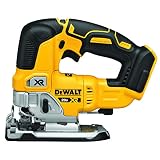
A brushless cordless jig saw rated at 3,200 blade speed with an LED light, sold as a bare tool. If portability beats unlimited runtime for you, this is the DeWalt cordless option to compare against the corded DW331K. A barrel-grip DCS335B is also listed.
Which DeWalt Jig Saw Fits You?
| Model | Power | Best use | Consider if |
|---|---|---|---|
| DW331K (corded) | 6.5 A | Hardwood, furniture, cabinetry | You want unlimited runtime and a long stroke |
| DW317K (corded) | 5.5 A | Plywood, trim, light shop work | You want DeWalt quality at a lower price tier |
| DCS334B (cordless) | 20V MAX XR, brushless | Roofline, remodel, outdoor cuts | Mobility matters more than constant power |
| DCS335B (cordless, barrel grip) | 20V MAX | Long flat cuts, countertops | You prefer a lower, wrap-around grip |
Blade Selection by Material
The blade decides cut quality more than the saw does, so it is worth matching blade to material before you start. The table below summarises common starting points; always check the blade maker’s packaging for rated materials and thickness.
| Material | Blade style | Orbital setting | Speed |
|---|---|---|---|
| Thin plywood and veneer | Fine-tooth, clean-cut or down-cutting | Off or lowest | Medium to high |
| Hardwood boards | Medium-tooth wood blade | Low to medium | Medium |
| Softwood framing lumber | Coarse-tooth, fast-cutting | Highest | High |
| Laminate countertop | Fine-tooth, carbide or down-cutting | Off | Medium, with tape on the cut line to limit chipping |
| Thin sheet metal | Metal-cutting bi-metal blade | Off | Low |
| Plastic and acrylic | Fine-tooth plastic blade | Off | Low, to avoid melting the kerf |
Ownership Realities: What Wears First
On any jig saw, blades are the main consumable, followed by the roller guide that supports the blade from behind and the base plate insert that reduces tear-out. Expect to replace blades often, especially in abrasive materials like laminate and fibre-cement board. A worn roller guide shows up as a blade that wanders sideways or leaves angled edges; if you notice it, inspect and replace the part according to the maker’s instructions.
Corded saws also have a power cord and brushes. A cord that is nicked or kinked should be repaired by a qualified service centre, not taped. Brush-equipped motors on corded saws are serviceable on some models, so check the manual for brush replacement guidance. Keep vents clear of sawdust, wipe the shoe regularly so it slides freely, and store the saw in its case, which is one reason kits like the DW331K, DW317K and Makita JV0600K are worth a closer look.
Budget saws like the WORKPRO or SKIL will likely wear faster under heavy daily use than premium models, simply because bearings, gear sets and guide rollers are built to a price. For weekend projects that difference rarely matters. For a shop that cuts every day, a premium saw tends to pay for itself in fewer replacements.
Getting Cleaner Cuts
A few habits improve any jig saw. Mark the cut line on the good face, then cut with the good face down when using standard up-cutting blades, since the blade teeth tear fibres on the upstroke and push them out of the top face. If the good face must be up, use a down-cutting or clean-cut blade or apply painter’s tape along the line to hold fibres in place.
For inside cutouts, drill a starter hole in the waste area large enough for the blade, or tilt the saw forward and plunge-cut only if the material and your experience allow it. Clamp the work so that the section being cut is supported, and let the saw base ride flat on the surface. For tight curves, choose a narrow scroll blade and slow the speed; for straight lines, use a wider blade and clamp a straightedge to the work as a guide.
Finally, give the saw a moment to reach full speed before starting the cut, keep steady forward pressure without forcing, and let the blade stop completely before lifting the saw out of the material. Disconnect the cord before changing blades.
Matching a Saw to Your Budget and Workload
Think in terms of hours per month rather than brand loyalty. If you cut under five hours a month, a budget saw such as the SKIL JS314901 or the WORKPRO kit covers it, and the money saved can go toward a good set of blades. At five to twenty hours a month, a mid-range saw like the DW317K, the Bosch JS260 or the Makita JV0600K gives better guide rollers, steadier shoes and a calmer motor. Above twenty hours a month, or if you cut hardwood and laminate regularly, the DW331K or Bosch JS365 are the saws that justify their price tier through stroke length, vibration control and longevity.
Also consider the rest of your tool kit. If you already own DeWalt 20V MAX batteries, the cordless DCS334B can share them, and you may prefer one battery platform over a corded saw. If your work happens mainly at a bench with outlets within reach, corded saves the cost of battery and charger and gives constant power on long cuts. Many woodworkers end up owning one of each: corded for shop accuracy, cordless for site visits and quick jobs.
How We Chose
This guide is research-based. We reviewed manufacturer spec sheets where available, retailer listing details and independent reviewer feedback. We did not personally use these products. Where a listing did not state motor current, stroke length or weight, we wrote that it is not listed rather than guessing.
The criteria were motor amperage, stroke length, orbital settings, bevel range, blade clamp style, weight and kit contents. We limited the main picks to two models per brand and described cost with tier words only.
Buying Guide
Amperage and Stroke Length
For woodworking, 5 to 6.5 amps covers most work. Choose 6 amps or more for hardwood, laminate countertops and long cuts. Stroke length matters as much as amperage: a 1 inch stroke clears chips faster and cuts more aggressively than a shorter stroke, though many budget saws do not publish it.
Orbital Action
Orbital settings add a forward motion on the upstroke so the blade clears the kerf. Zero orbital gives the cleanest edge for veneers and thin material; the highest setting cuts fastest in softwood. Look for at least three settings, with four being better.
Blade Clamp and Blade Type
Tool-free clamps save time, and T-shank blades are the dominant standard. Blade choice shapes results: fine-tooth blades for clean plywood and laminate, coarse blades for fast cuts in framing lumber, and metal-cutting blades for thin sheet. The best saw with the wrong blade will tear the surface.
Bevel Capacity
A 45 degree bevel in both directions is standard. Detents at 15, 30 and 45 degrees, as on the DW331K, help repeat angle cuts. Always check the shoe is square before you cut.
Weight, Vibration and Dust
Around 6 pounds is typical. Counter-balance mechanisms reduce vibration, and a dust blower keeps the line visible. If you cut often, those features reduce fatigue and improve accuracy.
Common Mistakes to Avoid
- Forcing the saw through the cut. Let the blade do the work; pushing bends it and leaves angled edges.
- Using the wrong blade for the material.
- Leaving orbital action high for finish cuts, which causes rough edges.
- Not clamping the workpiece, which causes vibration and kickback of the saw.
- Skipping eye and hearing protection.
More Picks Worth Considering
If you want to compare the corded jig saws above against other listings, these are worth a look.
DEWALT Jig Saw, Top Handle, 6.5-Amp, Corded (DW331K)
As an Amazon Associate we earn from qualifying purchases at no extra cost to you.

The listing describes a corded, top-handle jig saw with a 6.5-amp motor. It is the model this guide names as its overall pick, so it is the natural starting point for woodworkers who want plug-in power for long cuts in thick stock. Stroke length, orbital settings and weight are not listed in the title, so check the full specifications before you decide on it.
BOSCH JS365 120V 6.5 Amp Top-Handle Jigsaw Kit Variable Speed, 45 Degree Bevel Cuts, Up to 3,000 SPM
This kit is listed as a 6.5-amp top-handle jig saw with variable speed, 45 degree bevel cuts and up to 3,000 strokes per minute. Those figures put it close to the DEWALT on paper, and the kit format may suit buyers who want everything in one package. Stroke length is not listed, and the contents of the kit are not detailed in the title.
DEWALT Jig Saw, Top Handle, 5.5-Amp, Corded (DW317K), Yellow
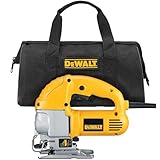
A corded top-handle saw with a 5.5-amp motor, sold as a kit according to the model code. It sits a step below the 6.5-amp model in motor rating, which makes it a sensible fit for lighter shop work and occasional curves. Speed range, bevel capacity and blade clamp details are not listed, so confirm them on the product page before buying.
Makita JV0600K Top Handle Jig Saw, with Tool Case

The listing highlights a top-handle design and an included tool case, which helps if you carry the saw between jobs or store it with its accessories. Amperage, stroke rate and bevel range are not listed in the title. It is one to consider for furniture and trim work where a familiar top-handle grip matters to you.
SKIL 6 Amp Corded Jig Saw with Tool-Free Blade Change – JS314901
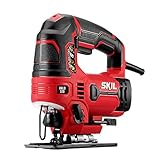
This corded saw has a 6-amp motor and a tool-free blade change, so swapping blades does not need a separate key. That makes it an easy choice for home projects where you change blades often between wood and other materials. Orbital settings and weight are not listed, so check them if they matter for your cuts.
WORKPRO 6.5AMP Corded Jig Saw, 3000 SPM, 6 Variable Speeds, 7 Blades

The listing shows a 6.5-amp motor, up to 3,000 strokes per minute, six variable speeds and seven blades in the package. It also mentions plus or minus 45 degree bevel cutting, four orbital settings, tool-free blade change, an LED light and an edge guide. A starter kit like this suits first-time buyers who want blades included from day one.
Frequently Asked Questions
What is the best corded jig saw?
The DEWALT DW331K is our top pick for general woodworking, thanks to its 6.5-amp motor, 1 inch stroke and four orbital settings. The Bosch JS365 is a close alternative.
Is a corded jig saw better than a cordless one?
Corded saws give steady power and unlimited runtime, which suits shop work and thick stock. Cordless saws win for portability and quick jobs on site.
What is the best DeWalt jig saw for woodworking?
For corded work, the DW331K is the stronger saw and the DW317K is the lighter-duty option. For cordless work, the DCS334B brushless model is the one to compare.
What is the difference between a jig saw and a sabre saw?
A jig saw cuts curves with a short blade clamped in the base. In the United States, a sabre saw usually means a reciprocating saw used for demolition. Some regions use the term for jig saws, so check what the product description says.
Which blade should I use for plywood?
A fine-tooth, down-cutting or clean-cut T-shank blade helps reduce tear-out on plywood faces. Check the blade packaging for the material it is rated for.
How many strokes per minute do I need?
About 3,000 strokes per minute is the common maximum. Variable speed lets you slow down for plastics, laminates and metal.
Can a jig saw cut metal?
Yes, with a metal-cutting blade and a slower speed. The DW331K lists about 3/8 inch mild steel capacity per retailer data, but follow the maker’s guidance and use eye protection.
Which One Should You Buy?
If you want the best all-round corded saw, buy the DEWALT DW331K. If you prefer Bosch, the JS365 is the matching alternative. For lighter work at a lower price tier, look at the DW317K, the SKIL JS314901 or the WORKPRO kit. Furniture makers who like a polished feel should check the Makita JV0600K. Whichever you pick, buy good blades for the material you cut most and read the maker’s safety instructions.
Sources
- DEWALT DW331K and DW317K product specification pages
- Bosch Power Tools JS260 and JS365 product pages
- Makita JV0600K product page
- SKIL JS314901 product page
- WORKPRO jig saw product listing
- Retailer listings for the DEWALT DW331K
Last updated: October 2026
Related guides
More from Amazon
Programs that pair well with the guide above. Offers and eligibility are set by Amazon and may change.
A free business account with business pricing and bulk-buying tools for work, shop or home office.
Create a business accountFree shipping on eligible items, Prime Video and more. Eligible new members can start with a free trial.
Start a Prime free trialAudiobooks and podcasts to listen to on the go. Eligible new members can start with a free trial.
Try Audible freeAd-free music streaming. Eligible new subscribers can start with a free trial.
Try Music Unlimited freeAs an Amazon Associate we earn from qualifying purchases.




Write Your Review
No reviews yet. Be the first to share your experience!