How to Assess a Tool’s Repairability Before Buying the Cheapest Model
What's inside
As an Amazon Associate I earn from qualifying purchases. This post may contain affiliate links at no extra cost to you.
The cheapest tool is not always the cheapest tool to own. A low purchase price can make sense for occasional work, but a failed switch, worn gear, or dead battery can turn a $40 tool into a disposable item. Before buying the budget model, spend a few minutes checking whether it can be opened, diagnosed, and repaired without spending more than its replacement cost.
As an Amazon Associate we earn from qualifying purchases at no extra cost to you.


Start With the Likely Failure Points
Different tools fail in different ways. A corded drill commonly develops a bad switch, worn carbon brushes, a damaged cord, or noisy bearings. An angle grinder may lose its switch, burn out its armature, or destroy its spindle bearings under heavy use. A cordless tool adds battery contacts, electronic controls, and a battery pack that may cost half as much as the tool.
Think about how hard you will use it. A homeowner drilling a few dozen holes each year may never wear out a basic drill. A contractor using the same drill for several hours daily is more likely to reach the limits of its switch, chuck, gearbox, or motor within a few years. Repairability matters most when use is frequent, downtime is costly, or the tool is expensive to replace.
| Part or failure | What to check before buying | Typical budget-tool trade-off |
|---|---|---|
| Power cord | Flexible molded cord, strain relief, and standard replacement availability | Easy repair if the cord is replaceable; sealed entry points can make it difficult |
| Switch | Separate switch assembly, visible screws, and replacement listings | Often replaceable on better tools; integrated electronics may require a costly board |
| Brushes | External brush caps or an accessible motor housing | Cheap and simple to replace, but some low-cost motors are sealed |
| Gearbox | Service parts, gasket, grease access, and removable housing screws | Repair may be uneconomical if gears are sold only as a complete assembly |
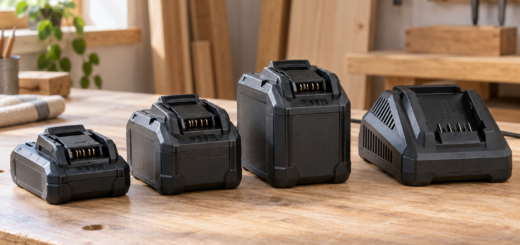
| Battery | Current battery platform, pack price, and charger availability | The tool may be inexpensive while replacement batteries are costly |
Inspect the Tool in Person
At a store, look at the fasteners. Standard Phillips, Torx, or hex screws are a good sign. Security screws, rivets, heavy adhesive, and plastic welds suggest that the manufacturer expects replacement rather than repair. A few perimeter screws do not guarantee serviceability, but they are a better starting point than a housing that appears permanently sealed.
Check whether the two halves of the housing separate cleanly. Look for molded clips that may break during disassembly, wires stretched tightly across the seam, and parts buried under several unrelated assemblies. A tool can be technically openable but still impractical to repair if reaching the switch requires removing the motor, gearbox, and trigger electronics.
On a corded tool, flex the cord near the handle and inspect the strain relief. The cord should not feel loose or sharply kinked. On a cordless tool, remove and reinstall the battery. Excessive play at the contacts can cause intermittent power and heat. If you are shopping for a corded drill with replacement parts, search the exact brand and tool family before purchasing, not just the generic tool type.
Research Parts Before You Purchase
Search for the tool’s parts diagram, exploded view, and service manual. These documents reveal more than advertising does. Confirm that the switch, chuck, brushes, armature, gears, and seals have individual part numbers. If the diagram lists only a complete “motor assembly” or “control module,” a small failure may become an expensive replacement.
Price the parts that are most likely to fail. A replacement switch costing $10 to $20 is reasonable for a $50 corded tool. A $35 electronic control board for that same tool is not, especially if shipping takes two weeks. For cordless tools, compare the battery price as well. A replacement 18- or 20-volt pack can cost $40 to $100, and proprietary batteries may disappear when a brand abandons a platform.
Independent repair videos are useful, but treat them as evidence of difficulty rather than proof of long-term support. Watch for broken clips, pressed-on gears, soldered battery tabs, and parts that require a specialty puller. A ten-minute repair using common screwdrivers is realistic for many owners. A repair involving soldering, bearing presses, or motor testing may not be.
Compare Total Cost, Not Shelf Price
Make a simple three-year estimate. Add the purchase price, likely consumables, one probable repair, and any battery or charger costs. For example, a $45 corded drill plus a $15 switch still costs less than a $100 professional drill if the tool is used only ten times per year. The calculation changes if the cheap drill fails twice, has a poor chuck, or loses enough power that each job takes twice as long.
A warranty also affects the calculation. A two-year warranty can make a cheap tool acceptable, but check who pays shipping and whether abuse, dust, or commercial use is excluded. Warranty replacement is not the same as repairability: it may solve the first failure, but it does not help after the coverage ends.
When the Cheapest Model Is Fine
Buy the budget model when the job is light, the tool is corded, replacement parts are simple, and failure would not stop important work. A basic budget corded angle grinder can be perfectly sensible for occasional cutting or rust removal because it avoids battery replacement costs. Likewise, a low-cost drill is reasonable for assembling furniture or drilling a few holes into wood each year.
Pay more when the tool will run hot for long periods, operate overhead, face dust or moisture, or support daily income. Better models usually provide stronger chucks, replaceable cords or switches, better bearing protection, and a parts network that lasts longer. For cordless equipment, buying into a well-supported battery platform can matter more than saving $30 on the bare tool. Browse cordless tool battery platforms only after checking the cost and availability of batteries, chargers, and common replacement parts.
Use Timing to Improve the Value
Seasonal sales can make a repairable midrange tool cost close to the regular price of a disposable one. Corded outdoor tools often fall in price near the end of summer, while cordless kits receive promotions around major holiday sales and spring home-improvement periods. Compare the sale kit with the bare tool, battery, and charger purchased separately; bundles sometimes hide the real discount.
Finally, save the receipt, parts diagram, and model number. Store the tool dry, clear dust from vents, and replace worn brushes or cords before they damage the motor. A cheap tool with accessible parts and sensible maintenance can deliver excellent value. A slightly cheaper tool with a sealed housing, unavailable battery, and no parts support is usually only cheap at the register.