How to Compare the Value of Tool Cases, Bags, and Modular Storage Systems
What's inside
As an Amazon Associate I earn from qualifying purchases. This post may contain affiliate links at no extra cost to you.
Tool storage is easy to overspend on because the products look more different than they often perform. A $25 soft bag may carry the same drill and hand tools as a $150 modular case. The expensive option earns its price only when its extra protection, organization, portability, or expandability solves a problem you actually have.
Compare storage by the job it must do, not by the number of pockets or the brand printed on the lid. A home repair kit used twice a month has different needs from a service technician’s loadout that rides in a truck every day.
Start With the Load You Actually Carry
Make a list of the tools that must travel together. Include batteries, chargers, bits, fasteners, safety glasses, and consumables. These often take more room than the tools themselves. Measure the largest item, then allow roughly 20 percent extra space for additions and easier packing.
Weight matters as much as capacity. A case that weighs 12 pounds empty can become unpleasant when loaded with a drill, impact driver, batteries, and sockets. For occasional household work, keeping the total carried load below about 25 pounds is sensible. If you climb stairs or carry tools across a jobsite, a lighter bag can be worth more than rigid protection.
Also consider how the storage will be transported. A bag lifted from a garage shelf has different requirements from a case stacked in a van. Rolling systems make sense for heavier collections, but wheels add cost, width, and failure points. A wheel or handle that breaks can make an otherwise usable system awkward to move.
Compare Bags, Cases, and Modular Systems
| Storage type | Typical price | Best use | Main weakness |
|---|---|---|---|
| Soft tool bag | $15–$60 | Light hand tools, drills, and household repairs | Limited impact and weather protection |
| Rigid tool case | $25–$100 | Protection, stacking, and organized kits | Fixed capacity and wasted space around irregular tools |
| Modular storage system | $80–$300 or more | Growing collections and frequent transport | High entry cost; accessories can become expensive |
| Rolling modular system | $150–$400 or more | Large loads moved across relatively smooth surfaces | Heavy, bulky, and vulnerable wheels or latches |
A soft bag is usually the value winner when the tools stay indoors and you need quick access. Look for a reinforced base, wide opening, strong handles, and a shoulder strap that can be removed. Thin fabric, weak stitching, and a sagging opening are warning signs. A bag with 20 small pockets is not useful if the pockets cannot hold the tools you own.
Choose a rigid case when tools are exposed to rain, vehicle cargo, dust, or rough handling. Rigid walls prevent drills and meters from being crushed, while a fitted interior stops smaller items from rattling around. The trade-off is poor flexibility: a case designed around one kit may be inefficient after you buy different tools.
A modular system becomes easier to justify when you need several boxes that lock together. You can carry only the electrical, plumbing, or fastening module required for a job instead of lifting one oversized toolbox. Check the connection mechanism before buying. A latch that feels secure empty may be difficult to operate while wearing gloves or after dirt gets into it.
Calculate Value Beyond the Sticker Price
Use cost per useful year rather than purchase price alone. A $30 bag used for five years costs $6 per year. A $120 modular box used for eight years costs $15 per year before adding organizers, lids, carts, and replacement parts. The modular box may still be the better buy if it prevents broken tools or saves several minutes on every job.
Time savings are real, but estimate them conservatively. Saving five minutes on each of three jobs per week equals 13 hours over a year. At that usage, paying extra for removable organizers or visible contents can make sense. If you use the tools only once a month, the same feature is unlikely to repay its premium.
Account for accessories. Some systems require separate trays, small-parts organizers, foam inserts, or mounting brackets. Add those costs before comparing prices. A $90 base case that needs a $35 organizer is not competing directly with a $45 bag that already holds the same tools.
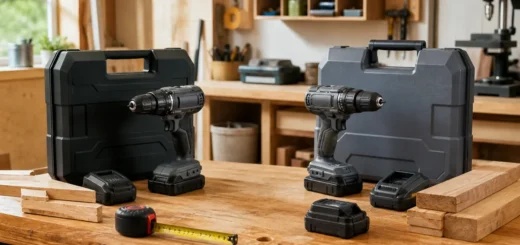
For a basic household kit, a reinforced soft tool bag is often enough. For a drill-and-driver kit used on outdoor projects, a hard power-tool case provides better protection without committing to a complete modular platform.
Inspect the Parts Most Likely to Fail
On bags, inspect handle stitching, zipper quality, the base, and the shoulder-strap anchors. A bag can still be usable with a torn pocket, but a failed handle can dump the entire load. Avoid carrying more than the manufacturer’s stated capacity; overloaded fabric stretches and zippers separate.
On cases, check hinges, latches, wheels, and the gasket if water resistance matters. A case labeled water-resistant is not necessarily waterproof. Test whether the lid closes evenly and whether the latch remains engaged when the case is lifted by its handle. Broken plastic hinge pins and warped lids are common failure modes on cheap cases left in hot vehicles.
For modular systems, verify that boxes remain stable when stacked. Pull the stack sideways before loading it with tools. Excessive movement indicates a connector that may wear quickly. Confirm that replacement parts and additional boxes are sold separately; a proprietary system with discontinued accessories has poor long-term value.
Use Brand and Seasonal Pricing Carefully
Brand value is strongest when it includes a useful warranty, available replacement parts, and a broad range of compatible boxes. It is less meaningful when you are buying one small container with no plans to expand. A less expensive bag from a reputable general tool brand can be the smarter choice than an entry-level piece from a premium ecosystem.
Buy modular storage during major tool promotions, holiday sales, and seasonal spring or fall project periods. Bundles can reduce the effective price of a rolling base and two boxes, but compare the bundle contents with separate prices. Retailers sometimes include a low-demand organizer to make a discount look larger.
For compact organization inside a bag or drawer, consider tool organizer pouches instead of replacing the whole storage system. If your collection has become too heavy to lift safely, a rolling modular storage system may be justified—but only if the route to the work area is mostly smooth and the added bulk will not become a daily nuisance.