Best Powermatic Table Saw
What's inside
As an Amazon Associate I earn from qualifying purchases. This post may contain affiliate links at no extra cost to you.
A table saw is the center of most woodworking shops, and when you are ready to move beyond contractor-grade machines, Powermatic sits in a tier that serious hobbyists and small production shops gravitate toward. The brand covers a wide range—from compact 1-3/4 HP cabinet saws that run on single-phase current to three-phase industrial machines with three times the motor. Choosing between them is not about which is objectively best; it is about matching rip capacity, power delivery, and shop infrastructure to the work you actually do.
What separates a good fit from a poor one? On the lower end, a 30-inch rip machine handles most sheet-goods jobs but forces awkward repositioning on long panels. On the upper end, a 7-1/2 HP three-phase saw is overkill unless your shop is already wired for it. Owner feedback consistently highlights dust collection performance, fence rigidity, and vibration under load as the practical differentiators that no spec sheet fully captures. In 2026, the lineup reviewed here spans those extremes and the space between.
As an Amazon Associate we earn from qualifying purchases at no extra cost to you.


Our Top Picks

Quick Picks
| Product | Best for | Price |
|---|---|---|
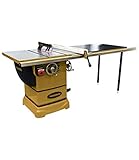
| Powermatic PM1000 (52-Inch Rip) | Long panel cuts without repositioning | $3,519 |
| Powermatic PM1000 (30-Inch Rip) | Most woodworkers entering cabinet-saw territory | $3,299 |
| Powermatic PM2000B Extension Table | Shop owners needing 3 HP on single-phase | $5,092 |
| Powermatic PM2000B Router Lift | Shops consolidating saw and router work | $6,225 |
| Powermatic PM1000T ArmorGlide | Reduced friction and easier table maintenance | $4,036 |
| Powermatic PM3000T ArmorGlide | Production shops with three-phase service | $8,579 |
| Powermatic PM1500T ArmorGlide Bandsaw | Resaw work paired with a Powermatic saw | $4,729 |
| Powermatic PM1500 Bandsaw | Capable bandsaw without the coating premium | $4,179 |
How We Picked
We compared published specifications, current street prices, and aggregated owner feedback across the eight models listed here. The criteria that matter most in this category are: motor power relative to the blade size and rip capacity you will actually demand of the saw; fence accuracy and rigidity under repeated use; dust collection efficiency at the point where the blade exits the table; and total cost of entry once you account for electrical requirements. A saw that needs a three-phase upgrade adds hundreds of dollars to the real price, and that is something buyers often overlook when reading a spec sheet.
The 8 Best Powermatic Table Saw in 2026
Powermatic PM1000 (52-Inch Rip)
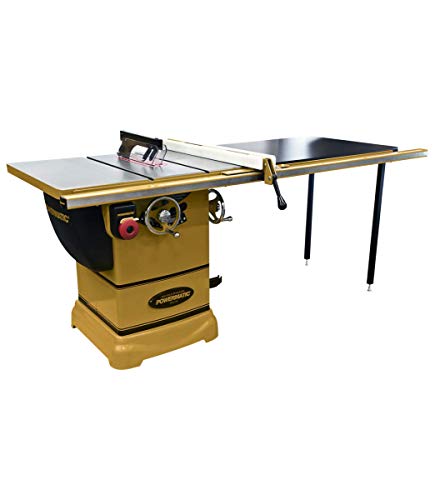
This is the highest rip capacity in the PM1000 family, designed for shops that process long solid-wood panels or oversized sheet goods without constant repositioning. The 1-3/4 HP motor and dual-voltage compatibility make it accessible to shops without a three-phase service upgrade. Owners praise the extended table surface for reducing fatigue on long cuts. The fence system holds zero reasonably well under normal use.
- Pros: Maximum rip capacity in the PM1000 line; runs on standard single-phase current.
- Con: Roughly seven percent more expensive than the 30-inch version for a rip width most users rarely need.
Skip it if your projects rarely exceed four feet in width.
Powermatic PM1000 (30-Inch Rip)
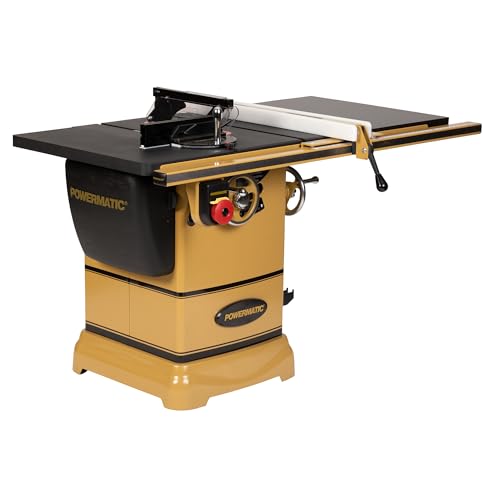
The entry point into Powermatic’s cabinet saw range and the most practical choice for the majority of woodworkers. Same 1-3/4 HP motor and dual-voltage flexibility, but at a $220 discount and a more compact footprint. Owner feedback highlights the solid cast-iron construction and the smooth rack-and-pinion fence at a price well below competing brands in this tier.
- Pros: Lowest price of genuine Powermatic cabinet construction; compact footprint for smaller shops.
- Con: Several owners note dust collection underperforms compared to the larger PM2000 series.
Skip it if you routinely rip stock wider than 30 inches, as you will fight the table edge.
Powermatic PM2000B Extension Table
Step up to 3 HP and a dedicated extension table configuration that adds meaningful infeed and outfeed support for sheet goods. The 230V single-phase requirement means you need a proper dedicated circuit, but no three-phase service. Owners consistently report noticeably less vibration and more consistent blade speed under load compared to the PM1000.
- Pros: 3 HP delivers steadier cuts through dense hardwoods; extension table adds practical support beyond raw rip capacity.
- Con: Requires 230V single-phase only—no 115V option, which limits shop compatibility.
Skip it if your budget is under $5,000 or if your shop only has 115V wiring without plans to upgrade.
Powermatic PM2000B Router Lift
Same platform and motor as the Extension Table model but with a built-in router lift that converts the table into a dual-purpose station. For shops that do both table saw and router work in a single footprint, this consolidation saves space and setup time. The $6,225 price makes it the highest-cost 10-inch model in the lineup.
- Pros: Integrates router work without a separate table occupying floor space; same 3 HP performance as the Extension variant.
- Con: Most expensive option here, and the premium is hard to justify if router work is occasional.
Skip it if you already own a dedicated router table or would use the lift only a few times per year.
Powermatic PM1000T ArmorGlide
The ArmorGlide coating is the headline feature here—a proprietary surface treatment that reduces friction so wood slides more easily across the table. Owners report that it noticeably improves feed feel and resists rust better than bare cast iron. The specs match the standard PM1000 at 1-3/4 HP and 30-inch rip on 115/230V.
- Pros: Less friction means easier stock feeding and reduced surface wear over time; improved corrosion resistance.
- Con: Costs roughly $740 more than the bare-cast-iron version for a surface a determined owner can replicate with wax and paste.
Skip it if you prefer to manage table surface condition yourself with a regular waxing routine.
Powermatic PM3000T ArmorGlide
This is the industrial end of the lineup. A 14-inch blade, 7-1/2 HP motor, and three-phase 230/460V power put it in a different conversation from everything above. The 50-inch rip and ArmorGlide surface make it a production shop machine that handles hardwoods and dense panels without hesitation.
- Pros: Substantially more power than any other model here; 50-inch rip with ArmorGlide for production throughput.
- Con: Three-phase power requirement makes it unusable in most residential shops without a costly phase converter or electrical install.
Skip it entirely unless your shop runs production volume that justifies industrial power and three-phase wiring.
Powermatic PM1500T ArmorGlide Bandsaw
A 15-inch bandsaw is not a table saw, and it does not compete with the models above for the same task. It earns its place in this roundup because many buyers shopping for a Powermatic table saw will also need a resaw-capable bandsaw, and pairing machines from the same brand simplifies parts sourcing and service. The ArmorGlide finish and 3 HP motor make it capable of full resaw work.
- Pros: Strong resaw performance; ArmorGlide table reduces sticking and maintenance on a surface that sees heavy stock contact.
- Con: At $4,729 it is a serious bandsaw price, and it does not replace a table saw for any task.
Skip it if your bandsaw needs are occasional or if you already own a capable machine.
Powermatic PM1500 Bandsaw
The bare-cast-iron version of the same 15-inch, 3 HP bandsaw platform at $4,179—a savings of $550 over the ArmorGlide variant. Owner feedback mirrors the PM1500T: solid resaw performance, quiet operation, and good blade tracking. The lack of the ArmorGlide coating means more routine maintenance to prevent surface rust.
- Pros: Same core performance as the ArmorGlide version at a meaningfully lower price; $550 savings for identical mechanical specs.
- Con: Requires regular waxing or paste application to keep the cast-iron table from rusting between uses.
Skip it if you want the lowest possible entry price across the whole lineup; a contractor-grade bandsaw from another brand will cost less for light-duty work.
Buying Guide
Motor Power and Phase Compatibility
The PM1000 and PM1000T series run 1-3/4 HP on either 115V or 230V single-phase, meaning most residential shops can use them without electrical work. The PM2000B requires 230V single-phase, which is still accessible but demands a dedicated circuit. The PM3000T is three-phase only—a non-starter unless your facility has that service or you install a rotary phase converter, which adds cost and maintenance. Match the motor to your wiring before matching it to your wood.
Rip Capacity and Table Configuration
Rip capacity on these models ranges from 30 to 52 inches. Thirty inches handles standard four-by-eight sheet goods with a helper or an outfeed roller. Fifty inches lets a single operator run wide panels without repositioning. The Extension Table and Router Lift variants on the PM2000B add physical support that reduces the effective limitation of rip capacity, which matters more for accuracy than raw number suggests.
Dust Collection and Fence Systems
Owner feedback repeatedly identifies dust collection as the practical differentiator at this price tier. Cabinet saws with larger enclosed bases capture more chips, and the PM2000 series benefits from both the extra airflow and a more refined throat plate design. Fence rigidity under load matters for repeatable cuts; rack-and-pinion fences with a positive locking mechanism outperform cam-lock systems over years of use.
Our Verdict
Top pick: The PM1000 at 30-inch rip is the best balance of Powermatic build quality, practical performance, and accessible price for the most woodworkers. Budget pick: same model—at $3,299 it is the cheapest genuine cabinet construction here, and the dual-voltage motor keeps it compatible without electrical upgrades. Condition where another wins: if you routinely cut stock wider than 30 inches and your budget stretches to $5,092, the PM2000B Extension Table’s extra horsepower and physical table support make the longer cuts noticeably easier and safer.
FAQ
What voltage do I need for a Powermatic table saw?
The PM1000 and PM1000T accept either 115V or 230V single-phase, so most home shops work without modification. The PM2000B series requires 230V single-phase specifically. The PM3000T requires three-phase power, which is uncommon in residential settings.
Is the ArmorGlide surface worth the extra cost?
Owner feedback suggests it improves feed feel and resists corrosion, reducing the frequency of wax and maintenance routines. Whether it justifies the premium depends on your shop’s humidity and how much you value a maintenance-free table surface.
Can a 1-3/4 HP motor handle hardwoods?
Yes, for typical furniture-scale work in species like walnut, cherry, and maple at standard feed rates. Owners report that it slows noticeably on dense tropical hardwoods or when taking deep resaw passes, which is when 3 HP or higher becomes relevant.
Why are bandsaws included in a table saw roundup?
Many woodworkers purchasing a cabinet-grade table saw are also evaluating a companion bandsaw for resaw work. Including both options from the same product family lets you compare Powermatic’s total offering and make a coordinated purchasing decision.