Ridgid vs Hart Tools: Comparing Warranty Coverage and System Costs
What's inside
As an Amazon Associate I earn from qualifying purchases. This post may contain affiliate links at no extra cost to you.
Ridgid and Hart both target DIY users, but they make different promises. Hart usually wins on the price of entry, while Ridgid can be the better long-term value if you buy tools covered by its Lifetime Service Agreement (LSA). The important detail is that Ridgid’s lifetime coverage is not automatic for every product, and Hart’s lower prices can make warranty differences less important for occasional users.
As an Amazon Associate we earn from qualifying purchases at no extra cost to you.


Quick comparison
| Factor | Ridgid | Hart |
|---|---|---|
| Main cordless platform | 18V | 20V, marketed as 20V maximum |
| Typical buyer | Serious DIYer, remodeler, frequent user | Homeowner building a basic tool collection |
| Warranty baseline | Limited warranty; selected products may qualify for Lifetime Service Agreement | Generally a three-year limited warranty on many power tools and batteries |
| Retail channel | Home Depot and other authorized sellers | Walmart and Walmart.com |
| System cost | Higher initial prices, often better package contents | Lower starter-kit and bare-tool prices |
| Best value case | You will use the system for years and register eligible purchases | You need inexpensive tools for light or occasional work |
How the warranty difference works
Ridgid’s strongest selling point is its Lifetime Service Agreement. On eligible tools, the agreement can provide free parts, free service, and free batteries for the life of the original purchaser. You normally need to buy from an authorized retailer, register the qualifying purchase within the required period—commonly 90 days—and retain the receipt and registration confirmation.
That wording matters. Not every Ridgid product qualifies. Some accessories, consumables, plumbing equipment, storage products, and certain batteries or kits may have different coverage. The exact product listing and current warranty terms control. Before buying, check whether the specific tool is marked as LSA eligible rather than assuming the Ridgid name guarantees lifetime coverage.
Ridgid also has standard limited warranties for products outside the LSA program. Service may require shipping the tool, visiting a service center, or dealing with documentation. “Lifetime” does not mean instant replacement at the store, and normal wear, misuse, unauthorized repairs, and damage from abuse are not generally covered.
Hart’s common advantage is simpler pricing, not broader coverage. Many Hart cordless tools and batteries carry a three-year limited warranty, but the period and exclusions vary by product. Keep the receipt and confirm the terms before purchase. A dead battery after four years is a meaningful Hart ownership risk; under a valid Ridgid LSA claim, an eligible battery may be replaced or serviced without buying another one.
Comparing system costs
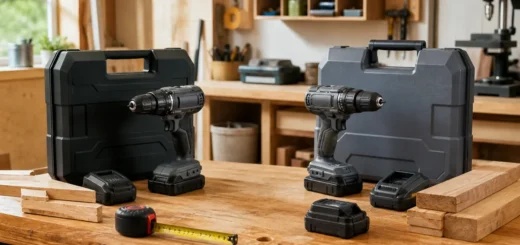
For a first purchase, Hart is usually cheaper. A drill-driver kit, impact driver kit, or small combo kit often costs less than the equivalent Ridgid package. Hart also discounts heavily during holiday events and Walmart promotions. If you need a drill to assemble furniture, a light, and perhaps a small vacuum, that price gap can be more useful than a lifetime service promise you may never use.
Ridgid kits often cost more upfront, but the included batteries can be larger and the tools may be built for heavier work. Compare battery capacity, not just tool count. A kit with two 2.0Ah batteries may be cheaper but less useful for a circular saw or blower than a kit with 4.0Ah or 6.0Ah packs. Replacement batteries are one of the largest hidden costs in a cordless system.
As a rough planning example, a homeowner might spend $150 to $250 on a Hart starter kit, then $40 to $100 per additional bare tool and roughly $50 to $100 for replacement batteries, depending on capacity and sales. A comparable Ridgid starting kit may run $200 to $350, with bare tools commonly costing more. Those figures change during sales, so treat them as budgeting ranges rather than fixed prices.
Before choosing either platform, price the actual five-tool collection you expect to own. A drill, impact driver, reciprocating saw, circular saw, and light is a more useful comparison than two starter kits with different contents. You can check current market pricing for Ridgid 18V cordless tool kits and Hart 20V cordless tool kits, but verify seller status and warranty eligibility before ordering.
Real-world trade-offs
Ridgid makes more sense for jobs that create heat, dust, vibration, or repeated battery cycles. Framing, deck construction, remodeling, and regular property maintenance can expose weak batteries and switches quickly. A tool that fails during a project costs more than its purchase price because it can stop the job, require a replacement, or force you to buy into a second battery system.
Hart is fine for lighter duty. Its drills, drivers, lights, sanders, and small outdoor tools can handle shelves, trim repairs, flat-pack furniture, garden cleanup, and occasional maintenance. The cheaper option is especially reasonable when the tool may be used only a few times per year. Even a three-year warranty can outlast your practical need for a basic drill.
The failure modes are different from the warranty headline. Batteries lose runtime from age and heat, chucks can slip, switches can fail from dust, and saws can bog down when paired with a small battery. Warranty coverage may address an electrical failure but not a worn blade, overloaded tool, dropped housing, or water damage. Buy the right battery size and keep receipts; those steps prevent more frustration than brand loyalty.
When to buy each brand
Choose Hart when the starter price is the priority, your projects are intermittent, and you can replace a failed tool without disrupting paid work. Buy during Walmart’s major seasonal promotions, especially around spring outdoor projects and late-November holiday sales. Avoid buying a large kit solely because it includes several tools you will not use.
Choose Ridgid when you expect to expand, already do demanding DIY work, or want the possibility of long-term battery and service support. Register every eligible purchase promptly and save digital copies of receipts. If the LSA registration process is inconvenient or the product is not eligible, recalculate the value using Ridgid’s ordinary limited warranty instead.
For outdoor work, compare cordless leaf blowers by battery size and runtime rather than advertised voltage. For fastening and drilling, a drill and impact-driver kit is usually the most useful starting point.
The practical verdict is straightforward: Hart offers the lower-risk way to get basic cordless tools cheaply, while Ridgid offers stronger potential value for a long-lived system—provided you buy LSA-eligible products and complete the registration correctly. Price the complete collection, count the batteries, and judge the warranty against how often a tool failure would actually hurt you.