How to Decide Which Tools to Buy New and Which to Buy Used
What's inside
As an Amazon Associate I earn from qualifying purchases. This post may contain affiliate links at no extra cost to you.
Start With the Job, Not the Brand
The best new-versus-used decision starts with the work you actually do. A homeowner who drills a few holes each year does not need the same tool as a contractor using it eight hours a day. Consider frequency, workload, precision, and the cost of failure before comparing prices.
Used tools are often excellent buys when the tool is simple, durable, and easy to inspect. A corded drill, cast-iron bench vise, hand plane, socket set, or contractor table saw can provide years of service after changing hands. New tools make more sense when batteries, electronics, safety systems, or warranty coverage are central to the purchase.
As an Amazon Associate we earn from qualifying purchases at no extra cost to you.


As a basic rule, buy used for durable mechanical tools and buy new for tools where hidden wear is expensive or dangerous. That rule is not absolute, but it prevents many bad bargains.
Where Used Tools Usually Make Sense
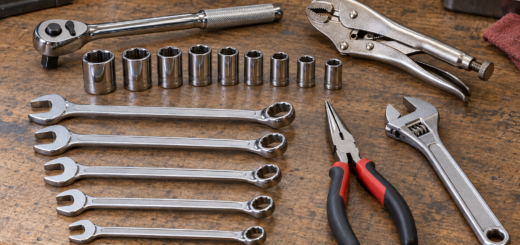
Hand tools have the clearest case for buying used. A quality wrench, ratchet, clamp, or chisel can last decades. Surface rust is usually cosmetic if it has not pitted the working surfaces. Check that jaws close evenly, ratchets do not skip, and moving parts are not loose. Used hand tools should generally cost at least 30% to 50% less than comparable new tools after accounting for cleaning and replacement parts.
Older corded power tools can also be good values. Their motors are relatively easy to test, and replacement cords, switches, and brushes are often available. Run the tool for several minutes under light load. Excessive sparking, a burning smell, grinding bearings, or a cord that becomes hot indicates a likely repair. A used corded drill priced at $35 may be sensible; one priced at $25 with a failing switch is not.
Large stationary tools are another area where used prices can be attractive. A used drill press, jointer, bandsaw, or table saw may sell for 40% to 70% below a new equivalent, especially locally because shipping is difficult. The trade-off is transportation, missing accessories, and the time needed to align it. A $400 used saw that needs a $100 blade, $75 of hardware, and half a day of adjustment is not really a $400 saw.
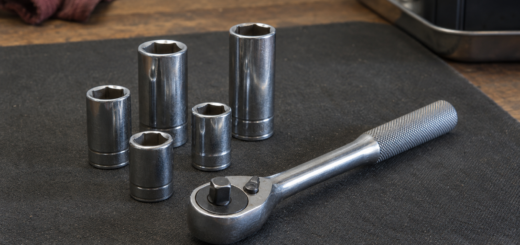
For common hand-tool categories, used hand tools and socket sets are usually safer purchases than used cordless equipment. There are fewer hidden failure points and no battery age to estimate.
When Buying New Is the Better Value
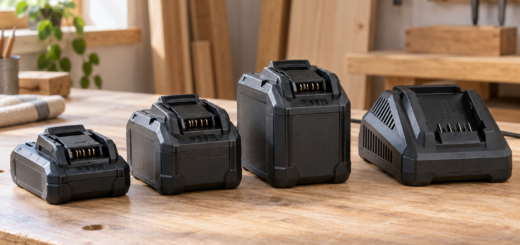
Cordless tools are the most complicated category. The tool may look clean while the battery has lost half its original capacity. Lithium-ion batteries commonly show noticeable aging after roughly 3 to 5 years, sooner if stored hot, left fully discharged, or used heavily. A replacement battery can cost $50 to $150, which can erase the used-tool discount.
Buy new when you are starting a battery platform. The initial kit price often includes a charger and two batteries, while buying those pieces separately later costs more. If you already own compatible batteries in good condition, a used bare tool can be worthwhile. Test it with your battery and listen for gearbox noise, trigger hesitation, and abnormal heat.
New is also preferable for tools with significant safety consequences: grinders, nailers, chainsaws, routers, and saws with electronic brakes or guards. Used does not automatically mean unsafe, but missing guards, cracked housings, bent arbors, and modified switches are common failure modes. A $20 saving is not worth accepting a tool that stops, kicks back, or fails to hold a blade correctly.
For occasional DIY work, new cordless tool kits with batteries often beat piecing together several used tools. Compare the complete kit price, not just the bare tool price.
New Versus Used at a Glance
| Tool category | Usually better buy | Why | What to inspect |
|---|---|---|---|
| Hand tools | Used | Low failure risk and long service life | Cracks, pitting, worn jaws, skipped ratchets |
| Corded drills and sanders | Used if tested | Simple, repairable, often heavily discounted | Sparks, bearing noise, hot cord, switch operation |
| Cordless tools | New or used bare tool | Battery condition controls the real cost | Battery age, run time, charger, heat, gearbox noise |
| Grinders and saws | New | Guards, brakes, and bearings affect safety | Arbor play, guard operation, cracks, repairs |
| Stationary machines | Used locally | Large savings are possible if alignment is sound | Rust, flat tables, missing parts, motor and fence condition |
Calculate the Real Used Price
Start with the current new price, then subtract the value of missing items and add likely repair costs. Include blades, bits, batteries, chargers, cases, fences, dust ports, and manuals when they matter. A used tool should not be compared with a stripped-down new tool if the used one lacks its essential accessories.
A practical target is 50% to 65% of current new pricing for a clean, complete tool with light use. For a tool that is 10 years old, discontinued, or difficult to service, aim lower—often 25% to 40%. Age alone is not decisive, but parts availability is. Search for the motor, switch, battery, and manufacturer parts before paying.
Be cautious with unusually cheap listings. Counterfeit batteries, stolen tools, concealed water damage, and tools with swapped parts appear in online marketplaces. Meet in a public place when possible, test the tool under load, and avoid sending payment for an item you have not inspected.
Use Seasonal Timing to Lower the Price
Buy outdoor power equipment late in the season, when retailers clear mowers, trimmers, pressure washers, and chainsaws. Discounts of 15% to 30% are common, although selection narrows quickly. Winter is often a good time to buy used lawn equipment locally because sellers want storage space.
Holiday promotions can be useful for cordless kits and shop vacuums, but compare the price history. A “sale” is not compelling if the discount is only from an inflated list price. Spring is usually the worst time to buy popular lawn tools because demand rises before supply does.
For a durable workshop tool, patience usually saves more than chasing a particular brand. corded drills and other corded shop tools are frequently discounted outside the main holiday period and remain useful without battery replacement costs.
Make the Final Decision
Choose new if the used discount is under 25%, the tool cannot be tested, or a single failure would stop an important job. Choose used when the savings are at least 40%, the tool is mechanically simple, parts are available, and you can verify its operation.
Do not buy used merely because the sticker price is lower. Buy used when the remaining service life, repairability, and included accessories make the total cost lower. Otherwise, a basic new tool with a return policy is often the more economical choice.