Best Affordable Impact Driver for Deck Building and General DIY
What's inside
As an Amazon Associate I earn from qualifying purchases. This post may contain affiliate links at no extra cost to you.
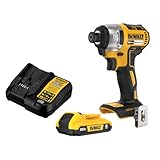
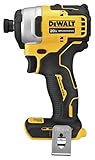
For deck building and general DIY, the best affordable impact driver is usually a compact 18V or 20V brushless model from a battery platform you will actually use again. You do not need a professional flagship driver to install deck screws, build planters, assemble furniture, or handle routine repairs. You do need enough torque, a comfortable grip, and batteries that do not become expensive or difficult to replace.
Expect to spend roughly $80 to $140 for a kit with a tool, battery, charger, and case during ordinary sales periods. Bare tools can cost $50 to $100, but they are only a bargain if you already own compatible batteries. For occasional DIY work, a brushed kit can be perfectly adequate. For repeated deck construction, brushless is worth paying extra for because it usually runs cooler, delivers better runtime, and has a longer service life.
As an Amazon Associate we earn from qualifying purchases at no extra cost to you.


What matters for deck building
A deck project puts more stress on an impact driver than most indoor DIY jobs. You may drive hundreds of structural screws, work overhead, and switch between long fasteners and small trim screws. Look for a driver with at least 1,500 inch-pounds of advertised torque, though torque figures vary between brands and are not directly comparable. A useful speed range is about 0 to 3,000 revolutions per minute, with a separate impact rate around 0 to 4,000 impacts per minute.
Three speed or power settings are more useful than a huge headline torque number. A low setting helps prevent stripped screw heads and overdriven trim screws. The high setting is useful for long ledger, joist, and blocking screws. A narrow 1/4-inch hex chuck, a bright work light, and a belt hook are small features that become valuable during a long day.
Battery size affects both runtime and handling. A 2.0Ah battery keeps the tool light and is usually enough for household repairs. A 4.0Ah or 5.0Ah pack reduces battery changes during deck work but adds noticeable weight. For most homeowners, a kit with one small and one medium battery is more practical than a single oversized pack.
Best value options by buyer
| Buyer | Best choice | Typical kit price | Main trade-off |
|---|---|---|---|
| Occasional DIY user | Brushed 18V/20V kit | $60–$100 | More heat and shorter expected life under heavy use |
| Deck builder or frequent DIYer | Compact brushless kit | $90–$160 | Higher initial cost |
| Already owns batteries | Bare brushless tool on that platform | $50–$110 | Limited to the battery system you own |
| Heavy structural work | Brushless mid-torque driver with 4.0Ah battery | $130–$220 | Heavier and often unnecessary for light repairs |
For a homeowner starting from nothing, a compact brushless impact driver kit is the safest value. It gives you enough performance for deck screws without committing to the price of a premium contractor system. Choose the platform based on the other tools you expect to buy: a drill, circular saw, reciprocating saw, or light.
If you only build one small project, a brushed 20V impact driver kit is fine. It will drive ordinary 3-inch construction screws and deck screws, provided you let the tool work instead of leaning heavily on it. The main failure mode is heat. Driving screws continuously can warm a brushed motor and battery quickly, so work in batches and allow the tool to cool.
Brand and battery-platform value
Entry-level lines from major brands often cost more than store-brand tools, but the extra price can buy better battery availability, more replacement parts, and a wider selection of bare tools. This matters more than a small difference in maximum torque. A cheap driver is less attractive if a replacement battery costs nearly as much as the original kit.
Store-brand systems can be excellent for light and moderate use. They are often the cheapest way to get a drill, driver, light, and saw into a garage. Their weaknesses tend to appear in battery selection, charger speed, warranty handling, or long-term platform availability. Before buying, check whether replacement batteries are sold individually and whether the brand offers the tools you may want next.
Do not buy a premium 18V professional system solely for a single deck. The stronger platform makes sense if you expect several years of construction work or already own its batteries. For a weekend deck, an affordable brushless driver with two batteries will normally finish the job at a lower total cost. Search for 18V brushless impact driver bare tools only after confirming that your batteries and charger are compatible.
Using an impact driver without damaging the work
Use the correct bit for the screw head. A worn Phillips or square bit cams out, rounds the recess, and makes the driver appear weak. For a typical deck screw, use a fresh bit and keep it aligned with the fastener. Start on the low or medium setting, then increase power only when the screw stops advancing.
Do not use an impact driver as a substitute for a drill when making pilot holes. Drill pilot holes near board ends and anywhere splitting is likely, following the screw manufacturer’s guidance. A pilot hole reduces splitting, lowers driving resistance, and helps prevent the driver from twisting out of your hand. An impact driver is also a poor choice for delicate hardware; its hammering action can snap small screws or damage soft materials.
For structural connections, use screws approved for the application rather than generic drywall screws. Drywall screws are brittle and have poor corrosion resistance outdoors. On treated lumber, choose fasteners rated for exterior exposure and compatible with the treatment chemicals. The driver cannot compensate for the wrong fastener.
When to buy and what to avoid
Battery tool kits commonly reach their best prices during spring project sales, Father’s Day promotions, Black Friday, and holiday clearance periods. Compare the kit contents, not just the advertised discount. A $99 kit with a 2.0Ah battery may be worse value than a $129 kit with two batteries, a faster charger, and a brushless motor.
Avoid kits with no stated battery capacity, proprietary chargers with poor availability, or a tool that lacks a low-speed setting. Be cautious with extreme torque claims from unfamiliar brands; testing standards differ, and inflated specifications do not guarantee better screw driving. For most DIY buyers, a reliable battery ecosystem and a comfortable brushless driver beat the highest number on the box.