Best Affordable Nut Driver Set for Light Electrical and Appliance Work
What's inside
As an Amazon Associate I earn from qualifying purchases. This post may contain affiliate links at no extra cost to you.
For light electrical and appliance work, a nut driver set is often more useful than a large socket kit. It is quicker for hex-head screws, terminal hardware, hose clamps, small brackets, and sheet-metal fasteners. The best affordable set is not necessarily the one with the most pieces. You want the common sizes, a handle that does not slip, and shafts that can survive more than a few repairs.
As an Amazon Associate we earn from qualifying purchases at no extra cost to you.



What to Look For in an Affordable Nut Driver Set
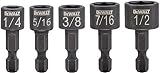
A practical set should cover both SAE and metric sizes. For household work, SAE sizes such as 1/4, 5/16, 3/8, and 7/16 inch are common, while metric sizes from 6 mm through 10 mm show up regularly on appliances, imported hardware, and electrical equipment. A set covering roughly 5 mm to 11 mm plus 3/16 to 7/16 inch handles most light-duty jobs without becoming expensive or bulky.
Look for hollow or deep shafts if you work on machine screws threaded onto long studs. A shallow shaft can bottom out before the driver reaches the nut. This is a common problem on appliance panels and junction-box fittings. Magnetic tips are convenient for starting small nuts, but magnetism is not a substitute for a properly fitting driver. A loose fit rounds corners quickly.
The handle matters more than flashy packaging. A textured plastic or rubberized grip is easier to control with greasy hands. Color-coded handles help when you are working inside a cramped cabinet. Cushion grips are comfortable, but very soft rubber can tear or become sticky after years in a hot garage. Chrome-plated steel shafts resist rust and wipe clean easily.
For a basic household kit, compare current SAE and metric nut driver sets rather than buying two incomplete sets. A mixed set usually costs less than purchasing missing sizes separately, although the included case may be flimsy.
Best Value Options by Use
| Set type | Typical price | Best for | Main compromise |
|---|---|---|---|
| Basic 6-piece SAE set | $10–$18 | Older U.S.-made appliances and simple electrical work | Missing metric sizes and larger drivers |
| Basic 6-piece metric set | $10–$18 | Modern appliances, furniture, and imported equipment | Not useful for common SAE terminal hardware |
| Mixed 10- to 14-piece set | $18–$35 | General home maintenance | Some sizes may see little use |
| Professional 10- to 14-piece set | $35–$75 | Frequent service work and daily tool use | More money than occasional repairs require |
| Insulated nut driver set | $35–$90 | Qualified work near energized systems | Higher cost and still requires de-energizing circuits |
For most homeowners, the mixed 10- to 14-piece category is the sweet spot. It gives enough coverage without paying for specialized sizes. If you already own a metric socket set, a smaller SAE nut driver set can be the cheaper choice. Likewise, someone repairing older American-made equipment may get more value from six SAE drivers than from a large mixed kit.
The Most Useful Configuration
A sensible first set includes 1/4, 5/16, 3/8, and 7/16 inch, plus 6, 7, 8, 9, and 10 mm. Add 11 mm or 1/2 inch if you regularly work on appliances, small engines, or plumbing-related brackets. Drivers larger than 1/2 inch are less useful in light electrical work and are better handled with a ratchet and socket.
Choose standard fixed-handle drivers for routine work. Ratcheting nut drivers are convenient when a fastener has many threads, but their mechanisms add cost and can fail if you use them as a wrench. They also tend to have thicker heads, which makes access worse in narrow electrical boxes. A fixed driver with a hex bolster can be turned with a wrench when extra leverage is occasionally needed.
Do not pay a premium for a full set of magnetic drivers unless you frequently drop hardware into cabinets. Magnets can attract metal filings and may be inconvenient around sensitive components. For ordinary terminal blocks and appliance panels, a nonmagnetic driver is entirely adequate.
Electrical and Appliance Safety
Turn off the breaker or unplug the appliance before removing covers. Verify that power is absent with a properly functioning tester, and remember that some equipment contains capacitors that can retain a charge after it is unplugged. Nut drivers are not automatically safe for electrical work just because their handles are plastic.
If you work on energized equipment professionally, buy a certified 1000V insulated nut driver set from a reputable electrical-tool brand. Insulation should be marked with an appropriate rating, not merely described as “rubber coated.” Even insulated tools are intended for trained users and controlled situations, not as permission to skip lockout and voltage checks.
On appliances, avoid using a nut driver to force a seized fastener. Small shafts can twist, and the handle can split when you apply pliers for leverage. Use penetrating oil where appropriate, let it work, and switch to a socket or wrench if the fastener needs serious torque. A nut driver is designed primarily for light to moderate tightening, not breaking loose rusted hardware.
Brand and Price Value
At the budget end, anonymous sets can be fine for occasional cabinet panels and outlet-box hardware. The usual weaknesses are inaccurate sizing, thin shafts, poor chrome plating, and handles that loosen after repeated use. A $12 set may be a good purchase if it is used five times a year, but replacing one damaged driver can erase the initial savings.
Mid-priced sets from established hand-tool brands generally offer better fit and more consistent heat treatment. That matters when a nut is recessed or slightly corroded. They are worth the extra money for maintenance workers, landlords, and anyone who uses the tools weekly. You are paying for fewer damaged fasteners and a better chance that replacement or warranty support exists.
Check the actual contents before buying. Some listings advertise “20 pieces” while counting a case, bit adapter, or duplicate driver. Reviews are most useful when they mention shaft wobble, loose handles, and whether the stated sizes fit real fasteners. A molded storage tray is helpful, but a zip pouch is acceptable if the drivers are labeled clearly.
When to Buy and When to Upgrade
Nut driver sets commonly receive discounts around spring tool events, Father’s Day, Prime-style sales, and the November holiday period. Compare the final price rather than the claimed percentage discount; a mixed set priced around $20–$30 is usually a reasonable budget target, while prices above $40 should bring noticeably better construction or insulation.
If your current set covers the sizes you use and the tips are not rounded, there is little reason to upgrade. Replace a cheap set when the shaft slips inside the handle, the driver no longer fits the fastener cleanly, or rust has begun pitting the working end. For a first purchase, a well-reviewed professional mixed nut driver set is sensible if the price is close to a generic kit. Otherwise, an inexpensive mixed set is enough for light, de-energized electrical and appliance repairs.