Best Budget Torque Wrench for Automotive and Bicycle Maintenance
What's inside
As an Amazon Associate I earn from qualifying purchases. This post may contain affiliate links at no extra cost to you.
A good torque wrench does one job: it applies a fastener’s specified tightening force more consistently than guesswork. For automotive and bicycle maintenance, the best budget choice is usually a click-type wrench with a useful torque range, a readable scale, and a drive size suited to the work. Spending more can improve calibration, adjustment, and durability, but the cheapest tool is not automatically a bad buy.
As an Amazon Associate we earn from qualifying purchases at no extra cost to you.


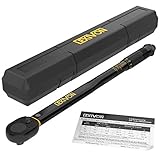

What to look for in a budget torque wrench
Torque range matters more than brand prestige. A wrench rated from 20 to 150 lb-ft may be useful for lug nuts and suspension work, but it is a poor choice for bicycle stems, seat clamps, carbon components, and derailleur hardware. Those jobs commonly call for 3 to 12 Nm, or roughly 27 to 106 lb-in.
For general automotive work, a 3/8-inch drive wrench covering about 20 to 100 lb-ft is a practical starting point. It handles many engine, brake, and chassis fasteners without being excessively large. A 1/2-inch drive wrench covering roughly 50 to 250 lb-ft makes more sense for wheel lug nuts and larger suspension fasteners, but it is less useful for smaller bolts.
For bicycles, look for a dedicated low-range wrench covering approximately 2 to 20 Nm. A beam-style tool can work at low cost, but a click wrench is easier to use in confined areas. If you work on carbon handlebars, seatposts, or stems, a torque wrench is cheap insurance against crushed parts and slipping handlebars.
Useful features include a reversible ratchet head, dual-direction operation, a locking adjustment collar, and a clear scale. A case is worthwhile because torque tools should not be thrown loose into a toolbox. Avoid paying extra for a huge range if the tool will spend most of its time operating near one end of that range.
Best budget torque wrench types
| Type | Best use | Typical budget | Main trade-off |
|---|---|---|---|
| 3/8-inch click | General automotive repairs | $25–$60 | Limited usefulness for very small or very large fasteners |
| 1/2-inch click | Lug nuts and heavier vehicle work | $30–$80 | Bulky and less accurate-feeling at low settings |
| Low-range bicycle click | Stems, seatposts, rotors, and small hardware | $25–$70 | Not suitable for automotive fasteners |
| Beam-style | Occasional, low-cost checking | $15–$35 | Harder to read and easier to misalign |
A 3/8-inch drive click torque wrench is the strongest value for a home mechanic who does routine automotive service. It can usually reach common tightening specifications without the weight and cost of a professional tool. For wheel work, choose a 1/2-inch drive automotive torque wrench instead.
How cheap is too cheap?
At the bottom of the market, the main risk is inconsistent calibration. A wrench may click at the right setting one day and be several percent high or low later. That does not automatically make it unusable, but it matters on critical fasteners. A budget wrench claiming ±4% accuracy is more convincing than one with no accuracy specification at all.
The cheaper option is fine for occasional lug-nut checks, brake caliper bolts, or bicycle components when the tool is stored correctly and used near the middle of its range. It is less attractive for daily shop work, repeated engine assembly, or jobs where a manufacturer gives a narrow torque tolerance.
Price also reflects adjustment quality. Low-cost collars can slip if the lock is weak, and coarse scales make it easy to set 45 instead of 40 lb-ft. A better wrench generally has smoother adjustment, a more positive lock, and a ratchet that feels less loose. Those improvements save time but do not necessarily justify doubling the price for an occasional user.
Choosing one for bicycle maintenance
A bicycle torque wrench should be small, light, and designed for inch-pound or Newton-meter settings. A tool rated 10 to 150 lb-ft cannot reliably replace a 2 to 20 Nm bicycle wrench. Even if its scale technically overlaps the needed value after conversion, accuracy is commonly worst near the bottom of the range.
For most home bicycle work, a low-range wrench with 2, 2.5, 3, 4, 5, and 6 mm hex bits covers the important jobs. Check that the bits are long enough to reach recessed bolts, and confirm whether the wrench uses a 1/4-inch drive or proprietary bits. A bicycle torque wrench with hex bits can cost less than buying a wrench and bits separately.
Do not assume every bicycle fastener should be tightened to the maximum printed number. The lower figure on a component, frame, or clamp is the limit. Clean, dry threads usually produce more repeatable results than oily ones, but follow the component maker’s instructions where thread lubricant or assembly paste is specified.
Choosing one for automotive maintenance
For lug nuts, match the wrench to the vehicle’s specification. Many passenger cars call for approximately 80 to 110 lb-ft, but the correct number can differ by model and wheel type. Tighten in a star or crisscross pattern, then recheck after lowering the vehicle enough to stop the wheel turning. Never use a torque wrench as a breaker bar; loosening stuck fasteners can damage its mechanism.
For engine and brake work, the specified value may be below 20 lb-ft or above 150 lb-ft. That is why one wrench rarely covers every automotive task well. A sensible two-tool setup is a low-range 3/8-inch wrench for smaller fasteners and a 1/2-inch wrench for wheels and high-torque work. If you only service wheels, buy the larger tool and avoid paying for range you will not use.
Use, storage, and calibration
Set a click wrench only while it is unlocked, then engage the handle lock before use. Pull smoothly from the center of the grip until it clicks once. Stop immediately; adding force after the click can over-tighten the fastener. Keep the wrench reasonably close to its stated range and use a normal ratchet for final tightening if the fastener is not torque-critical.
After use, return an adjustable click wrench to its manufacturer’s lowest marked setting. Do not leave it compressed at a high setting. Store it in its case, keep it dry, and do not use it as a general-purpose ratchet. If it is dropped, used to break bolts loose, or subjected to heavy shop use, calibration becomes more important.
A torque wrench calibration checker is useful for frequent users, but most home mechanics are better served by periodic professional calibration. For occasional work, buying a reputable budget wrench with a stated accuracy rating, correct range, and return option is usually the best value.