Best Value Wire Stripper for DIY Electrical Repairs
What's inside
As an Amazon Associate I earn from qualifying purchases. This post may contain affiliate links at no extra cost to you.
For most DIY electrical repairs, the best-value wire stripper is a manual stripper with clearly marked gauges, a comfortable handle, and a built-in cutter. You do not need an expensive automatic tool for occasional work, but the cheapest stamped-metal strippers can damage conductors, slip off insulation, and leave your hands sore after a few dozen cuts.
A sensible budget is $10 to $25 for a general-purpose stripper. That range buys a tool suitable for replacing switches, outlets, light fixtures, thermostat wiring, and small appliance cords. Spend more only if you work with wire regularly, handle several wire sizes, or want a tool that combines stripping, cutting, crimping, and looping functions.
As an Amazon Associate we earn from qualifying purchases at no extra cost to you.



What to Look For in a Wire Stripper
Start with the wire sizes you actually use. Household solid copper branch-circuit wiring is commonly 14 AWG and 12 AWG, while 10 AWG appears on larger circuits. Low-voltage cable, speaker wire, and automotive wiring use different sizes and may be stranded. A stripper that covers 10–22 AWG is a useful general-purpose choice, but the printed range is not the whole story.
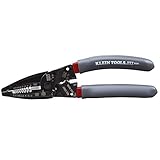
Look for sharply formed stripping holes with readable markings. The holes should close evenly, without one jaw touching before the other. A spring-loaded handle makes repetitive work easier, but it is not essential for a small repair. A built-in wire cutter is useful; a crimper is convenient but usually less capable than a dedicated crimping tool.
For a basic home toolbox, compare 10–22 AWG manual wire strippers rather than buying a multi-tool based solely on the number of functions. Extra crimping and bolt-cutting features are worthwhile only when they work cleanly and do not make the stripper bulky.
Manual, Automatic, and Multi-Function Strippers Compared
| Type | Typical price | Best use | Main drawback |
|---|---|---|---|
| Basic manual stripper | $8–$15 | Occasional household repairs | Requires matching the hole to the wire |
| Better manual stripper | $15–$30 | Frequent DIY work and mixed wire sizes | Costs more for comfort and consistency |
| Automatic stripper | $15–$40 | Many repeated strips or awkward access | Can nick small conductors and wears faster |
| Electrician multi-tool | $20–$50 | Stripping, cutting, looping, and crimping | Often compromises at each individual task |
A basic manual stripper is the value winner when you make a few repairs per year. It has fewer moving parts and can last for decades if kept dry. The cheaper option is fine for stripping 12 and 14 AWG solid copper wire, especially when the tool has accurate holes and a reasonably smooth pivot.
Move up to a better manual stripper if you regularly work on junction boxes or renovation projects. The extra money usually buys stronger steel, better insulation on the handles, a smoother spring, and more accurate cutting edges. Those details matter after 50 or 100 strips, not necessarily after five.
Automatic strippers are convenient when you need to remove the same length of insulation repeatedly. They can be helpful for stranded conductors and tight spaces, but inexpensive versions often fail in predictable ways: they pull insulation off unevenly, crush fine strands, or fail to open fully after the strip. A good automatic tool is not automatically a better value.
The Best Value Choice for Most DIYers
Choose a mid-priced manual stripper rated for roughly 10–22 AWG, with a spring-loaded handle and a cutter near the pivot. Look for a compact design that fits inside an electrical box without excessive bulk. A tool with dedicated holes is preferable to a generic automatic stripper for standard household wiring.
For buyers who want a little more leverage and durability, browse professional-style 10–22 AWG wire strippers. “Professional” on the package is not proof of quality, so check recent reviews for complaints about loose pivots, inaccurate gauge markings, and cutting edges that arrive dull.
Consider a wire stripper and crimper multi-tool if you also install insulated terminals, work on automotive wiring, or want one tool for a vehicle emergency kit. For household receptacles and switches, however, the crimper adds little value. The tool may also be wider than a dedicated stripper, making it harder to use in a crowded box.
How to Strip Wire Without Damaging It
Turn off the circuit at the breaker, then verify that the conductors are dead with a properly functioning voltage tester. Do not rely on the wall switch alone. If more than one circuit enters the box, test every conductor you will touch.
Match the wire gauge to the correct stripping hole. Close the jaws firmly and pull the insulation straight off, without twisting. The copper should remain round and uncut. A shallow scratch may weaken a conductor; a deep nick is a failure point and calls for cutting the wire back and stripping a fresh section.
Strip only the length required by the device. Many switches and receptacles have a strip gauge printed on the back, often around 5/8 inch, but follow the device marking. Too little exposed copper can produce a poor connection. Too much leaves bare copper outside the terminal, creating a shock or short-circuit hazard.
For screw terminals, form a clockwise hook so tightening the screw pulls the wire inward. Do not put two wires under a terminal unless the device is specifically rated for it. When using push-in terminals, use them only when permitted by the device instructions; screw clamps are generally more secure for repairs that may be disturbed later.
When to Buy and When to Save
Wire strippers are commonly discounted in spring tool promotions, Father’s Day sales, and November holiday events. The savings are usually modest—often $3 to $10—so do not wait months for a basic tool if an electrical repair is already in progress. Kits can offer better value when they include a voltage tester, electrical tape, and insulated screwdrivers you would otherwise buy separately.
Avoid buying the absolute cheapest unbranded stripper if the jaws are visibly rough or the gauge markings are shallow. Saving $5 is not worthwhile if the tool damages a $20 device or forces you to redo a connection. On the other hand, a $40 stripper is unnecessary for replacing one outlet. Buy the simple manual tool when the job is occasional, and pay for better ergonomics only when your hands—and your project list—justify it.