Best Affordable Adjustable Wrench for Plumbing and General Repairs
What's inside
As an Amazon Associate I earn from qualifying purchases. This post may contain affiliate links at no extra cost to you.
An adjustable wrench is one of the most useful tools in a home repair kit, but the cheapest one on the shelf is not always the best value. A poor wrench can slip, round a fitting, or develop play in the jaw after only a few jobs. For plumbing and general repairs, the sweet spot is usually a well-made 8-inch wrench with a smooth adjustment mechanism, a readable scale, and jaws that stay parallel under load.
As an Amazon Associate we earn from qualifying purchases at no extra cost to you.
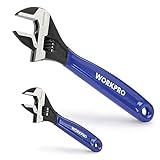


What to look for in an affordable adjustable wrench
Size matters more than many buyers expect. A 6-inch wrench fits easily into tight spaces, but its typical jaw opening is limited and its short handle provides less leverage. An 8-inch wrench is the best general-purpose size for faucets, supply lines, valves, automotive fasteners, and household hardware. A 10-inch wrench offers more leverage and a wider opening, but it is easier to over-tighten brass or chrome-plated fittings.
For a first purchase, look for a wrench with a jaw capacity of at least 1 inch at 8 inches long. Some wider-jaw designs open to roughly 1 1/4 inches or more, which is useful for larger plumbing fittings. Check the jaw thickness as well. Slim jaws reach recessed nuts, but extremely thin jaws can flex or spread when heavily loaded.
The adjustment screw should turn smoothly without feeling gritty or loose. A small amount of movement is normal, but excessive jaw wobble makes the wrench more likely to slip. A laser-etched or stamped measurement scale is useful when setting the opening before reaching into a cramped space. Chrome plating helps resist rust, though it does not make the tool immune to corrosion from wet jobs.
Best affordable options by use
| Wrench type | Typical price | Best use | Main trade-off |
|---|---|---|---|
| 6-inch adjustable wrench | $8-$15 | Small fasteners and tight cabinets | Limited leverage and jaw opening |
| 8-inch adjustable wrench | $10-$25 | General repairs and most household plumbing | Too large for some confined spaces |
| 10-inch adjustable wrench | $15-$35 | Larger fittings and extra leverage | Can damage soft fittings if overused |
| Wide-jaw adjustable wrench | $15-$35 | Large nuts with a relatively compact handle | Thin jaws may flex on stubborn fasteners |
| Adjustable wrench set | $20-$50 | Homes needing several sizes | Lowest-cost sets may have inconsistent quality |
For most homeowners, an 8-inch chrome adjustable wrench is the sensible starting point. A budget wrench is fine when it will be used occasionally on accessible nuts and bolts. You do not need a premium tool to tighten a water-supply connection or adjust a lawn-equipment fastener.
Spend more when the wrench will see frequent use, high loads, or difficult access. Better-made tools generally have tighter jaw tolerances and a stronger adjustment screw. That does not mean they can replace a pipe wrench or socket. An adjustable wrench remains a compromise: convenient and versatile, but more prone to slipping than a correctly sized fixed wrench.
Using an adjustable wrench for plumbing
Adjustable wrenches work well on hex-shaped compression nuts, faucet mounting nuts, supply-line connectors, and valve fittings. They are not the right choice for gripping smooth round pipe. Use tongue-and-groove pliers or a pipe wrench for that job, and protect finished surfaces with a strap wrench when possible.
Before turning the wrench, close the jaws firmly against the nut. The movable jaw should face the direction of rotation so the fixed jaw carries most of the load. Keep the wrench square to the fastener. If it sits at an angle, the jaws can spread and round the corners.
Plumbing hardware is often brass, copper, plastic, or chrome-plated. These materials can be damaged by excessive force. Start with hand-tightening, then use the wrench for a small additional turn. If a fitting leaks, do not automatically keep tightening it. The seal may need new thread tape, a replacement washer, or a properly seated compression ferrule. Over-tightening can split a plastic valve or distort a soft brass nut.
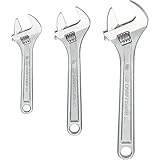
For chrome or polished fittings, place a thin cloth between the wrench and the surface only if the jaws still grip securely. A thick cloth can make the tool slip. A dedicated adjustable wrench set in 6-, 8-, and 10-inch sizes gives better coverage than forcing one large wrench into every space.
Brand value and quality differences
Established hand-tool brands usually charge more because their jaws, adjustment screws, and heat treatment are more consistent. That matters when a wrench is used daily or when a rounded fastener would create a much bigger repair. Mid-priced tools often provide the best value for homeowners: better fit and finish than anonymous bargain tools without the cost of a professional premium line.
Store-brand tools can be a good buy when they carry a lifetime replacement warranty and have a smooth mechanism in the package. Inspect the jaws before buying. Reject any wrench with visible gaps when closed, sharp casting edges, a crooked jaw, or a screw that binds through part of its travel. A low price is not a bargain if the tool cannot hold the fastener securely.
If you are buying a second wrench, consider a 10-inch wide-jaw adjustable wrench rather than another standard 8-inch model. It adds capacity and leverage, while the smaller wrench remains useful in confined spaces.
When to buy and how to save
Adjustable wrenches are commonly discounted during spring home-improvement promotions, Father’s Day sales, back-to-school tool events, and November holiday promotions. Sets often receive deeper discounts than individual tools, but compare the actual sizes and jaw capacities. A three-piece set with two nearly identical small wrenches is less useful than a simple 6-, 8-, and 10-inch combination.
Prices also fall when retailers clear older packaging or discontinue a particular finish. Tool performance is not determined by packaging design, so clearance stock can be worthwhile if the jaws and screw pass inspection. Avoid buying solely because a product claims a very wide opening. Capacity is useful, but jaw alignment and resistance to spreading are more important for stubborn fasteners.
The practical buying choice
Choose an 8-inch adjustable wrench in the $10-$25 range for normal household work. Add a 6-inch wrench if you regularly work under sinks or inside cabinets, and add a 10-inch wrench when larger fittings or extra leverage are common. The cheaper option is perfectly adequate for occasional light repairs, provided the jaws fit tightly and the tool is kept square on the fastener.
For frequent plumbing work, buy the best-fitting mid-priced wrench you can find rather than the largest bargain tool. Clean off water and grime after use, dry the adjustment screw, and apply a tiny amount of light oil if it begins to bind. Those simple habits usually extend the life of an affordable wrench more than paying for a premium finish.