Best Affordable Manual Edger for Defining Residential Lawn Borders
What's inside
As an Amazon Associate I earn from qualifying purchases. This post may contain affiliate links at no extra cost to you.
A manual lawn edger is one of the cheapest ways to make a residential lawn look deliberately maintained. It will not match the speed of a powered edger, but it avoids fuel, batteries, charging, engine maintenance, and the risk of accidentally cutting through irrigation lines with a fast-spinning blade. For a typical driveway, sidewalk, or garden border, a good manual tool can cost less than $40 and last for years.
As an Amazon Associate we earn from qualifying purchases at no extra cost to you.



What to Look For in an Affordable Manual Edger
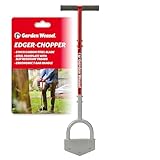
The most useful manual edgers fall into three groups: half-moon step edgers, rotary wheel edgers, and combination tools with a blade or cutter on one end. For defining a straight residential lawn border, a half-moon edger is usually the best value. Its semicircular steel blade cuts a clean vertical slot when you step on the top flange. It is simple, inexpensive, and less likely to jam in damp grass.
A rotary wheel edger is easier to guide over long, straight runs and usually leaves a consistent depth. The trade-off is that small wheels can clog with wet soil, bounce over roots, and struggle where the lawn meets an uneven driveway. A combination tool may be useful if storage space matters, but it often does neither job as well as a dedicated edger.
Look for a steel blade at least 8 inches wide, a reinforced step plate, and a shaft long enough to use without bending. Fiberglass handles are generally a good budget choice because they resist weather and cost less than premium ash or hickory. A sharp, reasonably thick blade matters more than a padded grip or decorative finish.
If you are comparing current options, start with manual half-moon lawn edgers and check the blade material, handle length, and recent customer photos rather than relying only on the product rating.
Budget Categories Compared
| Tool type | Typical price | Best use | Main drawback |
|---|---|---|---|
| Basic half-moon edger | $20-$35 | Short to medium borders, garden beds, sidewalks | Requires repeated foot pressure and lifting |
| Heavy-duty half-moon edger | $35-$60 | Hard soil, established grass, frequent use | Costs more without adding speed |
| Rotary wheel edger | $25-$50 | Long, mostly straight lawn edges | Can clog or skip over roots and uneven ground |
| Combination edging tool | $25-$45 | Occasional work with limited storage | Usually less effective at both edging and digging |
The cheapest half-moon edger is fine when the soil is already loose and you only edge a few times each season. Spending closer to $35 or $45 makes more sense for compacted clay, thick lawn runners, or a property with several hundred feet of border. A heavier blade and stronger step plate reduce flexing, but they do not eliminate the physical work.
The Best Affordable Choice for Most Homes
For most homeowners, choose a steel half-moon edger with a straight shaft, a broad foot plate, and a blade around 8 to 10 inches wide. This design gives you direct control over the cut and works around curves better than a wheel. It is also easier to sharpen or replace than a specialized rotary head.
A low-cost model is acceptable if its blade is straight, the handle is securely attached, and the step plate does not feel flimsy. Avoid tools with a narrow decorative blade or a handle that twists when you apply body weight. Those weaknesses show up quickly: the blade bends instead of entering the soil, the shaft loosens, or the tool leaves a ragged edge rather than a vertical trench.
For long, straight borders beside concrete, consider a manual rotary wheel lawn edger. It can be less tiring because you push rather than lift the tool, but inspect the wheel diameter and cutter design. Small wheels are inexpensive but tend to stall in thick turf. A wheel edger is not automatically the better buy just because it appears faster.
How to Get a Clean Border
Water the lawn lightly the day before edging if the soil is hard. You want the ground damp enough for the blade to enter, not muddy enough to smear. Mark the intended line with string, chalk, or a garden hose. A hose is especially useful for curved beds because it lets you adjust the shape before cutting.
Place the blade on the lawn side of the line and step down with your body weight. Cut 1 to 2 inches deep for a normal maintenance edge. Deeper cuts are sometimes needed to remove creeping grass, but going much beyond 2 inches can expose roots, damage shallow irrigation tubing, or create a trench that collapses into the bed.
Overlap each cut by roughly half the blade width. After completing the line, pull out the loosened strip of turf with a spade or hand trowel. Do not expect the edger alone to remove a thick strip of sod. Trying to force it through dense roots is a common way to bend a budget blade.
For an existing edge, make one light pass every two to four weeks during vigorous growth. For a new bed, make the first cut carefully, then maintain it rather than repeatedly cutting a deep trench. Grass that spreads by runners may require occasional trimming with a spade or a dedicated manual lawn edging tool with replacement blades.
Common Failure Modes and Maintenance
Wet grass and clay soil are the biggest causes of poor results. Mud sticks to rotary cutters and can make a half-moon blade appear dull. Wait a few hours, scrape the blade clean, and try again when the surface is workable. If the blade still will not enter, sharpen the leading edge with a file and check for bends.
Never use the edger to cut through buried cable, irrigation pipe, or landscape fabric. Confirm the location of utilities and shallow sprinkler lines before cutting a new border. Wear boots with firm soles, gloves, and eye protection when removing stones from the edge.
Spring is usually the best time to buy because garden-tool promotions begin before peak lawn season, while late summer and fall can bring clearance pricing. The best bargain is often a basic steel half-moon tool bought during an off-season sale, not a heavily discounted tool with a thin blade. If you edge only a few times a year, save the money. If you maintain long borders every month, pay for sturdier steel and a comfortable full-length handle.