Best Budget Corded Lawn Edger for Small Residential Properties
What's inside
As an Amazon Associate I earn from qualifying purchases. This post may contain affiliate links at no extra cost to you.
A corded lawn edger is often the best value for a small residential property. It costs less than a battery model, delivers consistent power, and avoids the fuel, oil, and maintenance associated with gas equipment. The trade-off is simple: you need an outdoor outlet and a suitable extension cord. For a typical driveway, sidewalk, and 50 to 150 feet of lawn border, that is usually a reasonable compromise.
As an Amazon Associate we earn from qualifying purchases at no extra cost to you.


What to Look for in a Budget Corded Edger
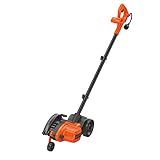
Most useful corded edgers fall in the 10- to 12-amp range. A 10-amp tool is usually enough for grass that is regularly maintained. A 12-amp model is preferable if the lawn has thick St. Augustine grass, creeping weeds, or an edge that has not been cut for several months. More amperage does not automatically mean better edging, but it gives the motor more reserve when the blade hits dense roots or damp soil.
Look for a metal edging blade, adjustable cutting depth, an adjustable guide wheel, and a blade shield that does not flex easily. A depth range of roughly 1 to 2 inches covers normal lawn maintenance. Deeper cutting can produce a sharper-looking trench, but it also increases the chance of hitting irrigation lines, landscape lighting cable, or buried edging.
For a small property, cord storage and weight matter as much as motor power. A tool weighing 12 to 16 pounds is easier to control around curves and garden beds. A heavier edger may feel more stable on a straight sidewalk but becomes tiring when you are constantly lifting and repositioning it.
Browse current corded electric lawn edgers by motor size and blade adjustment rather than choosing by the lowest listed price alone.
Budget Corded Edger Value Comparison
| Type | Typical street price | Best use | Main compromise |
|---|---|---|---|
| Basic 10-amp corded edger | $55–$80 | Maintained grass along sidewalks and driveways | Less reserve in heavy growth; simpler adjustments |
| Heavy-duty 12-amp corded edger | $80–$130 | Thick grass, neglected edges, frequent use | Heavier and sometimes harder to maneuver |
| Budget battery edger kit | $120–$220 | Properties without convenient outdoor power | Higher purchase price and limited runtime |
| Gas edger | $150–$300 | Large properties and long, repeated edging jobs | Fuel, noise, exhaust, maintenance, and storage |
These are practical street-price ranges rather than permanent prices. Sale events can move entry-level corded tools below $50, while shipping and regional availability can push them higher. If the cheapest tool lacks a guide wheel or has no depth adjustment, spending another $15 to $25 is usually justified.
Corded Versus Battery for a Small Yard
Battery edgers are more convenient because there is no cord to manage. That convenience is valuable when the nearest outlet is far from the work area or when you already own compatible batteries. Otherwise, a corded edger gives better value. It can run continuously, and its performance does not fade as the battery charge drops.
The real cost of a battery tool is often the kit price. A tool-only bargain is not a bargain if you need a battery and charger. A 2.0Ah battery may handle a small edging job, but thick grass and repeated deep cuts can reduce runtime substantially. If you already own a battery platform, compare only the bare-tool price; if not, compare complete kits against a corded tool plus a quality extension cord.
For most homeowners, a 12-amp corded electric edger is the better choice when the property has accessible outlets and no more than a few hundred feet of border to maintain.
Extension Cord and Electrical Safety
Use an outdoor-rated extension cord. For a typical 10- or 12-amp edger, a 12-gauge cord is the safest all-purpose choice, especially at lengths up to 100 feet. A 14-gauge cord may work for a short 25- or 50-foot run, but thinner cords can cause voltage drop, motor heat, and nuisance breaker trips. Do not use a lightweight indoor cord.
Check the tool’s manual for its cord recommendation, and use a cord-lock loop so the plug connections do not separate when you reach the end of a pass. Keep the cord behind you and inspect it before every use. A nicked jacket, loose plug, or warm connection is a reason to replace the cord, not tape it and continue.
How to Get Clean Edges Without Overworking the Tool
Mow first, then edge when the soil is slightly moist but not muddy. Very dry soil creates dust and makes the blade bounce. Wet soil clings to the blade guard and can clog the cutting area. Mark the desired line with a hose or chalk if the border is new.
Start with a shallow cut, about 1 inch deep, and let the guide wheel carry the tool. Do not force the blade into the ground. Make a second pass for a deeper trench if necessary. Holding the edger at an angle or pushing it sideways can bend the blade shaft, overload the motor, and produce a wavy edge.
Stop immediately if the blade strikes a rock, metal edging, or buried cable. Unplug the tool before clearing grass or inspecting the blade. Replace a worn or bent blade rather than trying to straighten it; replacement blades are normally inexpensive, and a damaged blade can create vibration throughout the machine.
When to Buy and Which Features to Prioritize
Spring promotions often offer the widest selection, but late summer and fall can bring better clearance pricing on corded outdoor equipment. The best buying window is usually when retailers are reducing seasonal inventory, provided replacement blades are still easy to find. Check blade availability before buying an obscure bargain brand.
For the lowest-cost acceptable purchase, prioritize a guide wheel, adjustable depth, a metal blade, and a two-year warranty or better. A longer warranty is useful only if the manufacturer has reachable parts and service support. Avoid paying extra for decorative features, onboard blade storage, or a large cutting-depth claim you will never use.
Choose a basic 10-amp corded lawn edger with a guide wheel if your grass is maintained and the work area is modest. Move up to a 12-amp model if you edge monthly, deal with aggressive grass, or routinely cut back overgrown borders. The cheaper option is completely adequate when it matches the yard; paying for excess power will not fix poor line control or an unsuitable extension cord.