Best Affordable Compost Tumbler for Small Backyard Setups
What's inside
As an Amazon Associate I earn from qualifying purchases. This post may contain affiliate links at no extra cost to you.
A compost tumbler is useful when you want faster, cleaner compost without turning a pile with a fork. For a small backyard, the best value is usually a compact two-chamber tumbler in the 30- to 45-gallon range. It should be easy to rotate when full, have a frame that does not flex, and cost less than the compost it helps produce.
Prices change with season and retailer, but affordable tumblers generally fall between $70 and $180. The cheapest models can work well for light household use. They become less attractive when the drum is difficult to turn, the sliding doors jam, or the stand starts to sag after a season outdoors.
As an Amazon Associate we earn from qualifying purchases at no extra cost to you.


What Size Compost Tumbler Do You Need?
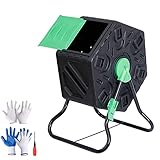
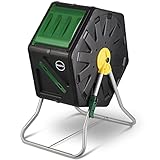
Capacity matters more than most buyers expect. A 30-gallon tumbler is suitable for one or two people producing vegetable scraps, coffee grounds, eggshells, and occasional yard waste. A 40- to 50-gallon model is a better fit for a small family or a yard with regular grass and leaf waste.
Do not assume a larger drum automatically makes better compost. A tumbler needs enough material to heat up, but an oversized unit may sit half empty and produce slowly. Most models need to be filled to roughly two-thirds capacity for efficient mixing. Once packed completely, they can become too heavy to rotate and develop wet, compacted pockets.
For most small backyards, a dual-chamber compost tumbler offers the best balance. One side can finish while the other accepts fresh scraps. A single-chamber tumbler costs less, but you must stop adding material while the batch decomposes.
Features Worth Paying For
Look first at the frame and axle. A drum holding wet compost can weigh 80 pounds or more. The frame should have wide feet and a metal axle that passes through the drum or its mounting brackets securely. Thin tubular legs are a common failure point, especially if the tumbler sits on soft soil.
Ventilation holes are necessary, but they should be small enough to keep rodents out. A useful tumbler has several vents around the drum rather than a few large openings. Locking doors are also important. Loose panels leak scraps when the drum is rotated and can become difficult to align once the plastic distorts in the sun.
A gear-assisted handle is helpful on larger drums, but it is not essential on a 30-gallon unit. Extra gears add another part that can wear or strip. If you are comparing two similarly priced models, choose the one with a stronger frame and better door hardware over one with a more elaborate turning mechanism.
| Type | Typical price | Best for | Main compromise |
|---|---|---|---|
| Single-chamber tumbler | $70–$120 | One or two people, light food waste | Must stop adding material during the active batch |
| Dual-chamber tumbler | $100–$180 | Small families and continuous composting | More hardware and more assembly points |
| Large 50-gallon-plus tumbler | $140–$250 | Regular yard waste and larger households | Heavy when full and harder to turn |
When the Cheaper Single Chamber Is Fine
Choose a single chamber if your main goal is keeping food scraps out of the trash and you do not need a continuous composting cycle. It is also the better choice when storage space is tight. A simple unit with a sturdy stand can outperform a larger dual-chamber product with weak panels.
The limitation is scheduling. You add scraps for several weeks, then leave the batch alone for four to eight weeks. During that time, new scraps need another container or a separate pile. If that inconvenience does not bother you, spending an extra $40 to $70 on two chambers may not be worthwhile.
Dual-chamber designs are convenient, but do not treat them as two full-size bins. The advertised total capacity is often split between the chambers. Each side may hold only 15 to 25 gallons, and small chambers cool quickly in cold weather.
How to Use One Without Creating a Wet Mess
Use roughly two or three parts dry material to one part fresh green material by volume. Browns include dry leaves, shredded cardboard, untreated paper, and small amounts of sawdust. Greens include vegetable scraps, coffee grounds, fresh grass, and plant trimmings.
Keep food scraps chopped to about 1 inch when practical. Large cabbage stems, whole citrus peels, and woody stalks take much longer to break down. Add a handful or two of shredded cardboard whenever the contents look glossy, clump together, or smell sour.
Rotate the drum five to 10 full turns every few days. More turning is not always better; excessive rotation can compact wet material into a dense ball. The finished mix should feel like a wrung-out sponge. If liquid runs from the vents or the material sticks to the drum, add dry browns and leave the door open briefly in dry weather.
Do not add meat, bones, dairy, pet waste, glossy paper, or diseased plants. These materials create odors, attract pests, or introduce problems that a small tumbler does not heat reliably enough to solve.
Buying Advice by Season
Late spring and early summer usually bring the widest selection, but prices are often highest when gardening demand peaks. If you need a tumbler immediately, compare the delivered price rather than the listed price; bulky units can carry significant shipping charges.
Late summer and fall are often better buying periods. Retailers discount garden equipment after peak planting season, and fall leaves provide abundant brown material for starting a batch. A small compost tumbler with a stand is often easier to find on sale then.
Winter can produce the lowest prices, but inspect the return policy and storage requirements. Plastic can become brittle in freezing conditions, and composting slows sharply below about 50 degrees Fahrenheit. If you buy in winter, keep the unit sheltered and avoid forcing a frozen drum to rotate.
The Best Value Decision
Buy the cheapest single-chamber model that has a rigid frame, secure doors, and enough capacity for your weekly scraps. That is usually the right answer for one or two people. Spend more on a dual-chamber unit if continuous use matters, or if you regularly compost kitchen waste and cannot pause for a month.
Before ordering, measure the space and allow at least 12 inches around the drum for turning and opening the doors. A tumbler that fits on paper but cannot rotate freely will be frustrating from the first batch. For most small yards, a 30- to 45-gallon unit on a stable hard surface is the practical budget target—not the largest capacity listed on the box.