How to Choose Tool Capacity Based on Your Actual Workload
What's inside
As an Amazon Associate I earn from qualifying purchases. This post may contain affiliate links at no extra cost to you.
Capacity Starts With the Job, Not the Tool
Tool capacity is the amount of work a tool can handle before its limits become a problem. For a drill, that may mean battery runtime and chuck size. For a shop vacuum, it means tank volume, airflow, and filter loading. For a generator, it means running watts and startup watts. Bigger is not automatically better: extra capacity usually costs more, weighs more, and can be awkward for small jobs.
Start by recording the work you actually do in a typical month. Count the number of holes drilled, cuts made, boards sanded, gallons of debris collected, or hours the tool must run continuously. Then identify the worst normal job—not an unlikely emergency. Buying for a realistic peak workload is usually cheaper than buying the largest tool “just in case.”
Separate Peak Load From Total Work
Two capacity measurements matter: peak load and total workload. Peak load is the hardest moment, such as driving a long structural screw, starting a compressor, or cutting thick hardwood. Total workload is everything the tool must complete before you can recharge, empty it, or stop for a break.
A tool can pass one test and fail the other. A compact drill may have enough torque for one large hole but overheat after drilling 40 of them. A small vacuum may pull well for several minutes but require emptying twice during a drywall cleanup. Write down both requirements before comparing brands.
| Work pattern | Capacity to prioritize | Common mistake |
|---|---|---|
| Occasional repairs | Basic power, low weight, simple controls | Paying for commercial-duty construction |
| Weekend projects | Battery size, runtime, heat management | Choosing the cheapest battery platform |
| Repeated daily work | Duty cycle, replaceable parts, service support | Judging value by purchase price alone |
| Large one-time project | Peak output and rental availability | Buying permanent capacity for temporary work |
Match Tool Size to Frequency
For light use once or twice a month, a smaller tool is often the better value. A compact cordless drill, 5-inch random-orbit sander, or 12- to 16-gallon shop vacuum can handle ordinary home maintenance without the cost and bulk of professional equipment. The cheaper option is fine when jobs are short, materials are moderate, and a short recharge or break does not matter.
Move up a size when the tool will be used for several hours at a time, on dense materials, or by more than one person. For example, sanding a single tabletop does not require the same dust collection capacity as refinishing multiple rooms. Cutting a few 2x4s does not justify a high-capacity saw battery, but framing a shed may make a second battery and faster charger worth more than a slightly stronger motor.
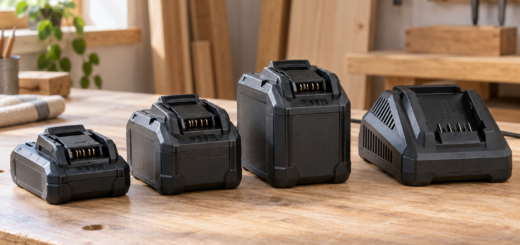
When comparing cordless tools, consider the complete platform cost. A bare tool may look inexpensive, but two batteries and a charger can add $100 to $250. If you already own compatible batteries, staying within that system can be the cheapest practical choice, even if another brand has a lower bare-tool price. If you are starting from zero, compare kits rather than isolated tools. Browse cordless drill kits with two batteries to see the real entry cost.
Use Numbers, Not Marketing Claims
Look for specifications tied to your workload. Battery amp-hours indicate stored energy, not direct power; an 8Ah battery generally lasts about twice as long as a 4Ah battery on the same tool, but it also weighs more. A shop vacuum’s peak horsepower is a weak comparison. CFM and sealed suction, along with hose diameter, tell you more about how it will move dust and debris.
For generators, add the running wattage of everything used at once, then account for startup surges. A refrigerator that runs at 700 watts may briefly need 2,000 watts to start. Keep at least 20 percent spare capacity rather than operating continuously at the rating limit. For air compressors, compare delivered CFM at the tool’s required pressure, not only tank size. A large tank can delay pressure drops but cannot make an undersized pump deliver more air.
For saws and grinders, capacity also includes the accessory. A tool rated for a 7-1/4-inch blade does not automatically cut deeply if the blade, fence, or battery cannot maintain speed. Check maximum cutting depth at 90 degrees and 45 degrees, and expect slower work in hardwood, wet lumber, or thick metal.
Price the Hidden Capacity Costs
Large capacity creates secondary costs. Bigger batteries take longer to charge and can cost $80 or more to replace. Larger vacuums need more storage space and more expensive filters. High-output generators use more fuel and may need heavier extension cords. A larger compressor can be much louder and may require a dedicated circuit.
Consumables matter too. A bargain tool that burns through sanding discs, blades, or filters quickly may cost more after a year. Check whether replacement parts are readily available and whether the brand sells batteries, filters, and switches separately. For dusty renovation work, a HEPA shop vacuum or dust extractor can be worth the premium if it prevents clogged filters and repeated cleanup.
Know When to Buy, Rent, or Step Up
Rent equipment when the job is large but rare: a floor sander used once every five years, a demolition hammer for one concrete repair, or a high-output generator for an occasional event. Rental pricing often makes more sense than storing and maintaining excess capacity. Buy when you use the tool regularly, when setup time matters, or when the tool’s accessories overlap with work you already do.
Seasonal sales are useful, but capacity should come first. Battery kits often receive the best discounts around spring project season, major summer sales, and November holiday promotions. Compare the sale price against the normal kit price and check whether the package includes the battery size you need. A discounted compact battery is not a bargain if it lasts only half the job.
Finally, leave a modest reserve rather than doubling capacity. About 20 to 30 percent above your measured peak is usually enough for wear, colder weather, dull accessories, and interruptions. If the only way to meet the workload is a much larger tool, consider splitting the work between two smaller tools, adding a spare battery, or renting. That choice often delivers better value than buying the biggest version permanently.