Best Hole Saw Kit for Metal and Wood: Bi-Metal vs Carbide and the Sizes You Need
What's inside
As an Amazon Associate I earn from qualifying purchases. This post may contain affiliate links at no extra cost to you.
The best hole saw kit for both metal and wood is a bi-metal kit with variable-pitch teeth, a quick-release arbor and the sizes you actually use, roughly 3/4 to 2-1/2 inches for most homeowners and remodelers, from an established maker such as Milwaukee, Lenox, DeWalt or Starrett. Carbon steel kits are cheaper but are really wood-only, and carbide-tipped saws are worth adding only for thick steel, stainless or abrasive materials. Below is how the kit types compare, which sizes matter, and how to make a dual-purpose kit last.
As an Amazon Associate we earn from qualifying purchases at no extra cost to you.
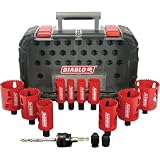
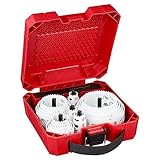


Kit types side by side
| Kit type | Wood | Mild steel (up to about 1/8 in) | Stainless / thick steel | Typical tooth pitch | Relative life in steel | Typical kit price |
|---|---|---|---|---|---|---|
| Carbon steel | Good | Poor; teeth dull quickly | No | Coarse, fixed | Very short | Roughly $15-$35 |
| Bi-metal (HSS teeth on alloy body) | Good | Good | Thin stainless slowly; thick steel with effort | Variable, about 4/6 TPI | Baseline | Roughly $50-$200 by size count |
| Carbide-tipped | Very good; fast in wood with nails | Very good | Good | Fewer, larger teeth | Several times bi-metal | $20-$60+ per saw; kits cost more |
| Diamond / grit edge | No | No | No | No teeth | Not applicable | Tile, glass and stone only |
For one kit that covers framing lumber, plywood, sheet metal, electrical boxes and thin steel plate, bi-metal is the clear default. Variable-pitch teeth (alternating tooth spacing) clear wood chips quickly while still keeping enough teeth on thin metal to avoid snagging.
The sizes that matter most
Large kits look good, but many sizes rarely get used. These are the common jobs that drive size choices:
| Size | Common job |
|---|---|
| 3/4 in | 1/2-in conduit knockouts and small cable runs |
| 7/8 in | 1/2-in conduit fitting holes in boxes and panels |
| 1 in | Door edge bore for latches and deadbolts |
| 1-1/8 in | 3/4-in conduit fittings |
| 1-3/8 to 1-1/2 in | Drain lines and 1-1/4 in pipe through framing |
| 1-3/4 to 2 in | Larger cable bundles, 1-1/2 in drain pipe |
| 2-1/8 in | Door lockset face bore |
| 2-1/2 to 3 in | 2-in drain pipe, dryer and fan ducts in thin material |
| 4 in and up | Recessed light cutouts, ventilation ducts |
A homeowner or remodeler kit in the 9 to 15 piece range covering about 3/4 to 2-1/2 inches, with two arbors (one small, one large), handles most jobs. Electricians lean toward kits heavy in 7/8, 1-1/8, 1-3/8 and 1-3/4 inch sizes; plumbers want more in the 1-1/2 to 3 inch range. Larger saws are often cheaper bought individually when a job requires them.
Features that separate good kits from frustrating ones
- Quick-release or quick-change arbor. Lets you swap saws without unscrewing them, and on many designs makes it easier to separate a seized saw.
- Slugs that come out easily. Look for wide slots in the cup wall (Lenox Speed Slot and Milwaukee Hole Dozer designs are known for this) so you can lever plugs out with a screwdriver.
- Cutting depth. Standard bi-metal saws cut about 1-1/2 to 1-7/8 inches deep, enough for a 2×4 face. Deep-cut versions are useful for doors, double plates and stacked framing.
- Pilot bit quality. A dull or wobbly pilot bit makes the whole saw walk. Replaceable HSS pilots are standard; carbide-tipped pilots help in nail-embedded wood.
- Case. Each saw in a labeled slot prevents tooth damage and lost arbors.
Matching a kit to your work
| Your work | Recommended kit |
|---|---|
| Occasional DIY: door hardware, a few pipe holes | Small bi-metal kit, about 6-9 pieces |
| Remodeling in wood and sheet metal | Mid-size bi-metal kit with two arbors, about 9-15 pieces |
| Electrical work in steel boxes and panels | Electrician-size bi-metal kit plus a carbide saw for stainless enclosures |
| Plumbing through framing | Bi-metal kit up to 3 in, or self-feed bits for repeated wood holes |
| Wood only, very occasional | Carbon steel kit is acceptable |
| Thick steel plate or stainless often | Carbide-tipped saws, or a magnetic drill with annular cutters |
Speed and technique for both materials
The biggest difference between cutting wood and metal is speed. Bi-metal saws cut wood fast at higher speeds, but in steel they burn out quickly if run fast. As a general guide for bi-metal saws:
| Saw diameter | Wood (approx. RPM) | Mild steel (approx. RPM) | Stainless (approx. RPM) |
|---|---|---|---|
| 3/4-1 in | 1,000-1,500 | 400-600 | 200-300 |
| 1-1/2 in | 700-1,000 | 250-400 | 125-200 |
| 2-1/2 in | 400-600 | 150-250 | 75-125 |
| 4 in | 250-400 | 100-150 | 50-75 |
- Use low gear on a cordless drill for anything over about 1-1/2 inches, and use the side handle; hole saws bind and twist.
- Cutting oil in metal. A few drops on the teeth reduces heat and roughly doubles practical life in steel.
- Rock slightly in wood. Tilting the saw a little as you cut helps clear chips and prevents burning in deep cuts.
- Drill from both sides in doors and finished panels: cut until the pilot exits, then finish from the other side to avoid tear-out.
- Clamp thin metal. Sheet metal can grab and spin; never hold it by hand.
What wears and how to extend kit life
- Teeth dull from heat, not from material alone. Slow down and use oil in steel.
- Nails and screws chip bi-metal teeth. Scan reclaimed wood first, or use a carbide saw for demolition work.
- Pilot bits are the cheapest part and often the first to fail. Keep spares.
- Arbor threads wear and seize. Wipe them clean and add a dab of grease occasionally.
- Most-used sizes wear first. Replace those individually rather than buying a new kit.
Bottom line
For a single kit that handles metal and wood, choose a bi-metal hole saw kit with variable-pitch teeth, a quick-release arbor and sizes between about 3/4 and 2-1/2 inches, and add individual carbide-tipped saws for stainless or thick steel. Run slower in metal, use cutting oil, and keep spare pilot bits, and even a mid-priced kit will last for years of mixed work.