Best Jigsaw Machines for Workshop and Jobsite Projects
What's inside
As an Amazon Associate I earn from qualifying purchases. This post may contain affiliate links at no extra cost to you.
Best Jigsaw Machines for Workshop and Jobsite Projects
The best jigsaw machine depends on what you cut and how often: choose a corded model for long sessions in a fixed workshop, a cordless model for mobile work, and prioritize cutting depth, speed control, and tool-free blade changes around your materials and project scale.
Compare the main choices
These representative specifications show how common jigsaw categories differ. Exact figures vary by model, and cutting capacity in wood is not the same as the maximum thickness you can cut cleanly or safely.
As an Amazon Associate we earn from qualifying purchases at no extra cost to you.

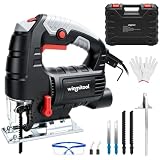


| Jigsaw type | Typical power or battery | Wood cutting capacity | Speed range | Best fit |
|---|---|---|---|---|
| Compact corded | 4–5 A | About 2–3 in. | 0–3,000 strokes/min | Occasional cuts, small shops, and lower-cost projects |
| Full-size corded | 6–7.5 A | About 3–5 in. | 0–3,100 strokes/min | Repeated cuts and extended workshop sessions |
| Compact cordless | 18 V or 20 V class; 2–4 Ah battery | About 2–3 in. | 0–2,500 strokes/min | Trim work, installation, and lighter mobile cutting |
| Full-size cordless | 18 V or 20 V class; 4–8 Ah battery | About 3–5 in. | 0–3,500 strokes/min | Jobsite use and frequent cuts where cords are inconvenient |
“20 V” is commonly a battery platform’s maximum-voltage label; many such tools are marketed as 18 V nominal. Battery capacity in amp-hours indicates stored charge, not a guaranteed runtime. Materials, blade condition, cutting speed, and the specific tool all affect how long a pack lasts.
Pick by project and work location
- For a home workshop with occasional projects: A compact corded jigsaw is often the economical choice. You avoid battery upkeep, and a 4–5 A tool can handle plywood, thin boards, and basic curves when paired with the right blade.
- For long sessions or thicker stock: Consider a full-size corded model with a 6 A-or-higher motor and a stated wood capacity that covers your material. Keep in mind that maximum capacity does not guarantee a square, clean cut through thick stock; blade deflection and heat can compromise accuracy.
- For cabinet installation or work around a property: A cordless model saves time when moving between cuts or working away from outlets. If you already own batteries from a tool platform, a bare tool can cost less than buying into a new system.
- For frequent jobsite cutting: Look at a full-size cordless model, a larger battery, and a second charged pack. For long, uninterrupted cutting runs, corded power may still be more convenient than managing battery swaps.
- For metal or plastic: Prioritize variable speed and blade availability over the biggest wood-capacity number. Use a blade rated for the material, reduce speed as appropriate, and follow the material and tool manufacturers’ guidance.
Features that matter more than a headline capacity
Speed control and orbital action
Variable speed helps match the cutting rate to the work. Faster strokes can suit many wood cuts; slower settings are useful for materials that heat up easily or when you need more control. Orbital action moves the blade forward on part of its stroke, typically cutting wood faster but leaving a rougher edge. Start with orbital action off for curves, finish work, and materials prone to chipping; increase it only when the cut and finish allow.
Blade changes and blade fit
Most current jigsaws use T-shank blades, but confirm compatibility before buying blades. A tool-free clamp makes frequent changes quicker; the important detail is whether it holds the blade securely without fuss. After installing a blade, check that it is fully seated and aligned before switching on. A clamp that is difficult to operate can encourage rushed changes, while a blade installed crooked can wander or bind.
Cutting depth, bevels, and visibility
Check the manufacturer’s stated capacity in wood and metal, plus the shoe’s bevel range if you need angled cuts. A large capacity is useful only if the blade is long enough and rigid enough for the material. A clear line of sight to the blade, dust extraction or a blower, and a stable shoe can make more difference to accuracy than extra capacity on paper.
A quick decision matrix
| Your situation | Practical choice | What to prioritize |
|---|---|---|
| Low budget, occasional use, beginner | Compact corded jigsaw | Variable speed, secure shoe, readily available T-shank blades |
| Small workspace, no convenient outlet | Compact cordless jigsaw | Battery compatibility, manageable weight, spare-pack cost |
| Frequent workshop use | Full-size corded jigsaw | Motor rating, vibration control, dust management, serviceability |
| Regular jobsite work across varied materials | Full-size cordless jigsaw | Battery capacity, speed range, blade changes, platform value |
Before comparing prices, include the cost of batteries and a charger if they are not already in your kit. Corded entry-level models generally occupy the lower price range; advanced cordless tools and battery bundles cost more, with platform and included accessories making a substantial difference.
Make the cut cleaner—and keep the tool dependable
Blade selection often matters more than a small difference in motor power. Use a coarse, fast-cutting blade when speed matters and a finer-tooth blade for cleaner edges. For laminated panels or visible faces, choose a blade designed to reduce tear-out and consider cutting with the finished face oriented according to the blade’s cutting direction. Test on scrap first.
Clamp the work securely, support both sides of the cut where practical, and let the blade do the work rather than forcing the saw. On curves, use a blade suited to tight turns and advance gradually; twisting the tool to steer can bend the blade and widen the cut. For thick stock, check the blade remains long enough to clear the material through the full stroke.
Common wear points include blades, the blade clamp, and the shoe. Replace dull or bent blades promptly: they cut slowly, wander, and place extra strain on the tool. After use, unplug a corded saw or remove its battery before cleaning. Clear dust from vents and the blade area with a brush or suitable low-pressure air, and inspect the cord, shoe, and clamp for damage. Avoid storing the tool with a blade installed if it could be knocked or bent.
Bottom line
For a fixed workshop and extended cutting, start with a full-size corded jigsaw. For mobile projects, choose a cordless model that fits a battery platform you already use—or budget for the whole battery system. In either case, match capacity to the thickest material you actually cut, insist on useful speed control, and check blade compatibility and clamp design before deciding.