Best Metal Jigsaw Blades for Clean, Controlled Cuts
What's inside
As an Amazon Associate I earn from qualifying purchases. This post may contain affiliate links at no extra cost to you.
The best metal jigsaw blade is matched to the workpiece: use a fine, bi-metal blade for mild steel and stainless steel, a coarser high-speed-steel or carbide-grit blade for aluminum, and confirm that the shank and rated thickness fit your jigsaw before cutting.
As an Amazon Associate we earn from qualifying purchases at no extra cost to you.

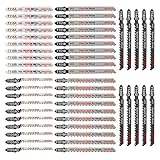


Quick picks by metal-cutting situation
| Cutting task | Recommended blade | Typical tooth pitch | Useful capacity | Best priority |
|---|---|---|---|---|
| Thin aluminum sheet | HSS or bi-metal, wavy-set teeth | 14–24 TPI | 0.8–3 mm | Preventing tooth grab and clogging |
| Aluminum plate or extrusion | Coarser HSS or carbide-grit blade | 8–14 TPI | 3–12 mm | Chip clearance and lubrication |
| Mild-steel sheet | Bi-metal, milled or precision-ground teeth | 18–32 TPI | 0.7–6 mm | Controlled feed and a clean edge |
| Mild-steel flat bar or tube | Bi-metal blade with a variable tooth pitch | 10/14 or 14/18 TPI | 3–10 mm | Reducing vibration and tooth breakage |
| Stainless-steel sheet | Premium bi-metal or carbide-grit blade | 24–32 TPI | 0.8–4 mm | Heat control and wear resistance |
These are practical starting points rather than universal limits. The blade package should always provide the final maximum thickness, because tooth geometry, blade length, jigsaw power, and the metal grade can change the result.
What to look for in a metal jigsaw blade
Tooth pitch
Tooth pitch is commonly expressed as teeth per inch, or TPI. A higher TPI gives more teeth in contact with thin sheet metal, which reduces snagging and leaves a smoother cut. A lower TPI creates larger gullets that clear chips more effectively when cutting thicker aluminum, tube, or bar.
A useful rule is to keep at least three teeth engaged in the material throughout the cut. For example, a 1 mm sheet generally needs a fine 24–32 TPI blade, while a 6 mm aluminum plate can use approximately 10–14 TPI. If too few teeth engage, the blade can catch and bend. If too many teeth engage in thick stock, chips pack into the gullets and generate heat.
Blade material and grade
- High-speed steel (HSS): Hard and relatively inexpensive, making it suitable for occasional aluminum and thin mild-steel work. It is less tolerant of twisting and overheating than bi-metal construction.
- Bi-metal: A flexible alloy-steel body combined with HSS cutting teeth. This is the most versatile choice for jigsaws for metal because it balances tooth hardness with resistance to snapping.
- Carbide-grit: An abrasive cutting edge rather than conventional teeth. It works well on stainless steel, hardened sheet, fiberglass-backed materials, and other difficult stock, but usually cuts more slowly and costs more.
- Carbide-tooth: Individual carbide teeth can provide long life and fast cutting in demanding applications. They are best reserved for compatible materials and stable, low-vibration setups.
For occasional repairs, a general-purpose bi-metal pack is usually more economical than buying separate specialty blades. For frequent stainless-steel work, the extra wear resistance of a premium bi-metal or carbide-grit blade can reduce blade changes and prevent the frustration of dull teeth.
Shank type
Most modern jigsaws use a T-shank blade, which is retained by a tool-free clamp. T-shank is the safest default when buying a new metal jigsaw blade because it is widely supported and does not normally require a separate retaining screw.
U-shank blades have a slot or cutout at the top and are associated with older or budget jigsaws. Some tools accept both types, but compatibility should be verified in the manual rather than assumed. A blade that fits loosely can create excessive vibration, wander from the cut line, or release under load.
Best choice for each metal
Aluminum
Aluminum is soft, but that does not make it effortless to cut. Its chips can weld to a hot blade, particularly when cutting slowly with a fine tooth pattern. Choose a medium or coarse blade with generous gullets, keep the pendulum-orbital action low or off, and apply a light cutting lubricant intended for aluminum.
For thin flashing and sheet, use 14–24 TPI. For thicker plate or extrusion, 8–14 TPI is more suitable. Clamp the workpiece close to the cut so it cannot flex; vibration is a common cause of rough edges and broken teeth. A blade marketed for nonferrous metal is preferable when available.
Mild steel
Mild steel rewards a fine, controlled cutting approach. Select a bi-metal blade around 18–24 TPI for common sheet thicknesses, or a variable-pitch blade for tubing and flat stock. Variable teeth distribute the cutting load across the blade and can make a noticeable difference when the workpiece resonates.
Use a moderate feed pressure. Pushing harder does not necessarily cut faster; it can deflect the blade, strip teeth, and leave a beveled edge. Cutting oil improves lubrication and tooth life, but use only enough to wet the cutting zone without allowing the blade to hydroplane.
Stainless steel
Stainless steel is the most demanding of these three materials because it work-hardens when rubbed rather than cut. A dull blade or hesitant feed can create a hardened surface that makes the next teeth work even harder. Use a sharp, fine-tooth bi-metal blade, commonly 24–32 TPI for sheet, or a carbide-grit option for repeated work.
Keep the blade moving at a steady rate and avoid stopping in the cut with the trigger held. Use low speed, firm clamping, and cutting lubricant. Orbital action should normally be off because the more aggressive tooth movement increases heat and can damage the edge.
Head-to-head: fine, variable, and carbide-grit blades
| Blade style | Edge quality | Speed | Most suitable materials | Main drawback |
|---|---|---|---|---|
| Fine fixed-pitch bi-metal | Very good on thin sheet | Moderate | Mild steel, stainless, thin aluminum | Gullets clog in thicker stock |
| Variable-pitch bi-metal | Good with less vibration | Moderate to fast | Tube, angle, flat bar, mixed thicknesses | Usually costs more than basic blades |
| Coarse HSS | Good enough for rough aluminum cuts | Fast in thicker soft metal | Aluminum plate and extrusion | Can grab thin sheet |
| Carbide-grit | Clean, burr-controlled abrasive cut | Slow to moderate | Stainless, hardened or abrasive materials | Higher purchase cost and less forgiving technique |
How to set up a jigsaw metal blade for a clean cut
- Measure the stock. Identify the actual thickness, not just the nominal size. Include the wall thickness when cutting tube or channel.
- Select the pitch. Choose a fine blade for thin sheet and a coarser or variable blade for thick sections. Aim for at least three engaged teeth.
- Check the shank and length. Install only a compatible T-shank or U-shank blade. The blade should extend below the workpiece by roughly 10–20 mm while cutting, without being unnecessarily long.
- Clamp the work. Support both sides of the cut and place the clamps close enough to prevent chatter. Thin sheet can be sandwiched between sacrificial boards.
- Set the saw. Turn orbital action off for stainless and most precision cuts. Use a low-to-medium speed, then adjust based on heat and chip formation.
- Lubricate and cut steadily. Apply cutting oil appropriate to the metal and maintain a consistent feed. Do not force a blade that has begun to wander.
- Deburr the edge. Let the work cool, then remove the burr with a file or deburring tool rather than twisting the still-installed blade against the edge.
Ownership costs and common mistakes
Blade life depends more on heat, sideways pressure, and contamination than on cutting time alone. The teeth usually wear first, while the body may still look straight. Replace a blade when it requires noticeably more pressure, produces excessive heat, leaves a tapered cut, or begins to chatter. Continuing with a dull blade can damage the jigsaw’s guide system as well as the workpiece.
As a simple cost comparison, suppose a five-blade pack costs $15 and each blade produces eight useful cuts in mild-steel sheet. The consumable cost is $15 ÷ 40, or about $0.38 per cut. If incorrect pitch reduces life to three cuts per blade, the cost rises to $1.00 per cut before accounting for rework. Choosing the right tooth pattern is often more economical than buying the cheapest pack.
- Do not use a wood blade for metal; its large teeth can catch violently.
- Do not use high orbital action for a clean metal edge.
- Do not twist the jigsaw to follow a curve; use a narrower metal blade or make relief cuts.
- Clean chips from the shoe and blade clamp after use, especially when cutting aluminum.
- Store blades dry and separated so fine teeth do not rub against other tools.
Bottom line
For the broadest coverage, choose T-shank bi-metal jigsaw blades in a fine 18–32 TPI range for steel and stainless, plus a coarser 8–14 TPI option for thicker aluminum. Match the rated thickness to the material, use low orbital action, clamp securely, and replace blades as soon as heat or wandering indicates wear. That combination gives a cleaner, more controlled cut than relying on a single so-called universal jigsaw metal blade.