10 Best Circular Saw Blades for Cleaner, Faster Cuts
What's inside
As an Amazon Associate I earn from qualifying purchases. This post may contain affiliate links at no extra cost to you.
10 Best Circular Saw Blades for Cleaner, Faster Cuts
The best 10 circular saw blades for most shoppers are a 24-tooth framing blade for fast ripping and rough construction, a 40-tooth carbide blade for general-purpose work, and a 60-to-80-tooth finish blade for clean crosscuts; choose the exact blade by matching its diameter, arbor, kerf, tooth geometry, and material to your saw and job.
Below are 10 dependable blade types and specific product lines to consider. Tooth counts and kerfs can vary by diameter or model, so confirm the manufacturer’s specifications for the exact blade before buying. A thinner kerf removes less material and can ease the load on a cordless saw, but it is more sensitive to poor alignment and aggressive feeding.
As an Amazon Associate we earn from qualifying purchases at no extra cost to you.



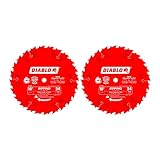
| Rank and pick | Typical size and teeth | Kerf guide | Best match | Cut character |
|---|---|---|---|---|
| 1. Diablo framing blade | 7-1/4 in, 24T | About 0.059 in on common thin-kerf models | Dimensional lumber, plywood framing | Fast, rough-to-medium |
| 2. Makita carbide framing blade | 7-1/4 in, 24T | Check model; thin kerfs are common | Jobsite framing and general lumber cuts | Fast, durable |
| 3. DeWalt framing blade | 7-1/4 in, 24T | Varies by model | Frequent framing and construction | Fast, efficient |
| 4. Diablo general-purpose blade | 7-1/4 in, 40T | Often around 0.063 in | Mixed plywood and lumber | Balanced |
| 5. Makita general-purpose blade | 7-1/4 in, about 40T | Varies by model | Remodeling and mixed cuts | Balanced, smoother than 24T |
| 6. Freud LU79 thin-kerf blade | Commonly 7-1/4 in, 60T | About 0.063 in | Fine crosscuts and sheet goods | Clean, slower feed |
| 7. Diablo fine-finish blade | 7-1/4 in, 60T | Varies by model | Trim, plywood, finish work | Clean crosscuts |
| 8. Forrest Duraline blade | Available in several sizes and tooth counts | Model-specific | Fine woodworking and smooth cuts | Very clean, slower |
| 9. Freud non-ferrous metal blade | Commonly 7-1/4 in, 60T | Model-specific | Aluminum and other non-ferrous metals | Controlled, material-specific |
| 10. Freud Diablo laminate blade | Commonly 7-1/4 in, 60T | Model-specific | Laminate and brittle-faced panels | Fine, chip-reducing |
Choose by the cut you make most
1–3. Fast framing: 24-tooth carbide blades
Diablo, Makita, and DeWalt all offer carbide-tipped framing blades in the common 7-1/4-inch size. A 24-tooth blade gullets out chips quickly, which makes it a strong choice for ripping studs, cutting construction lumber, and making repeated rough cuts. The trade-off is a rougher edge and more tear-out in veneer than a higher-tooth-count blade.
For the best 7 1 4 circular saw blade for ripping, start with a sharp 24-tooth blade if speed matters more than a furniture-ready edge. For hardwood ripping, use a suitable carbide blade and feed steadily; a 24-tooth framing blade can work, but a dedicated ripping blade or a higher-quality general-purpose blade may track and cut more smoothly. Keep the work supported on both sides of the cut to prevent pinching.
4–5. One blade for mixed work: 40-tooth general-purpose
A 40-tooth blade is a practical compromise for homeowners and remodelers who alternate between lumber, plywood, and occasional finish cuts. Diablo and Makita have broad circular-saw blade ranges that include this middle ground. It cuts more slowly than a 24-tooth blade but generally leaves a cleaner crosscut. If your saw has limited power or runs on a battery, a thin-kerf version can reduce cutting resistance; check that its arbor and permitted blade dimensions match the saw.
6–8. Cleaner edges: 60-tooth and fine-finish blades
Freud’s LU79 line, Diablo’s fine-finish options, and Forrest’s Duraline range serve users who prioritize edge quality over speed. More teeth generally mean smaller chips and a smoother crosscut, but they also create more friction and can clog or burn if you force the cut, use a dull blade, or let the workpiece shift. These are better choices for trim, cabinet parts, and visible plywood edges than for fast demolition or ripping thick stock.
For the best circular saw blade for hardwood, match the blade to the cut direction: a crosscut or fine-finish blade for cutting across the grain, and a ripping-oriented blade for cutting along it. A 60-tooth blade can leave a clean crosscut, but it is not automatically the right choice for long hardwood rips.
9. Aluminum and other non-ferrous metals
Use a blade specifically designated for non-ferrous metal, such as Freud’s non-ferrous blade options, rather than a wood blade. These blades use tooth geometry suited to softer metals. Confirm that the blade is approved for your saw and material, clamp the stock securely, and follow the blade maker’s instructions for feed rate and guarding. Aluminum chips can be sharp, and unsupported thin stock can snag or deform.
10. Laminate and brittle-faced panels
A laminate blade is designed to reduce chipping on brittle surfaces. Freud’s Diablo laminate options are worth comparing when cutting laminate flooring or faced panels. A zero-clearance support or sacrificial backing can further reduce tear-out. Make a test cut on an offcut first, since the best feed direction and face-up orientation depend on the saw and blade rotation.
Decision matrix: spend where it changes the cut
| Your situation | Best starting choice | Why |
|---|---|---|
| Occasional DIY, limited budget | 40T general-purpose carbide blade | Handles varied work without buying several specialized blades. |
| Frequent framing or deck work | 24T framing blade | Fast chip clearance; replace or sharpen when it begins to burn or wander. |
| Cabinetry or visible trim cuts | 60T fine-finish blade | Cleaner edges reduce sanding and patching. |
| Cordless saw or lower-powered saw | Compatible thin-kerf blade | Removes less material, potentially easing load; verify the saw’s requirements. |
| Aluminum, laminate, or specialty stock | Material-specific blade | Tooth geometry matters more than choosing a high tooth count alone. |
Fit, maintenance, and the real cost of a blade
Before purchase, check four items: blade diameter, arbor-hole diameter, maximum RPM rating, and whether the saw accepts the blade’s kerf and body thickness. A 7-1/4-inch blade is common, but diameter alone does not guarantee compatibility. Never remove a stabilizer or alter an arbor fit to make a blade work.
Carbide teeth usually remain useful through repeated sharpening, but sharpening is worthwhile only if the blade body is sound and the service cost compares favorably with replacement. Pitch and resin buildup can make a blade seem dull; clean it with a product labeled safe for saw blades, then dry it thoroughly. If teeth are missing, the plate is warped, or the blade has cracks, replace it rather than sharpening it.
For the best circular saw blade sharpener, most casual users are better served by a reputable professional sharpening service than by an inexpensive manual device. Accurate carbide sharpening requires maintaining tooth angles and consistent tooth height. Frequent users can compare a purpose-built carbide blade sharpener against local service pricing, but include setup, skill, and the cost of sharpening wheels in the calculation.
For example, if sharpening costs $15 and restores a blade that would otherwise cost $30 to replace, it saves money only if the blade is still structurally sound and the sharpened edge performs well for your work. Keep a simple log of sharpening and replacement costs per blade; the cheapest purchase price is not always the lowest cost per usable cut.
Store blades dry and protected, and avoid laying teeth against other tools. Replace a blade when cuts require excessive force, burn despite a suitable feed rate, or repeatedly wander after alignment and support are checked. A clean, sharp blade matched to the material will usually improve both speed and finish more than simply choosing the highest tooth count.