How to Calculate the Real Cost of Owning a Cordless Tool System
What's inside
As an Amazon Associate I earn from qualifying purchases. This post may contain affiliate links at no extra cost to you.
The advertised price of a cordless drill or impact driver is only the entry fee. The bigger cost is the battery platform you commit to: batteries, chargers, replacement packs and any tools you buy later to use the same batteries. A useful comparison looks at the cost of getting a working setup now and keeping it working for several years—not just the bare-tool price.
Define the system you actually need
Start with the work. A homeowner assembling furniture, hanging shelves and making occasional repairs may need one drill and two small batteries. A remodeler using a saw or grinder every day may need several batteries, faster charging and enough capacity to rotate packs without stopping.
Write down the tools you expect to buy over the next three to five years. Include likely additions such as a circular saw, work light or trimmer, but don’t count tools you might never use. Then note which jobs need high battery capacity. A drill can do plenty of light work on a compact pack; a saw cutting sheet goods all afternoon is a different load.
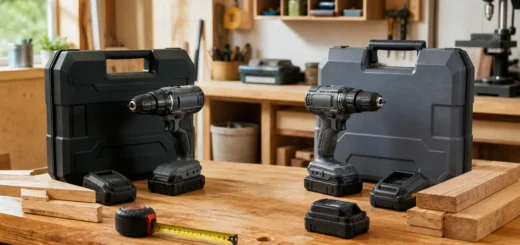
For a basic homeowner setup, compare a cordless drill kit with two batteries against a bare drill plus separately purchased batteries. For heavier use, a cordless combo kit with batteries and charger may lower the cost per tool—but only if the included tools fit your plans.
Build a realistic cost estimate
Use street prices rather than the suggested retail price. Check the cost of the exact kit, bare tools, batteries and charger on the same day. Prices shift during holiday sales and promotions, and a kit that looks expensive at full price can be good value when it includes batteries you would buy anyway.
For a fair comparison, total the following:
Initial kit: tools, batteries and charger. Future tools: bare-tool prices for the tools on your list. Extra batteries: packs needed to avoid downtime. Replacement: a realistic allowance for a pack that loses useful capacity or fails. You can divide this total by the number of years you expect to use the system, but keep the upfront total visible too. A low annual cost does not help if the initial purchase stretches your budget.
| Cost item | What to count | Common trap |
|---|---|---|
| Starter kit | Tool, batteries, charger and case if included | Comparing a kit price with a bare-tool price |
| Future tools | Expected bare tools, plus any required adapters | Assuming every tool in a large kit will be useful |
| Battery capacity | Enough packs for your workload and charging time | Buying several large packs for light, occasional jobs |
| Replacement | Likely battery replacement during your ownership period | Assuming a battery lasts forever—or fails after one fixed number of years |
| Convenience | Downtime, carrying weight and charging access | Treating a cheap setup as a bargain if work repeatedly stops |
A simple three-year comparison
Consider two hypothetical systems. System A costs $250 for a drill kit with two batteries and a charger. You later add a $100 saw and one $80 battery. System B costs $350 for a combo kit with the drill, saw, two batteries and charger. If both cover the same work, System A totals $430 and System B totals $350 before any replacement. The lower kit price did not make A cheaper overall.
But the comparison changes if you never need the saw: System A stays at $250, while paying extra for an unused tool in System B is wasted money. Likewise, if the combo kit’s batteries are too small for regular saw work, you may need another pack. Add its actual price before deciding.
These figures are examples, not current quotes. Record prices when you shop and rerun the math. A $40 promotion or a free-battery offer can change the result; a “free” tool is only valuable if you would otherwise buy it or can use it safely.
Price batteries by useful work, not just capacity
Battery capacity, commonly listed in amp-hours (Ah), is a useful clue but not a direct promise of runtime. A larger pack can run longer, but it usually costs more and adds weight. Tool design, material, blade condition and how hard you push the tool all affect consumption. A compact battery may be perfectly adequate for driving screws; on a circular saw, it can mean more frequent swaps or slower progress.
Check the price of compatible replacement batteries before choosing a platform. Compare packs with similar voltage and capacity, and verify that they are compatible with the specific tools you plan to buy. Avoid building your estimate around unverified third-party packs: a bargain battery may have inconsistent capacity, poor protection or no dependable warranty. If you use the tool professionally, downtime and a failed pack can cost more than the initial savings.
Battery life has no dependable universal expiration date. Heat, deep discharge, heavy use and long storage while fully drained can shorten it. Store packs dry and away from extreme temperatures, and follow the manufacturer’s charging and storage instructions. In a lightly used home setup, replacement may be years away; for frequent heavy work, budget for it sooner rather than treating it as impossible.
Count the charger and the cost of switching
One charger may be enough for weekend projects. For a crew or long workdays, a second charger can reduce waiting, but only if charging speed and available power suit your routine. Fast charging is not automatically worth paying for if batteries spend most of their time sitting unused.
Switching platforms later can strand batteries and chargers, though you may still sell or keep older tools. Do not let that risk force you into a brand before checking tool availability, battery prices, warranty terms and local service. Also confirm that the platform has the specialty tools you actually need; a large catalog is irrelevant if the tools you want are poor value or unavailable where you live.
When the cheaper setup is the right choice
A lower-cost kit is sensible if you do occasional household work, need only common tools and can tolerate charging between tasks. It is less attractive when batteries are scarce or expensive, the included charger is slow for your workload, or the tools you need later cost much more as bare tools than they do in a competing system’s kit.
Before buying, total one realistic purchase path for each platform: starter kit, planned tools, required batteries and a replacement allowance. Check a current replacement battery and charger listing against the manufacturer’s compatibility information, not just a marketplace headline. Buy during a seasonal sale if the discount applies to gear you already planned to use. The best-value system is the one that covers your actual jobs at a cost you can live with—not the one with the most tools in the box.