Best Budget Snow Blower for a Short Driveway
What's inside
As an Amazon Associate I earn from qualifying purchases. This post may contain affiliate links at no extra cost to you.
For a short, mostly flat driveway that holds one or two cars, a compact single-stage snow blower is usually the best value. It costs less than a two-stage machine, takes up less storage space, and can clear ordinary fresh snow quickly. The catch is that it is less effective in deep, wet snow and at the packed ridge left by a plow.
Before buying, measure the driveway and think about the snow you actually get. A 20- to 22-inch clearing width is enough for many short drives, but clearing width matters less than whether the machine can handle your typical snowfall and the end-of-driveway pile. Buying extra capacity you rarely use means paying for a heavier, bulkier machine and storing it year-round.
As an Amazon Associate we earn from qualifying purchases at no extra cost to you.



The best fit for a short driveway
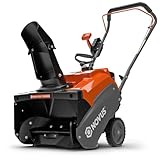
For light to moderate snow on pavement, start with a corded electric single-stage snow blower if an outdoor outlet is within practical reach. Corded models are typically inexpensive and need little maintenance, but the cord limits range and demands attention around the rotating auger. They make most sense on a small, simple drive without tight turns or far-away corners.
If managing a cord would be a nuisance, compare a cordless battery single-stage snow blower. It is easier to maneuver and start, but the battery and charger can account for a large part of the price. Check whether the kit includes both, the battery capacity, and the manufacturer’s runtime estimate. Cold weather, heavy snow, and an aging battery can all reduce usable runtime.
For a short driveway that regularly gets deep snow or a hard plow berm, a budget two-stage machine may be a better purchase than the cheapest single-stage option. Its powered wheels and larger intake make it more capable in difficult conditions, though it costs more, needs more storage space, and is harder to maneuver. A two-stage model is not automatically the better value if your usual snowfall is only a few inches.
Compare the budget choices
| Type | Good match for | Main trade-off |
|---|---|---|
| Corded electric single-stage | Small, flat paved drive near an outlet; light snow | Low purchase cost, but cord routing slows work and can snag |
| Cordless battery single-stage | Short paved drive; convenient starts and no cord | Simple to use, but runtime and replacement-battery cost matter |
| Gas single-stage | Small or medium paved drive with heavier snow | More power than many electric options, with fuel and maintenance to manage |
| Gas two-stage | Deep snowfall, gravel, or recurring plow berms | More capable, but heavier, costlier, and often unnecessary for light snow |
These are broad categories, not promises about a particular machine. Compare the manufacturer’s stated clearing width, intake height, and recommended conditions, then read recent reviews for reports about clogging, battery life, and parts availability. Specifications can differ substantially within the same category.
What to check before spending
Surface and snow depth: Single-stage machines work best on paved surfaces because the auger sits close to the ground. On gravel, it can pick up stones and throw them. If the driveway is gravel, look for a two-stage model with adjustable skid shoes and follow the setup instructions to leave clearance under the housing.
Snow texture: Light, dry snow is easier to clear than wet snow, even at the same depth. Wet snow can clog the chute or overload a small machine. If storms commonly leave 8 to 12 inches at once, or you must cut through an end-of-driveway ridge, do not choose a light-duty machine based only on its advertised clearing width. Work in narrower passes and avoid forcing the auger through dense snow.
Power and running time: For cordless models, check whether the advertised runtime is measured under light or demanding conditions. A second battery adds cost but can be worthwhile if the drive is long or snowfalls are frequent. For corded models, use only an outdoor-rated extension cord of the gauge and length specified in the manual. An undersized or excessively long cord can reduce performance.
Storage and handling: A machine that is hard to lift or turn may end up unused. Check its listed weight and whether the handle folds for storage. For a short drive, a lighter model can be more practical than one with extra capacity you do not need. Also check chute controls: a machine that requires awkward bending or stops to adjust direction slows a quick job.
Warranty and parts: A low purchase price is less attractive if wear parts are difficult to obtain. Look for clear warranty terms and locally available replacement shear pins, belts, paddles, or batteries as applicable. Read the manual before first use; using an improper tool to clear a clog is dangerous. Shut the machine off and follow the manufacturer’s safe clearing procedure.
When cheaper is fine—and when it is not
The least expensive corded or cordless single-stage machine can be a sensible buy when the driveway is short, paved, and reasonably level, and most storms leave manageable snow. For example, a roughly two-car paved drive with a nearby outlet and several inches of light snow is a very different job from a long, sloped drive with repeated heavy storms. In the first case, simple equipment may save money without making the work unreasonable.
Step up to a stronger category when the cheap machine repeatedly stalls, clogs, or cannot clear the plow ridge. Those are not minor annoyances if they happen every storm. A midrange gas single-stage machine may suit heavier snow on pavement; choose a two-stage machine if you need traction, have gravel, or regularly handle deep accumulation. For a steep driveway, also consider whether you can safely control the machine on the slope rather than assuming a larger blower solves the problem.
Timing your purchase
Buying in late summer or early fall can give you a wider selection, while end-of-season sales may offer lower prices if you can wait and find remaining stock. Before treating a discount as a bargain, compare the included battery, charger, warranty, and accessories. A bare tool can look cheap but cost more once the required battery is added.
For a short driveway, buy for the snow you normally clear, not the biggest storm you can imagine. A compact single-stage blower is the budget sweet spot for light-to-moderate snow on pavement; choose corded for the lowest cost when the layout is simple, or cordless for easier handling. Pay extra for two-stage capability only when your surface, snowfall, or plow berm gives you a concrete reason.